neuroscience · slides

Paper overview | Reach and grasp by people with tetraplegia using a neurally controlled robotic arm

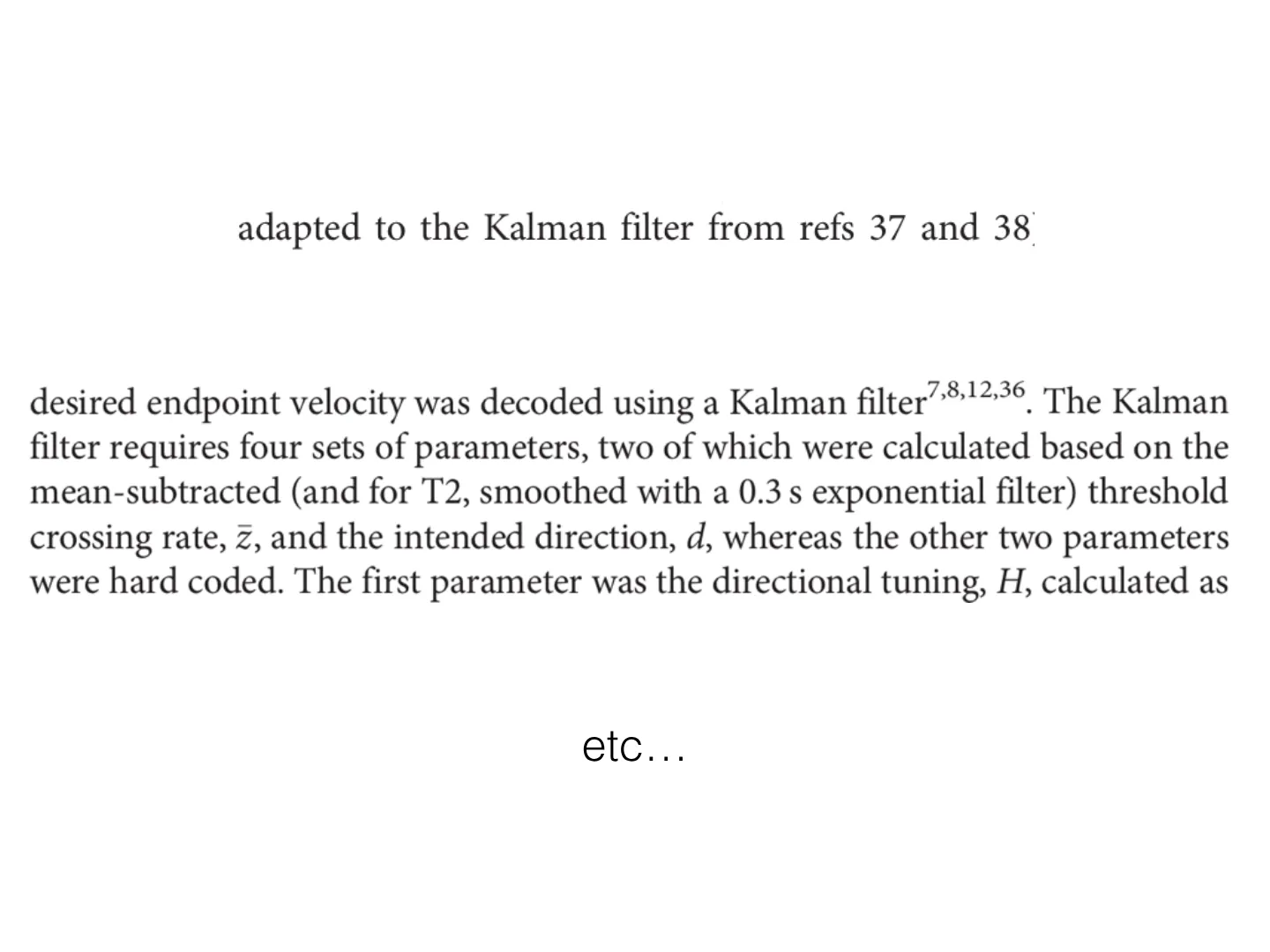
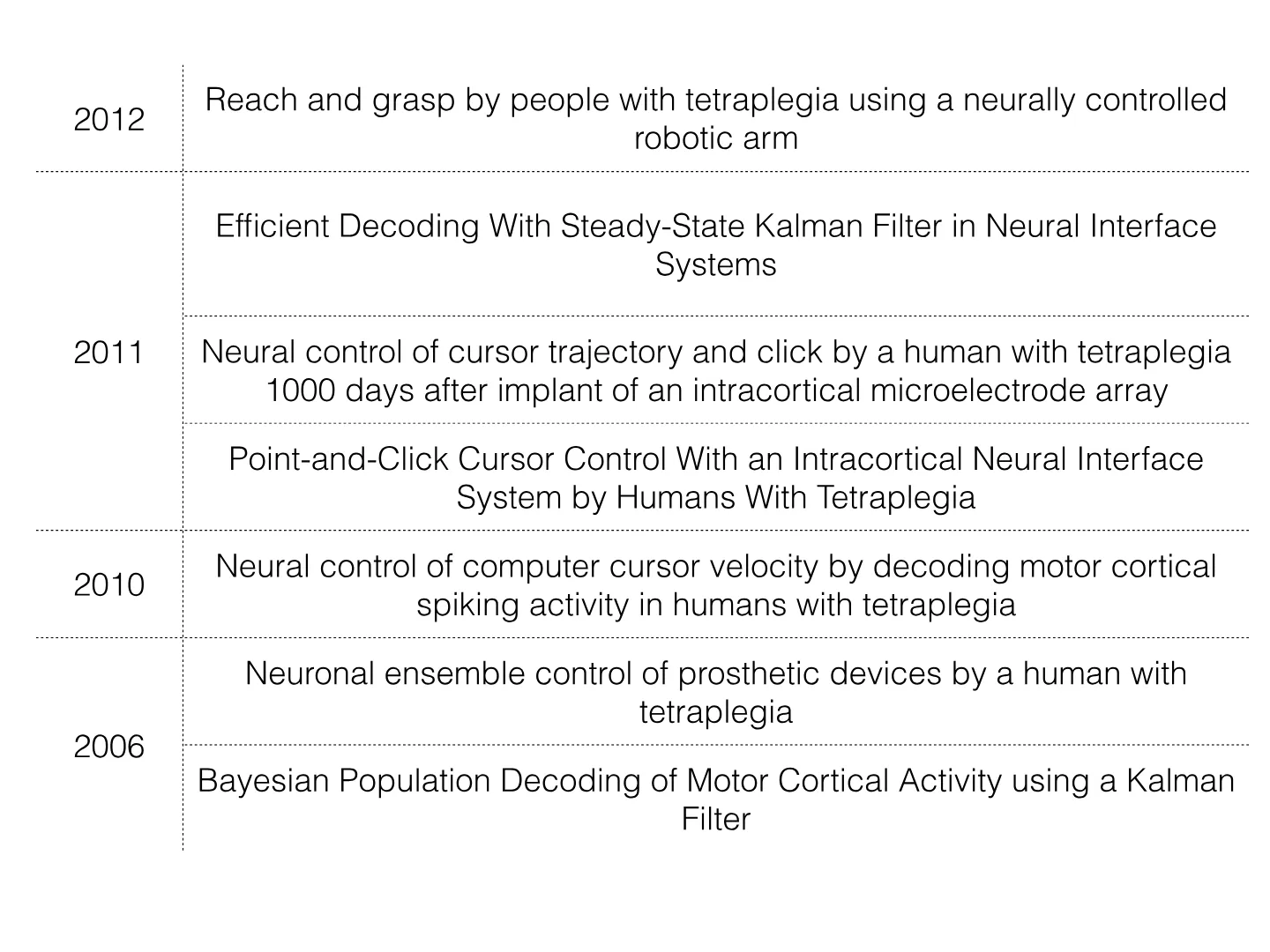
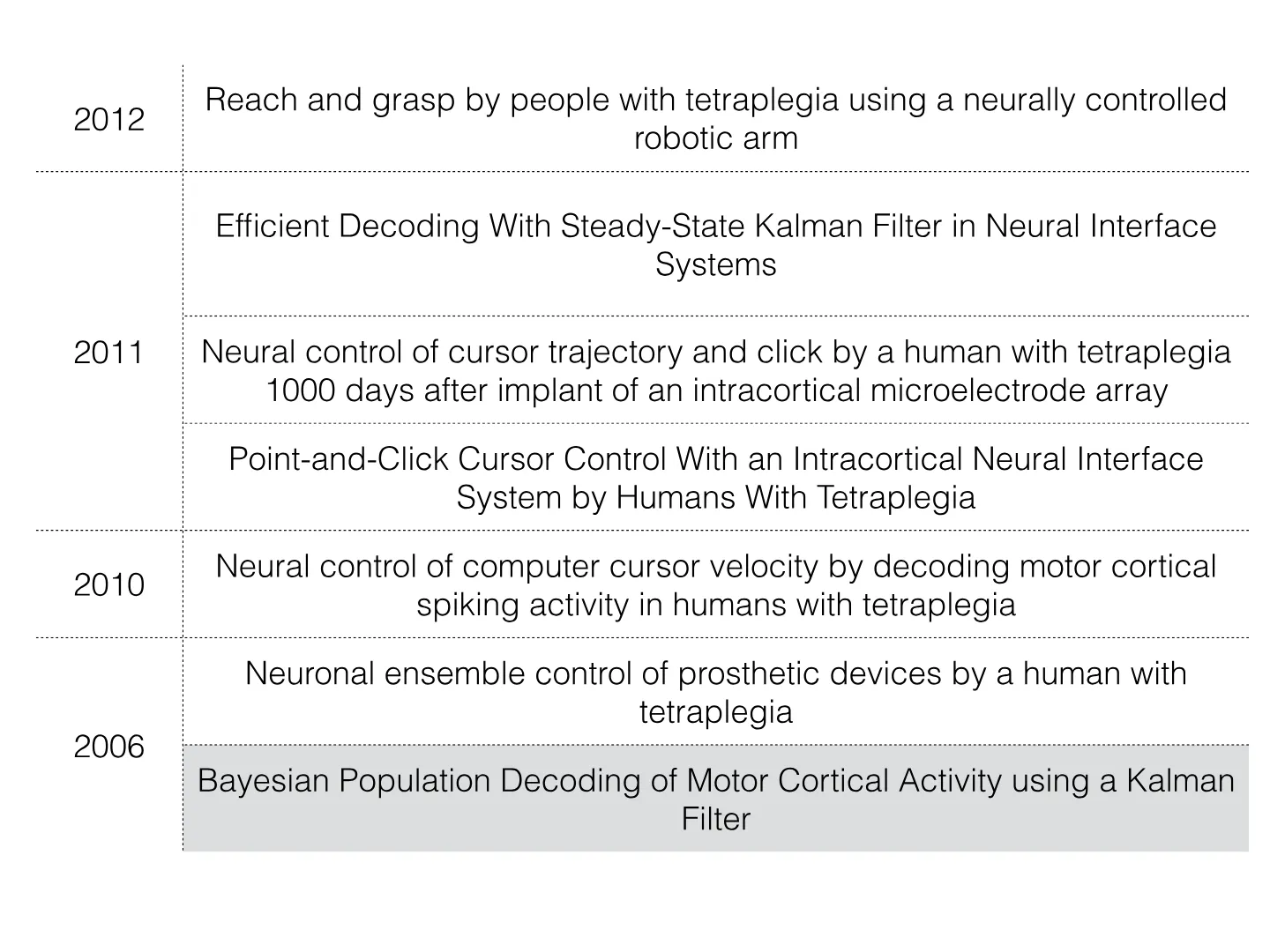
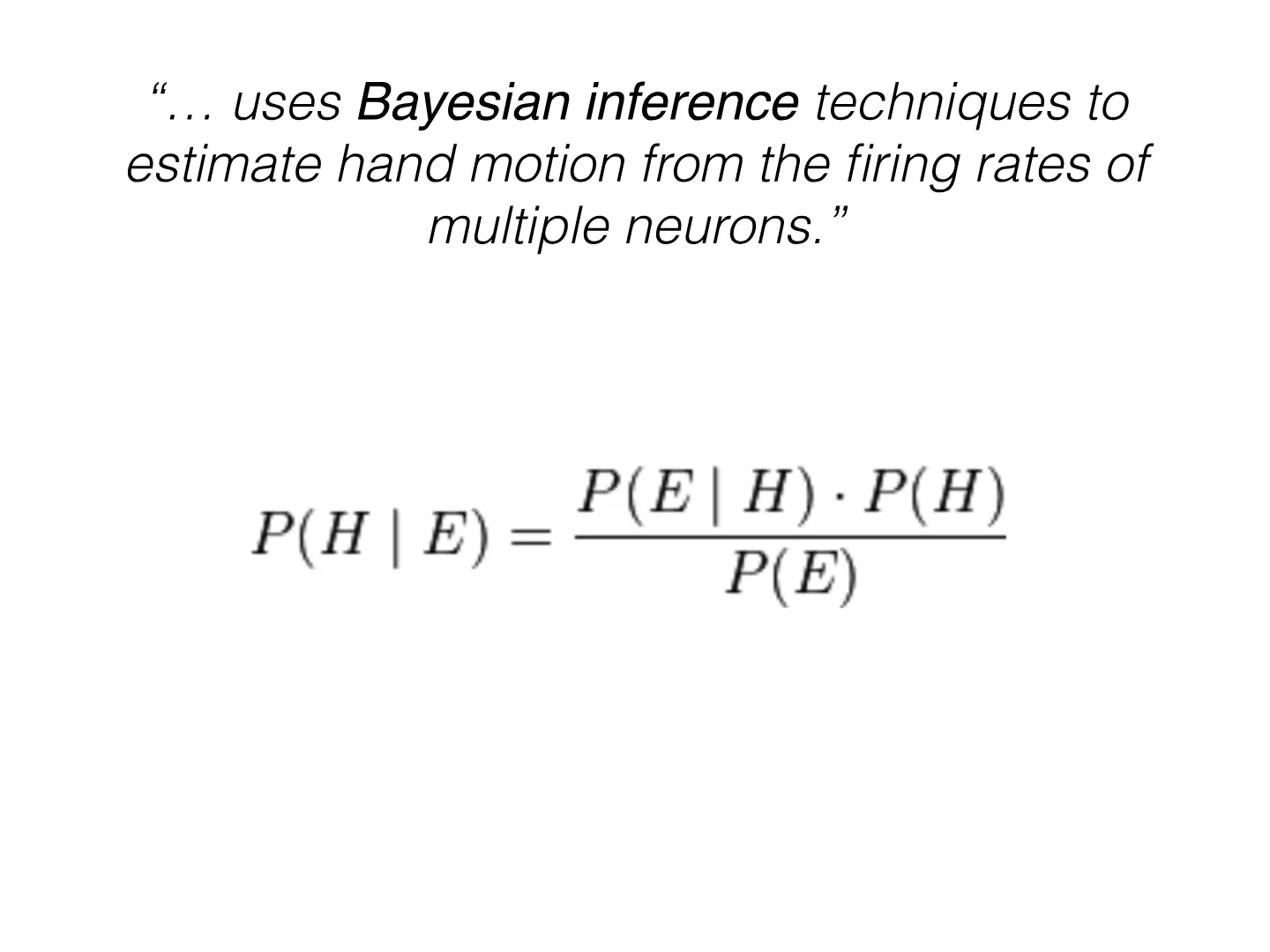
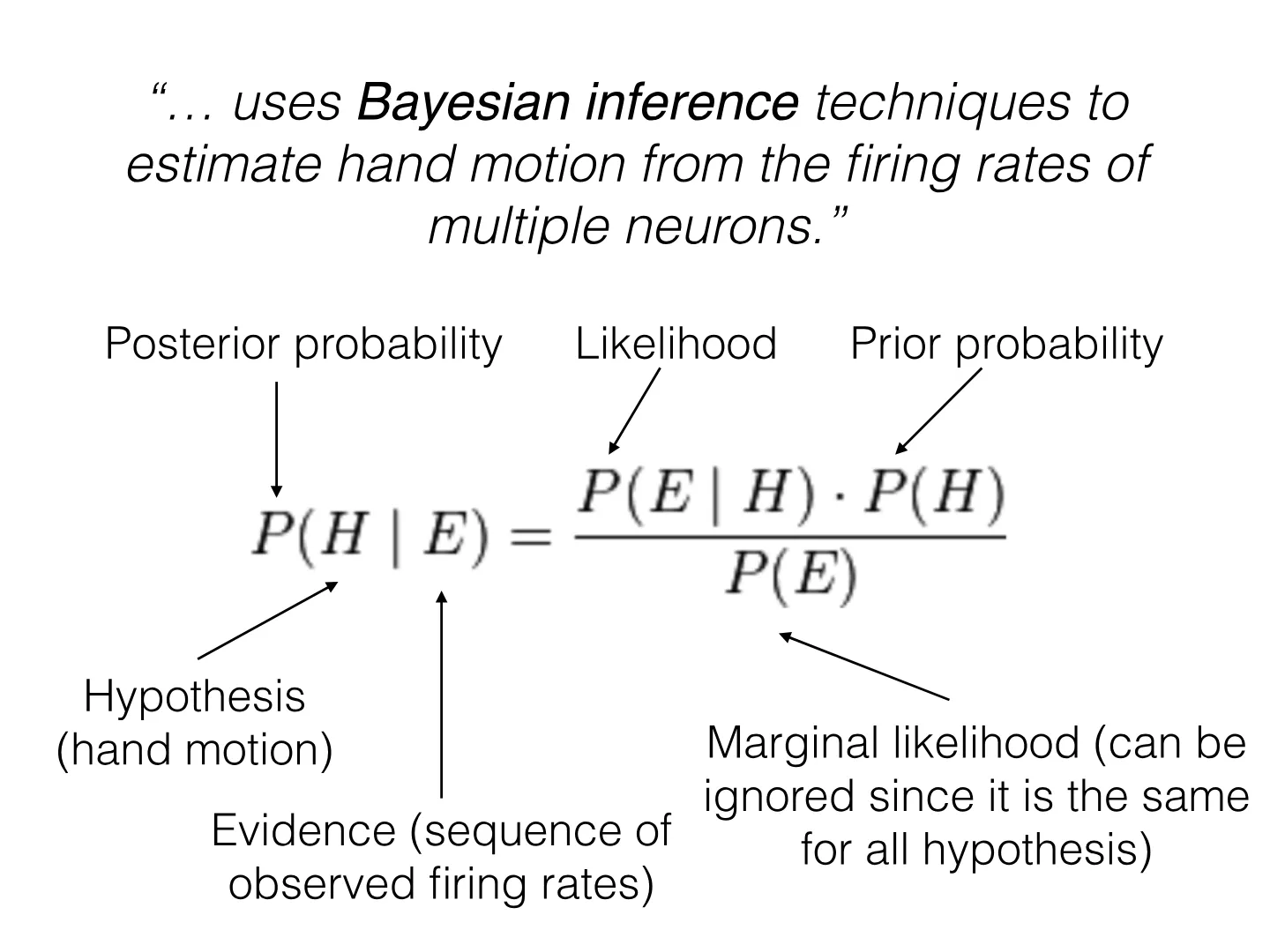
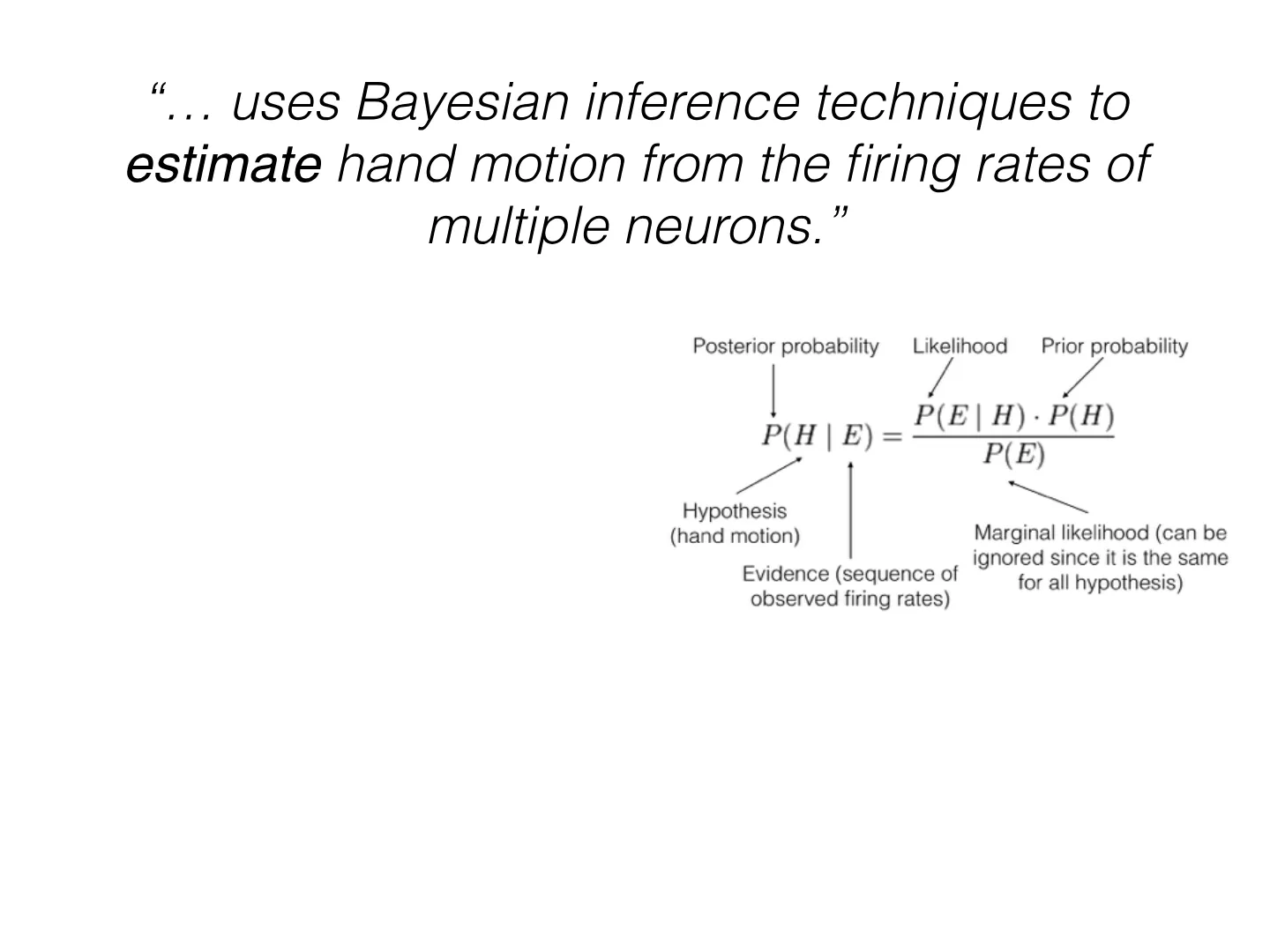
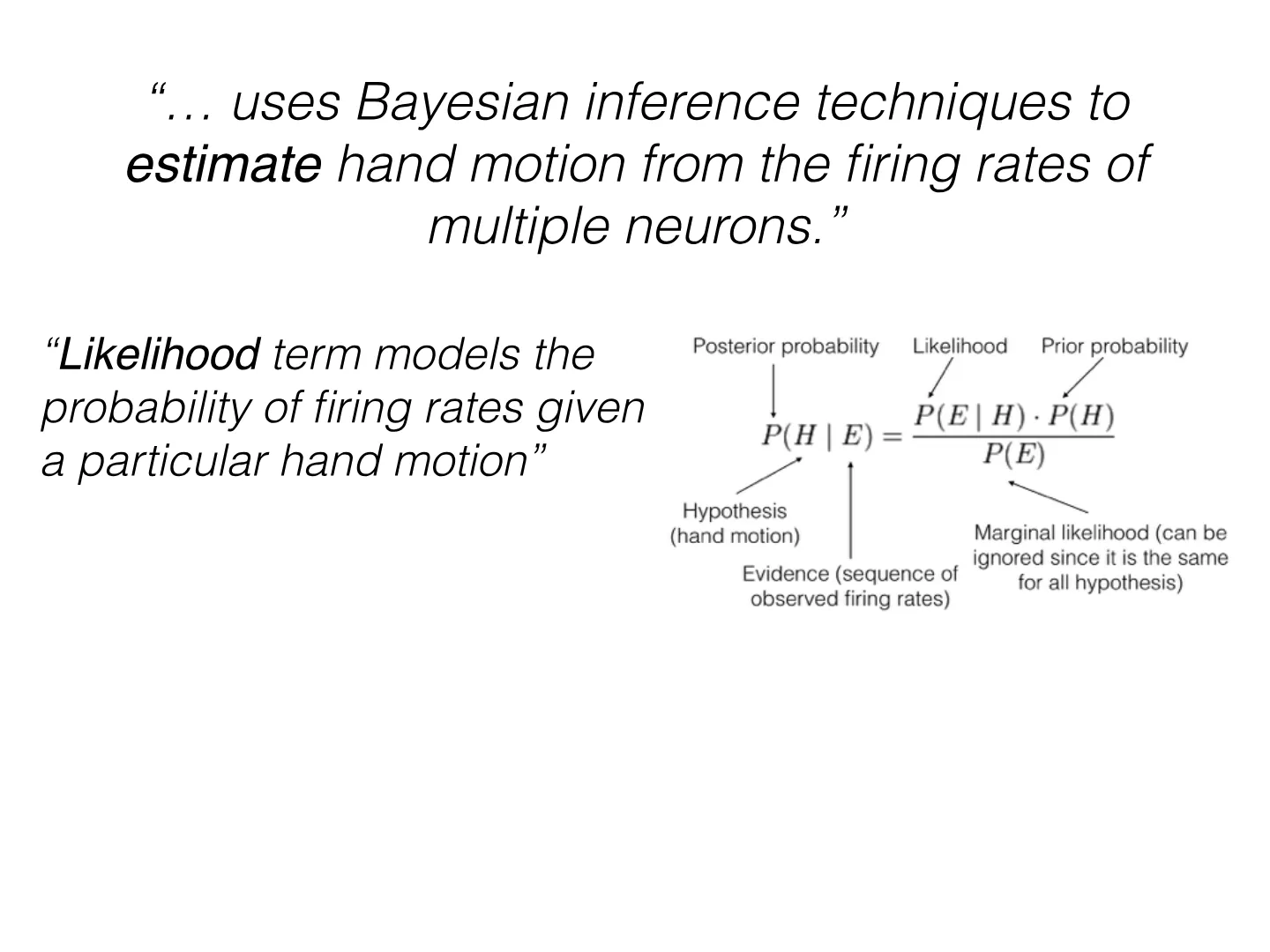
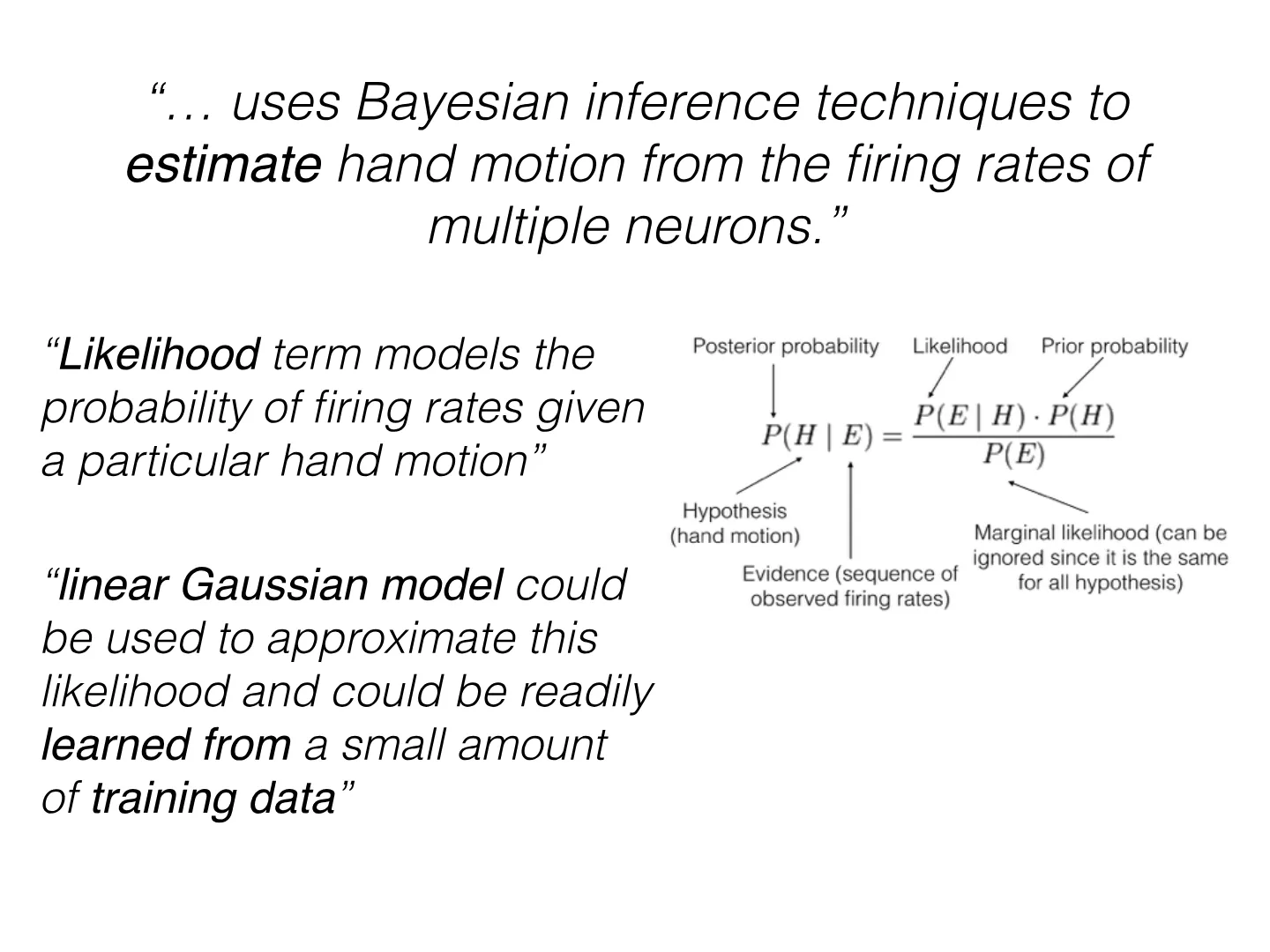
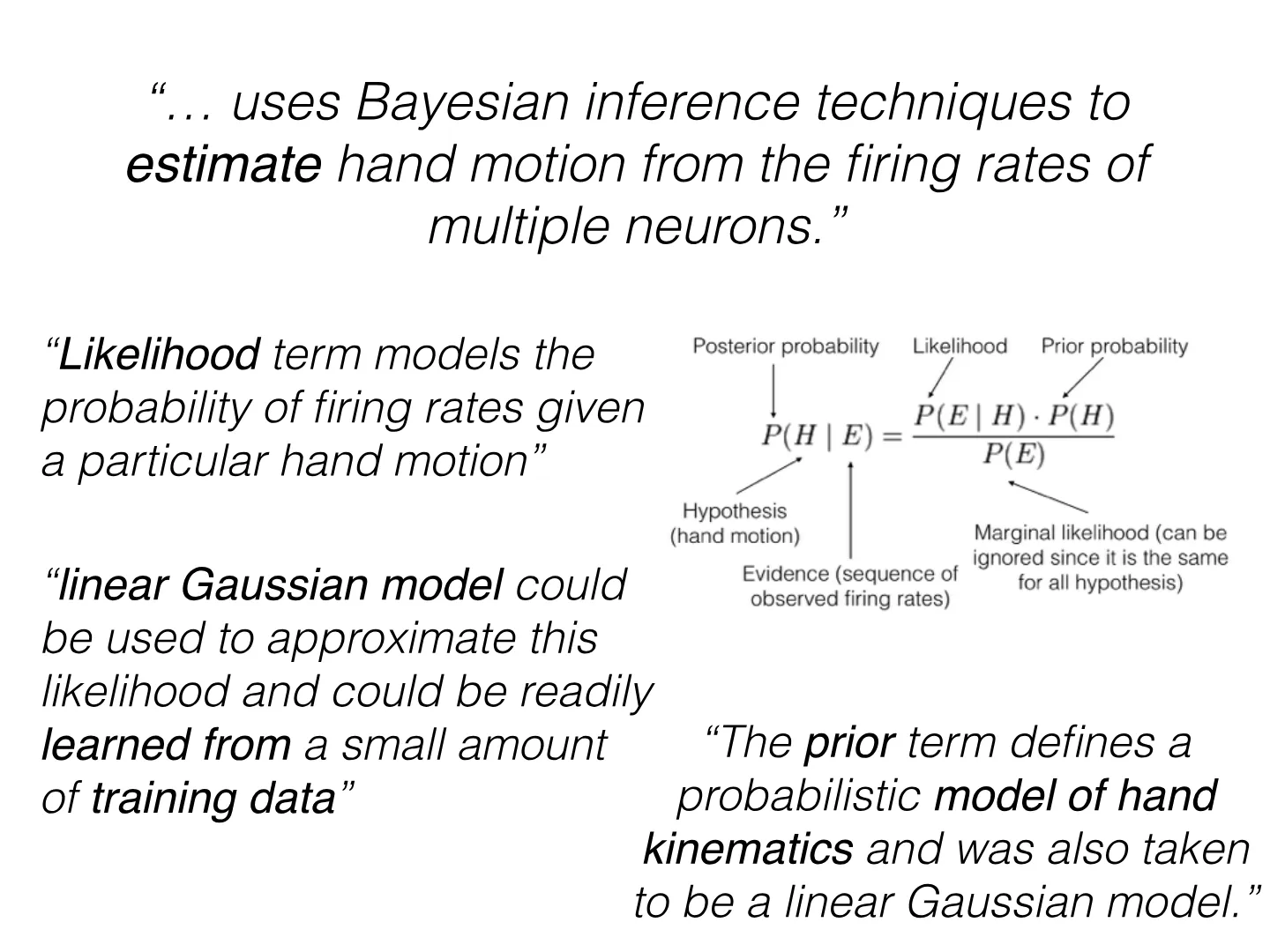
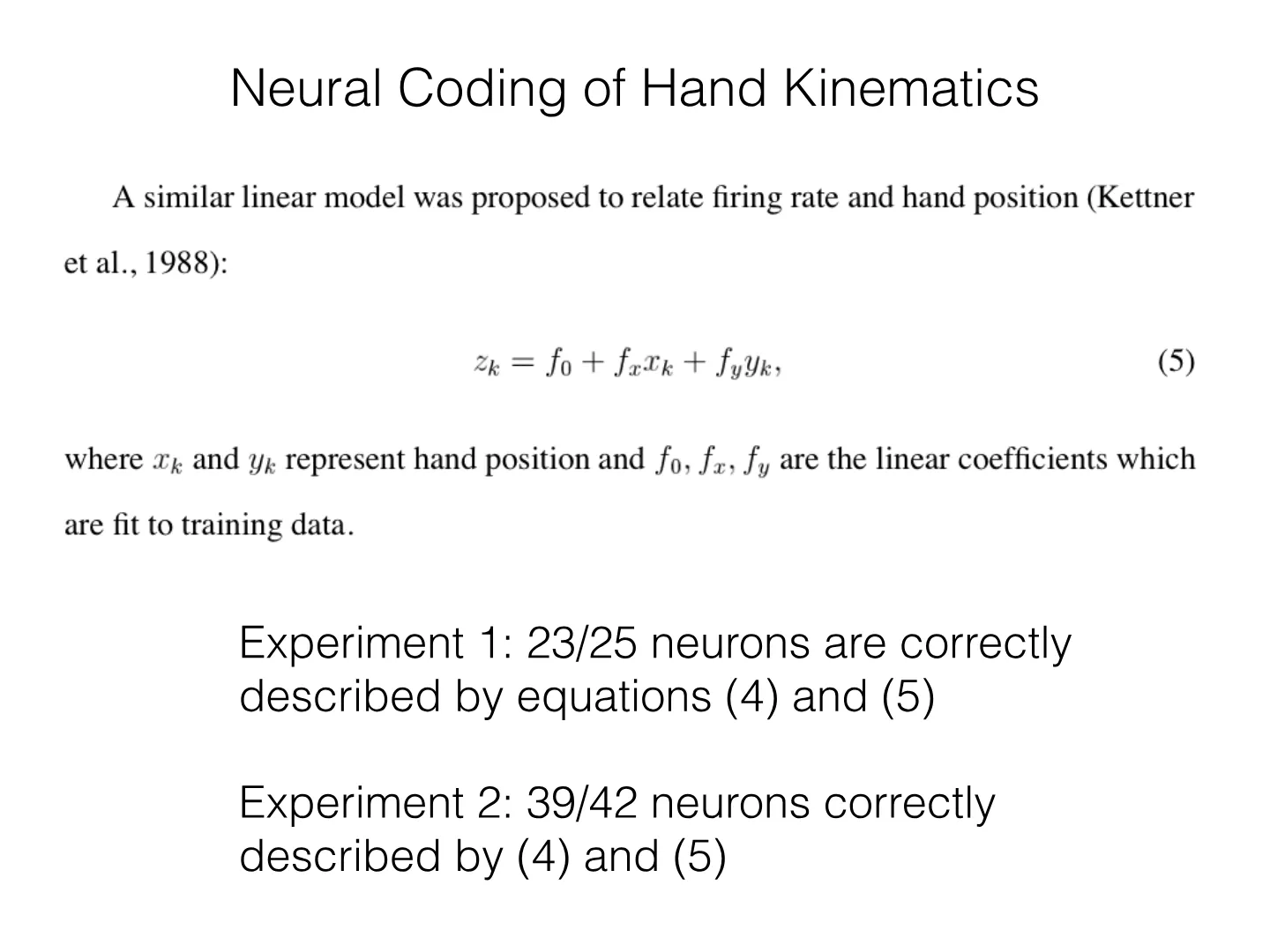
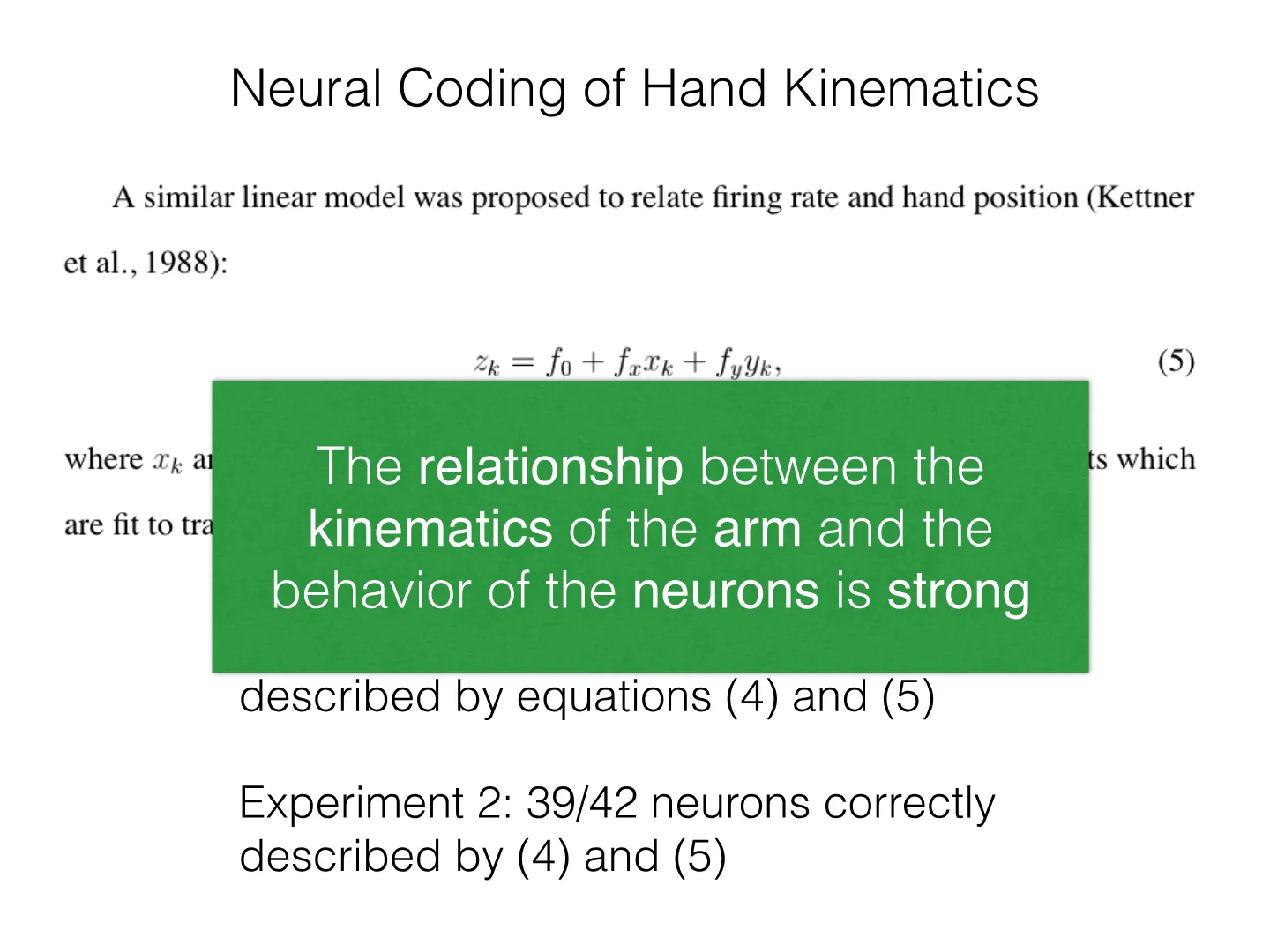
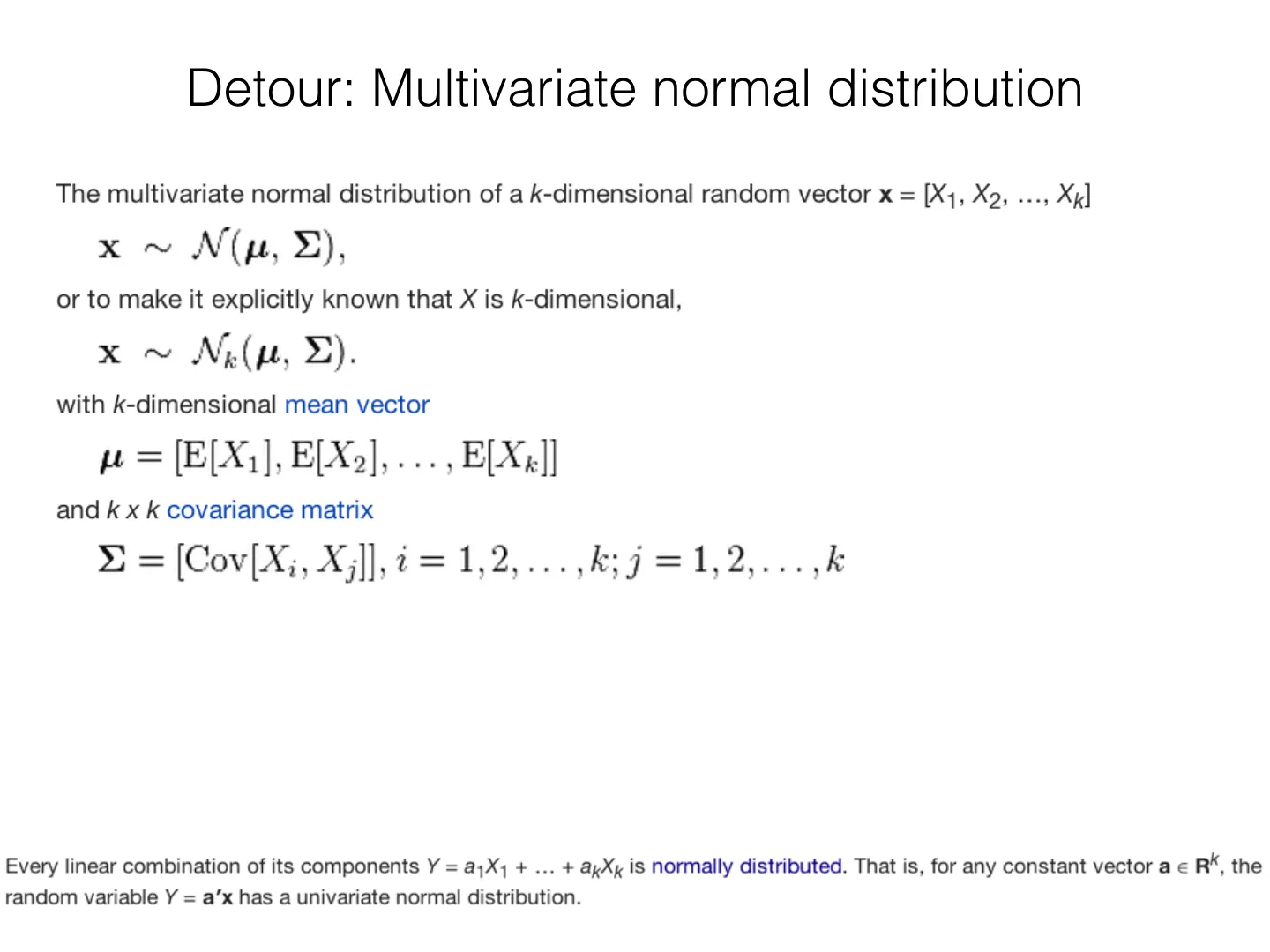
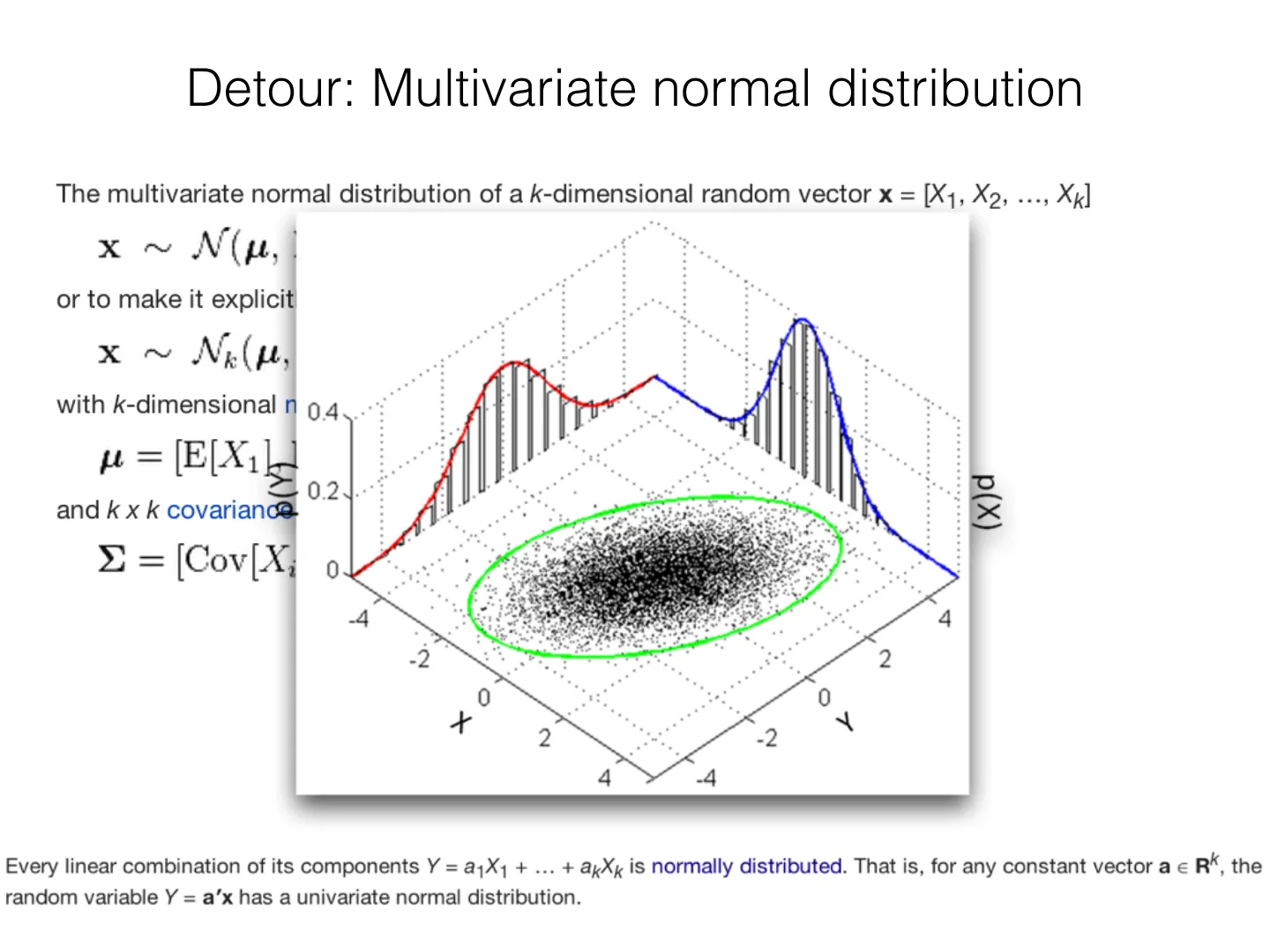
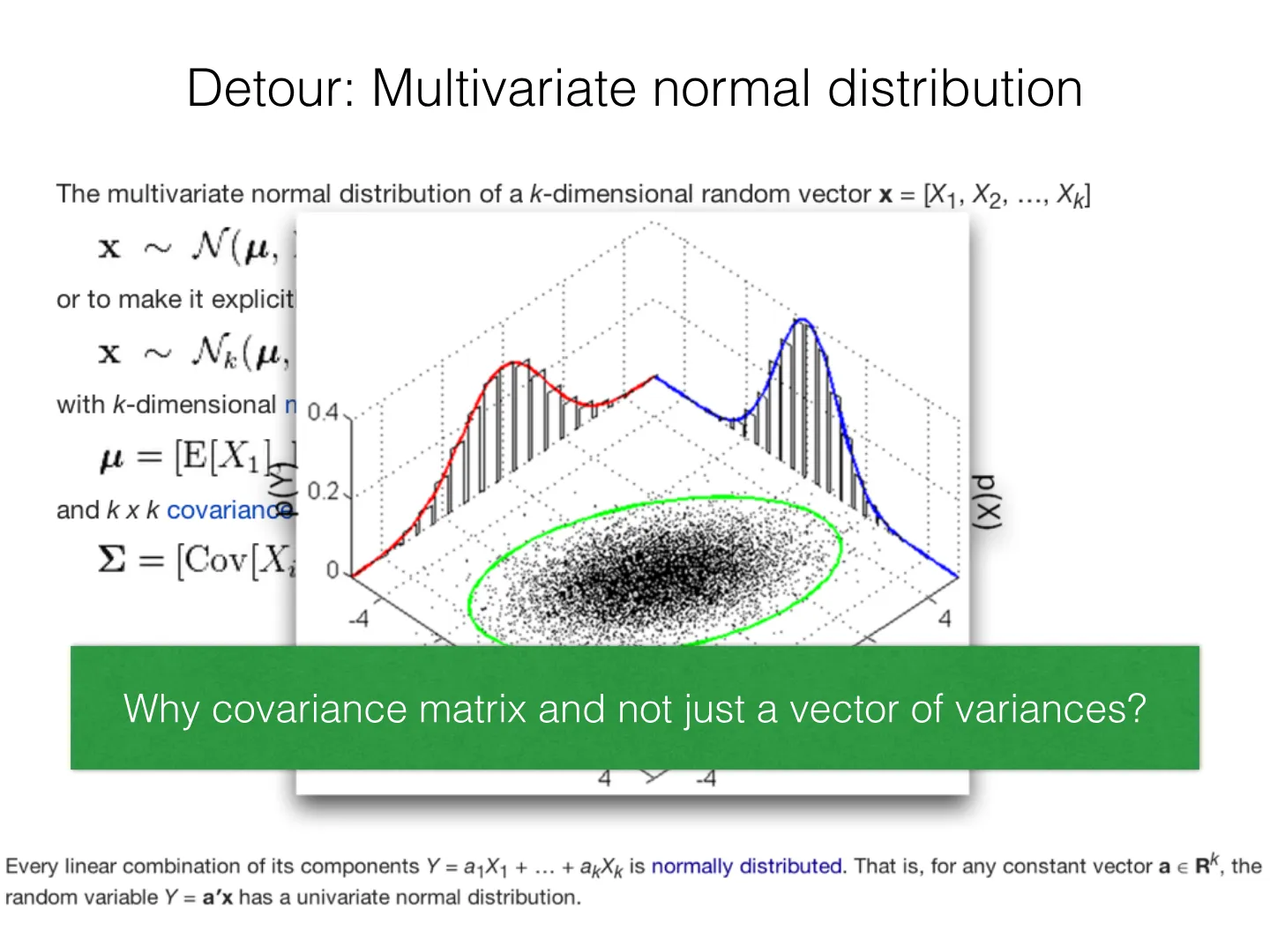
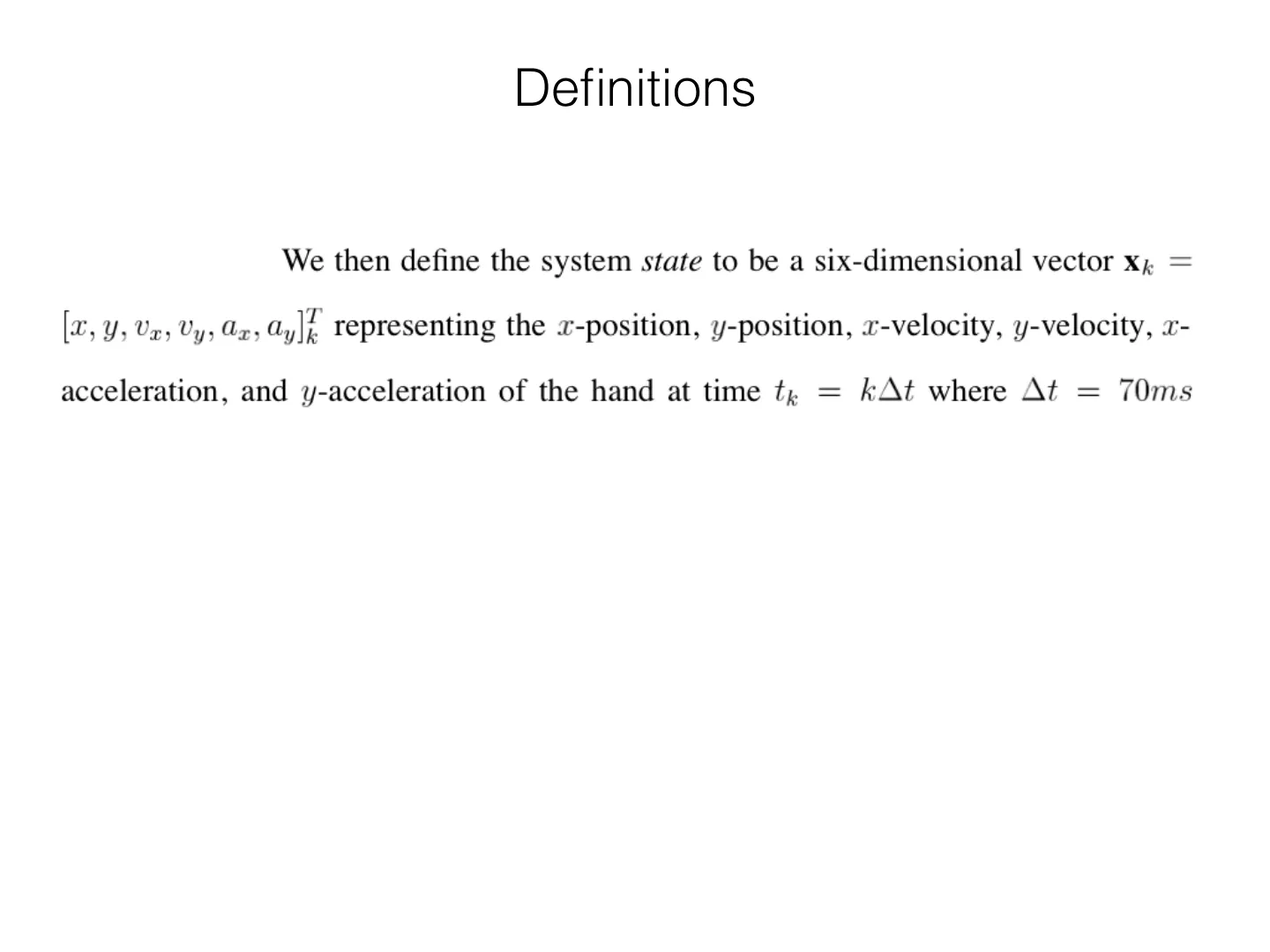
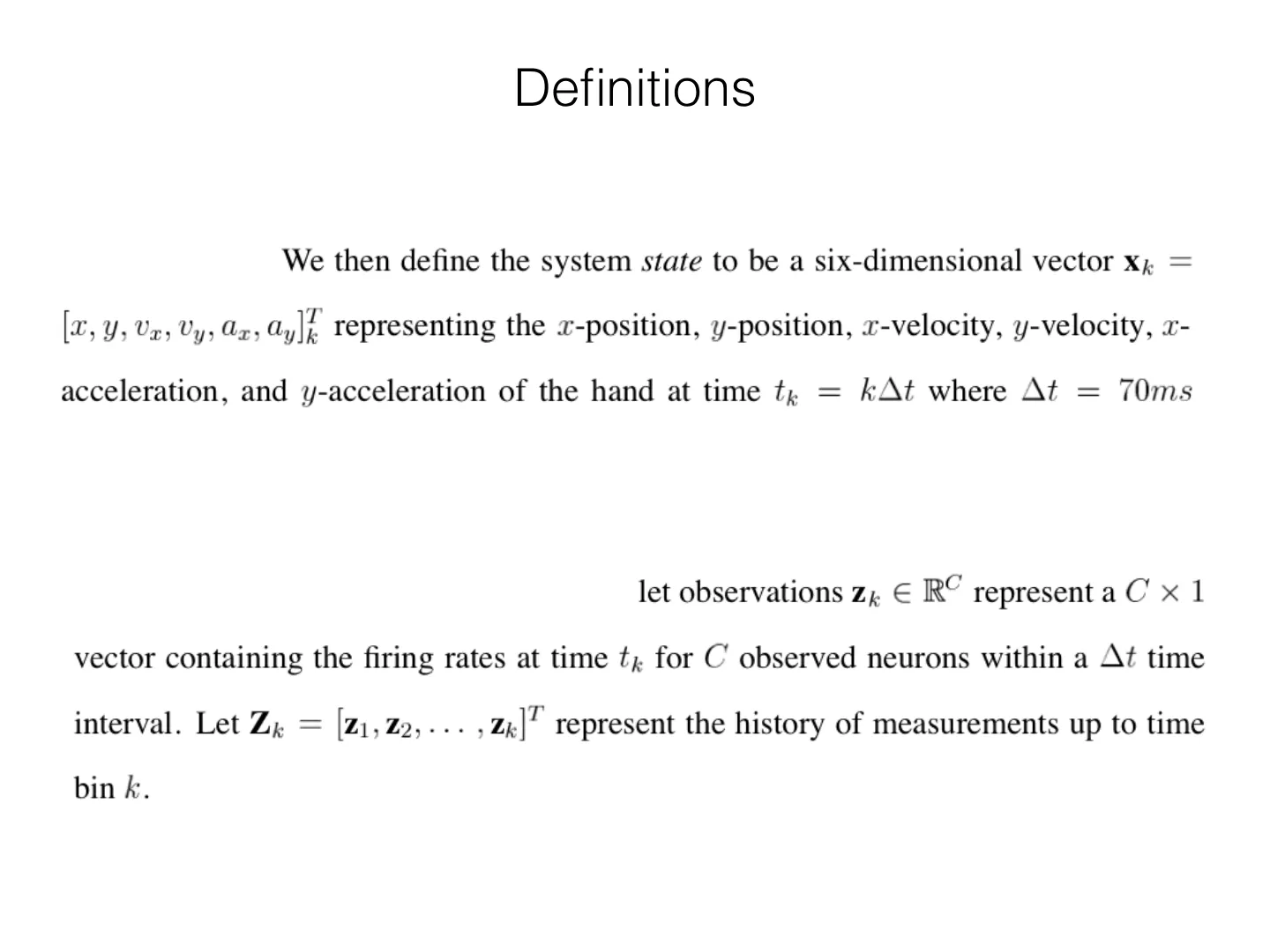
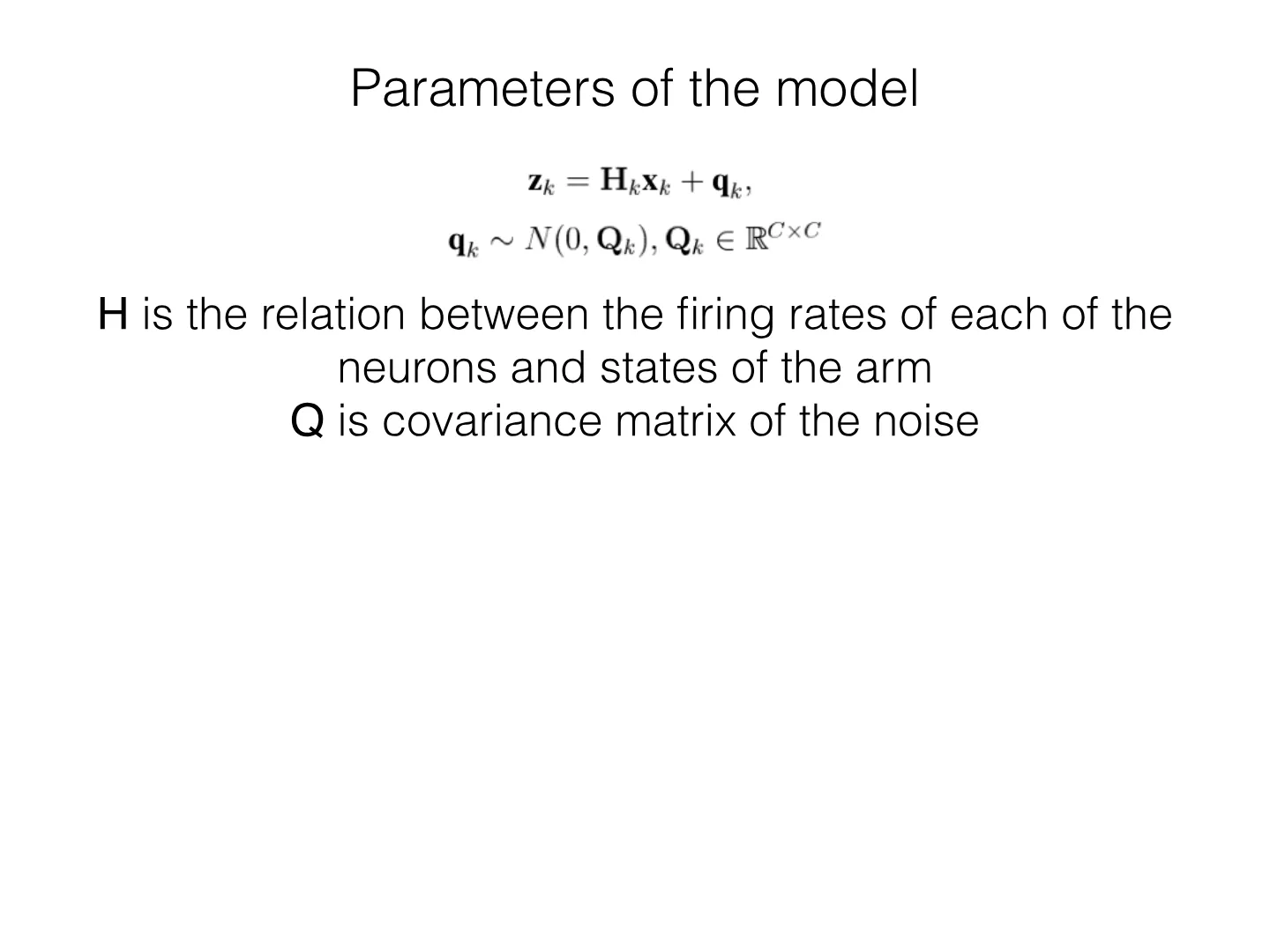
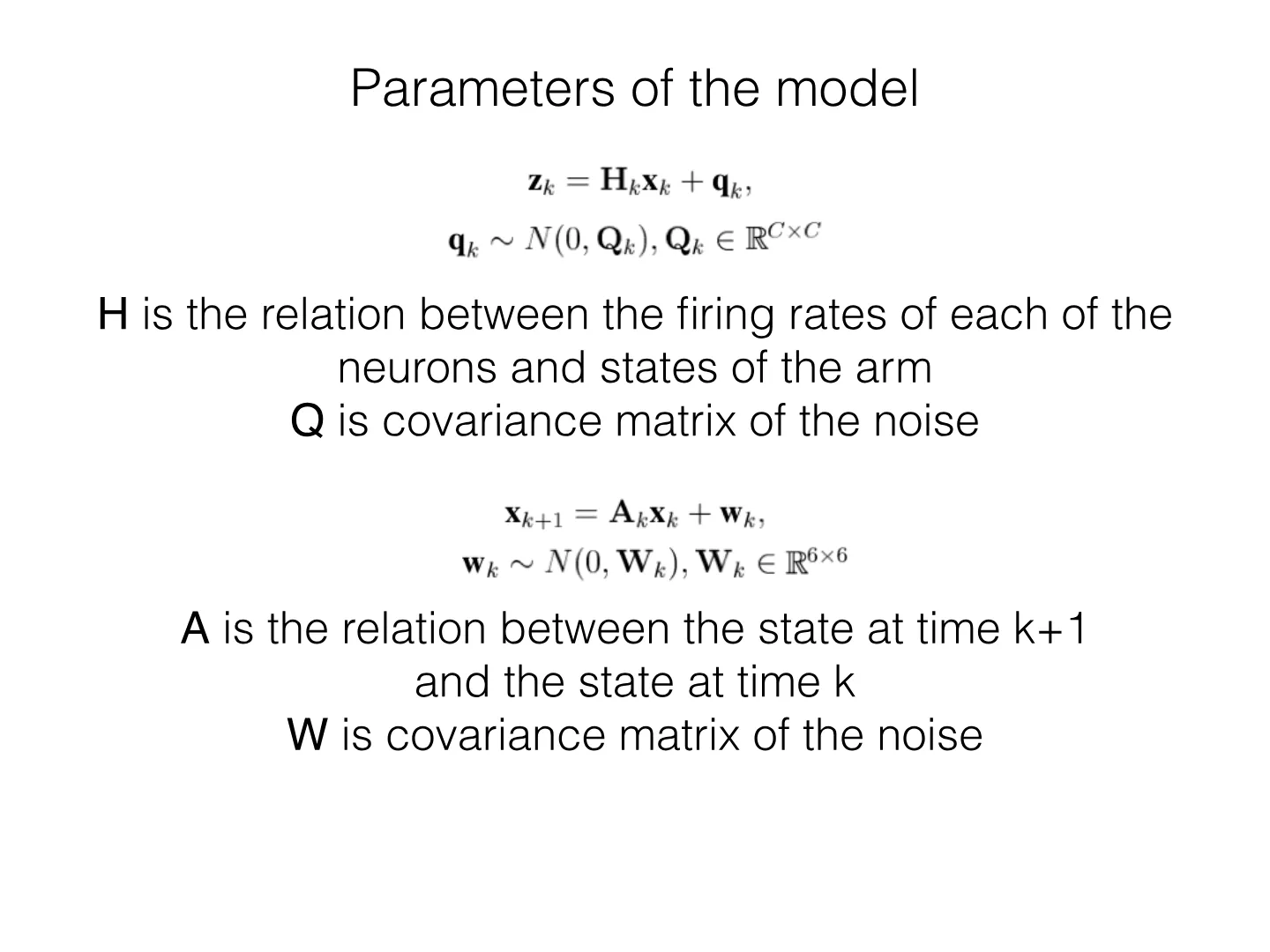
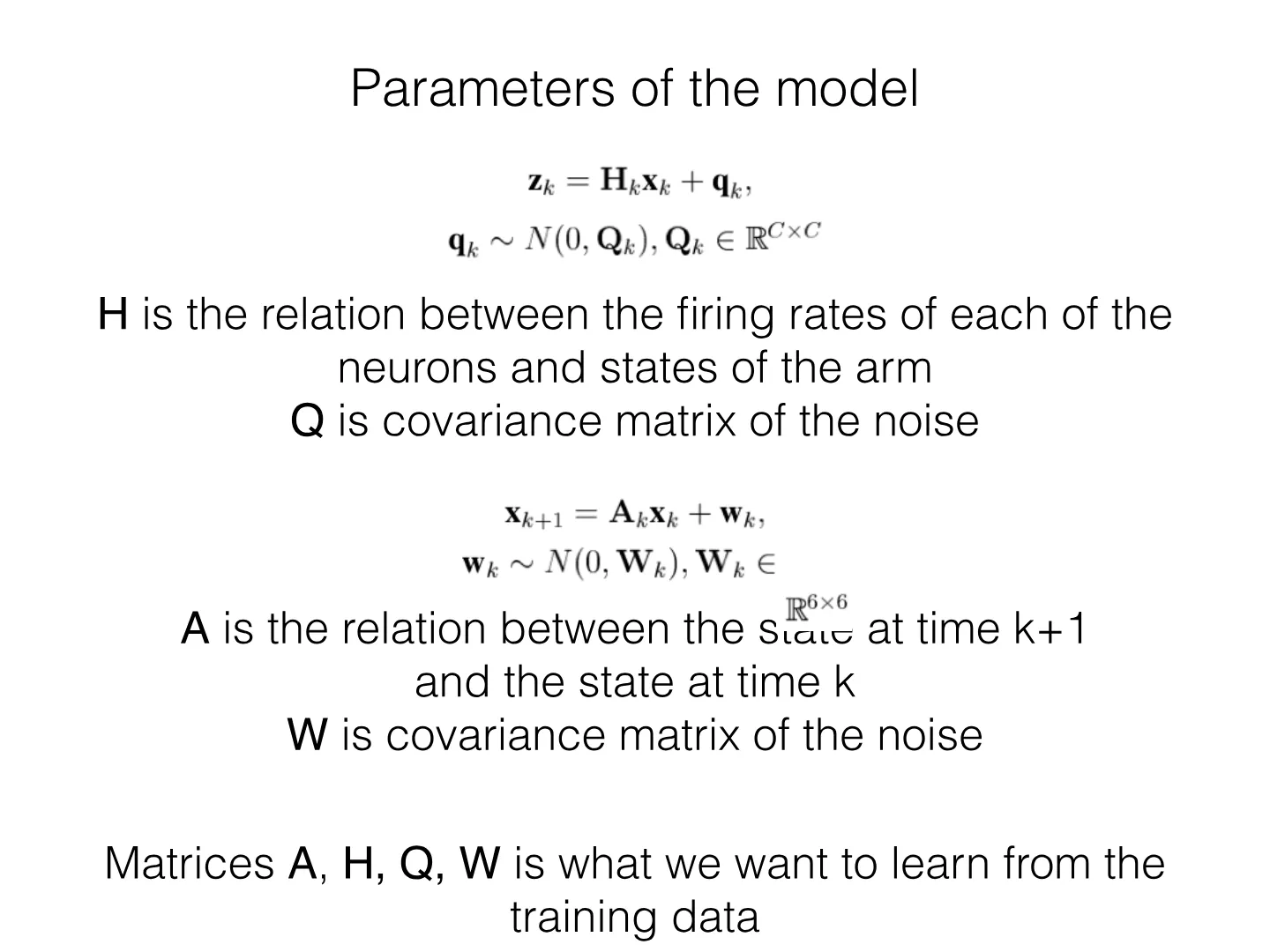
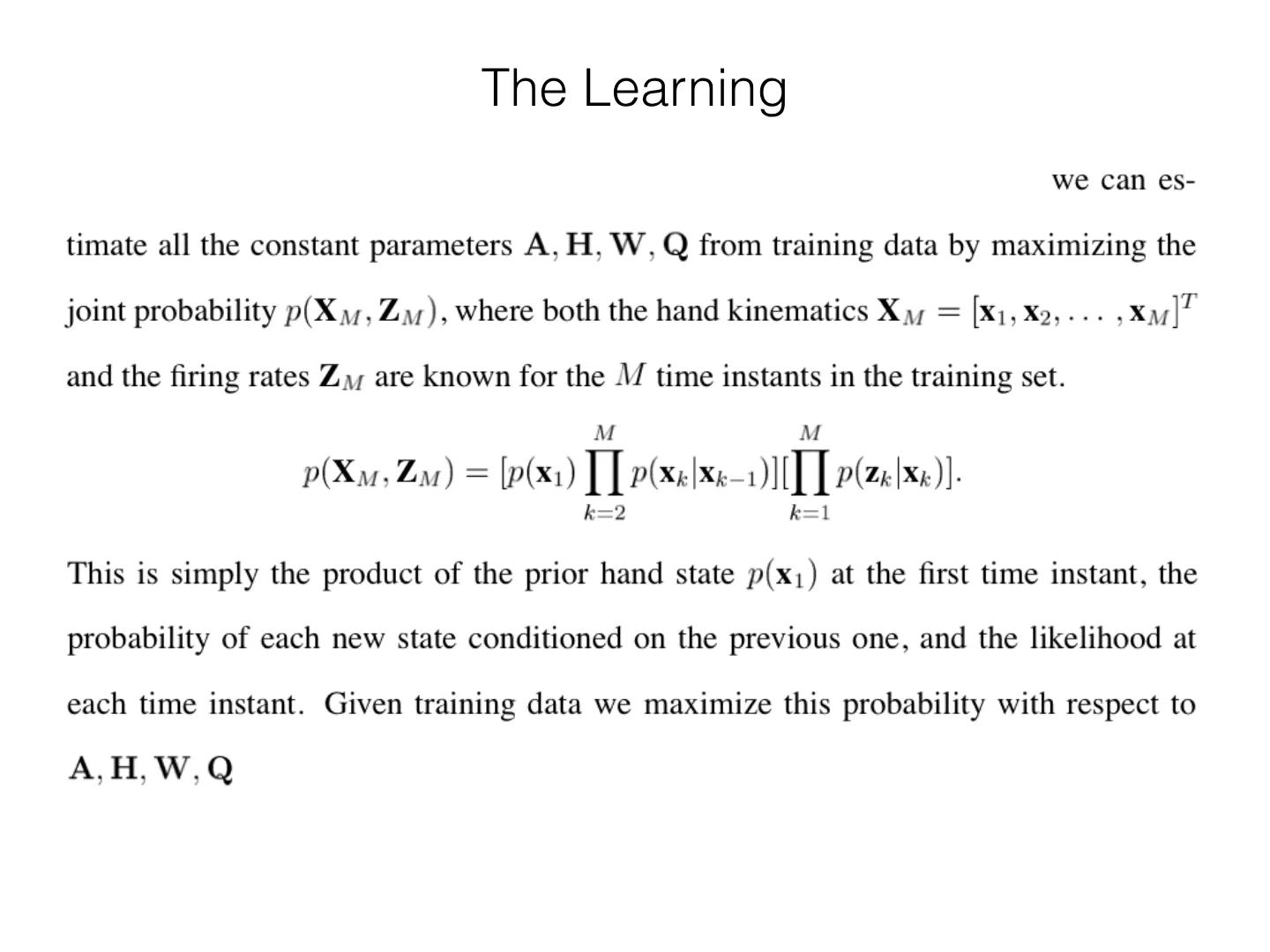
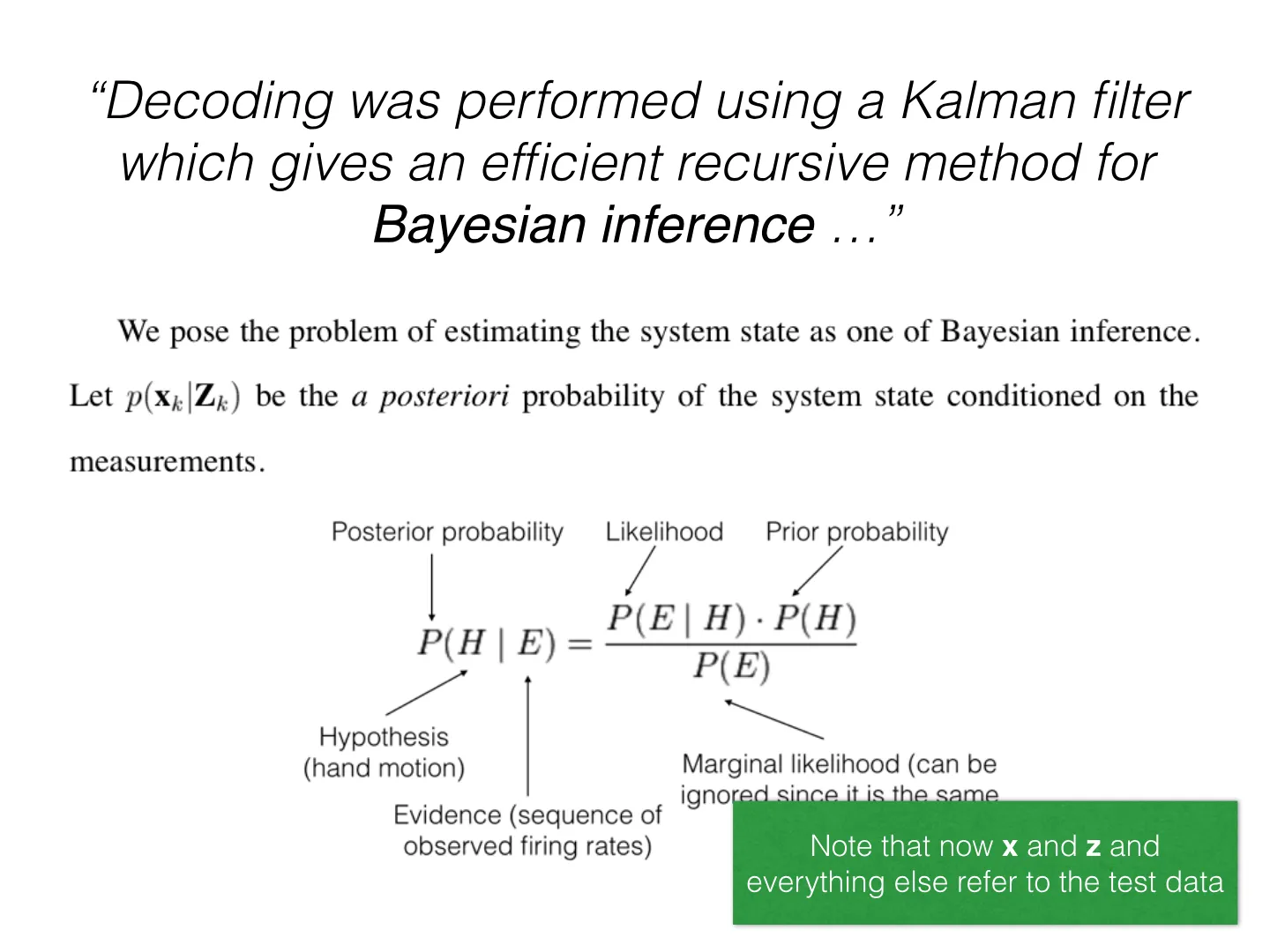
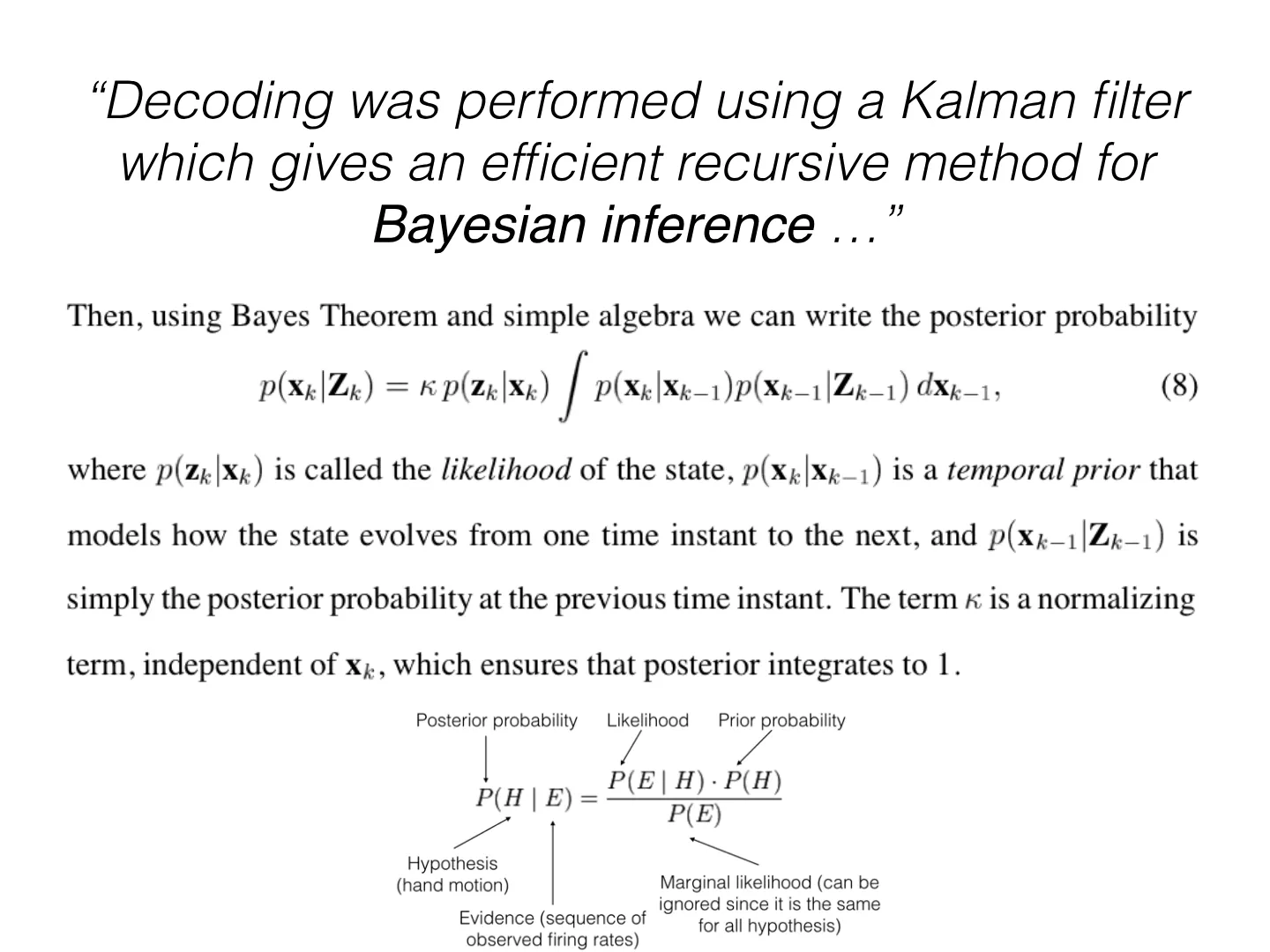
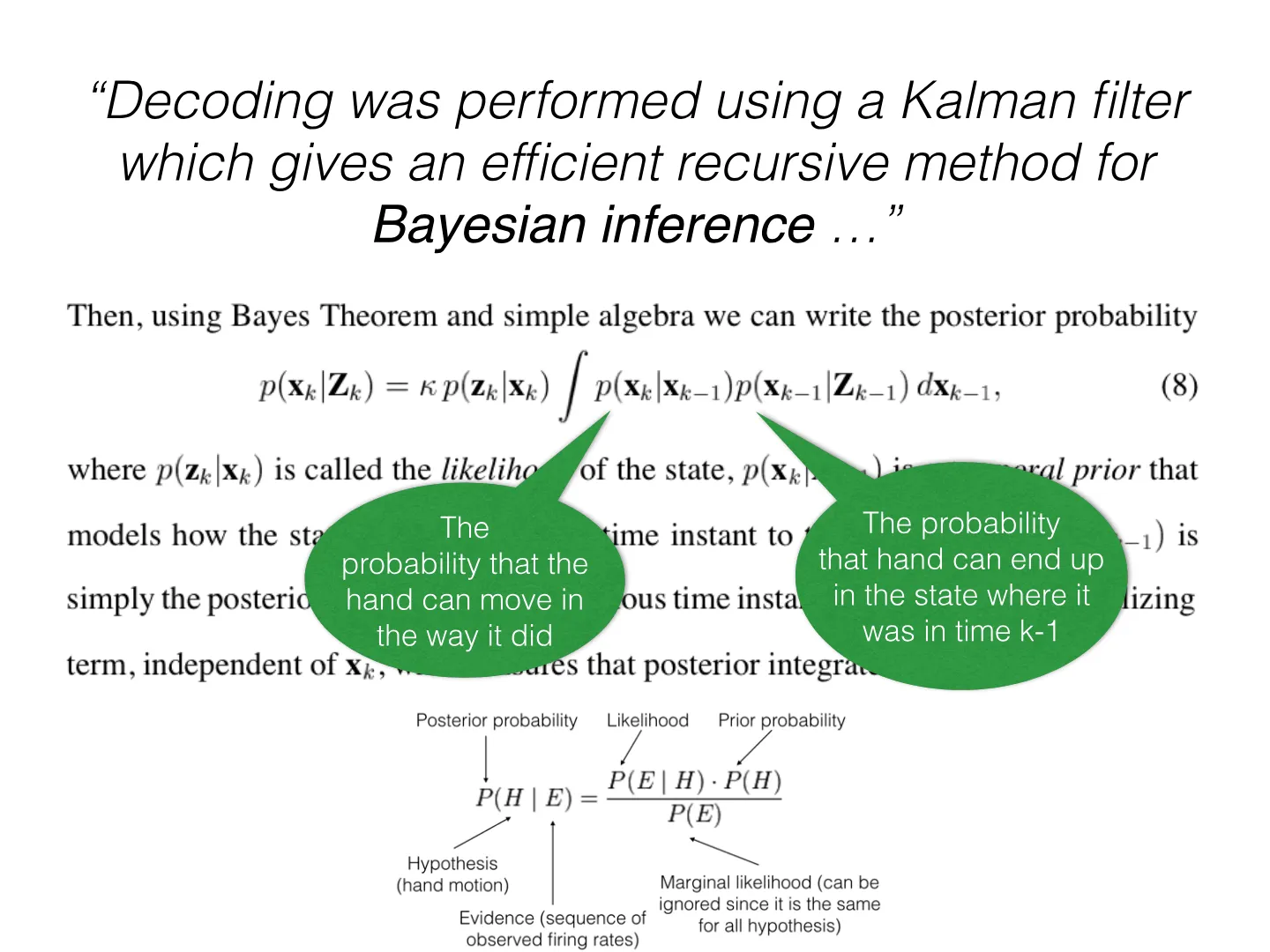
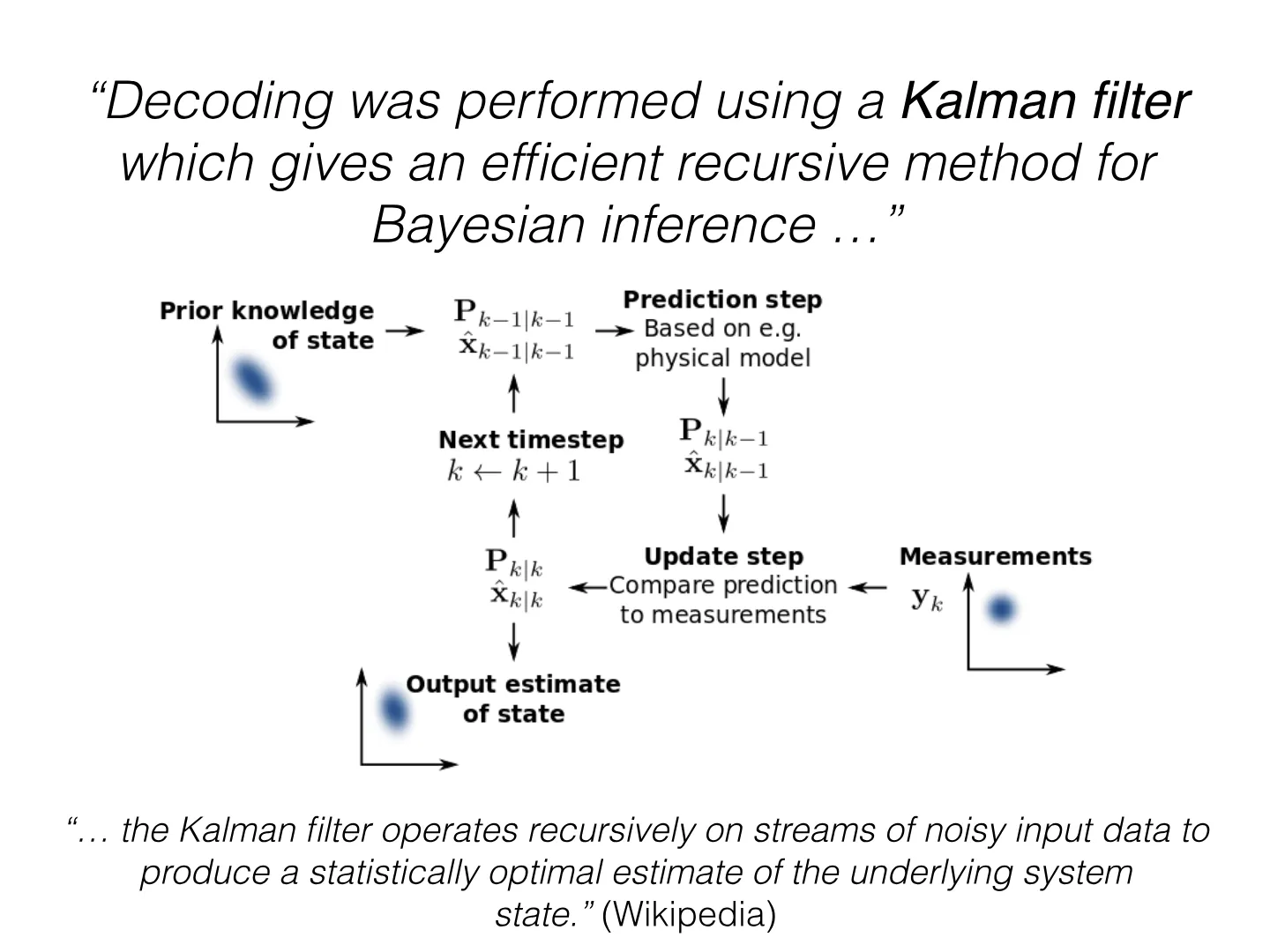
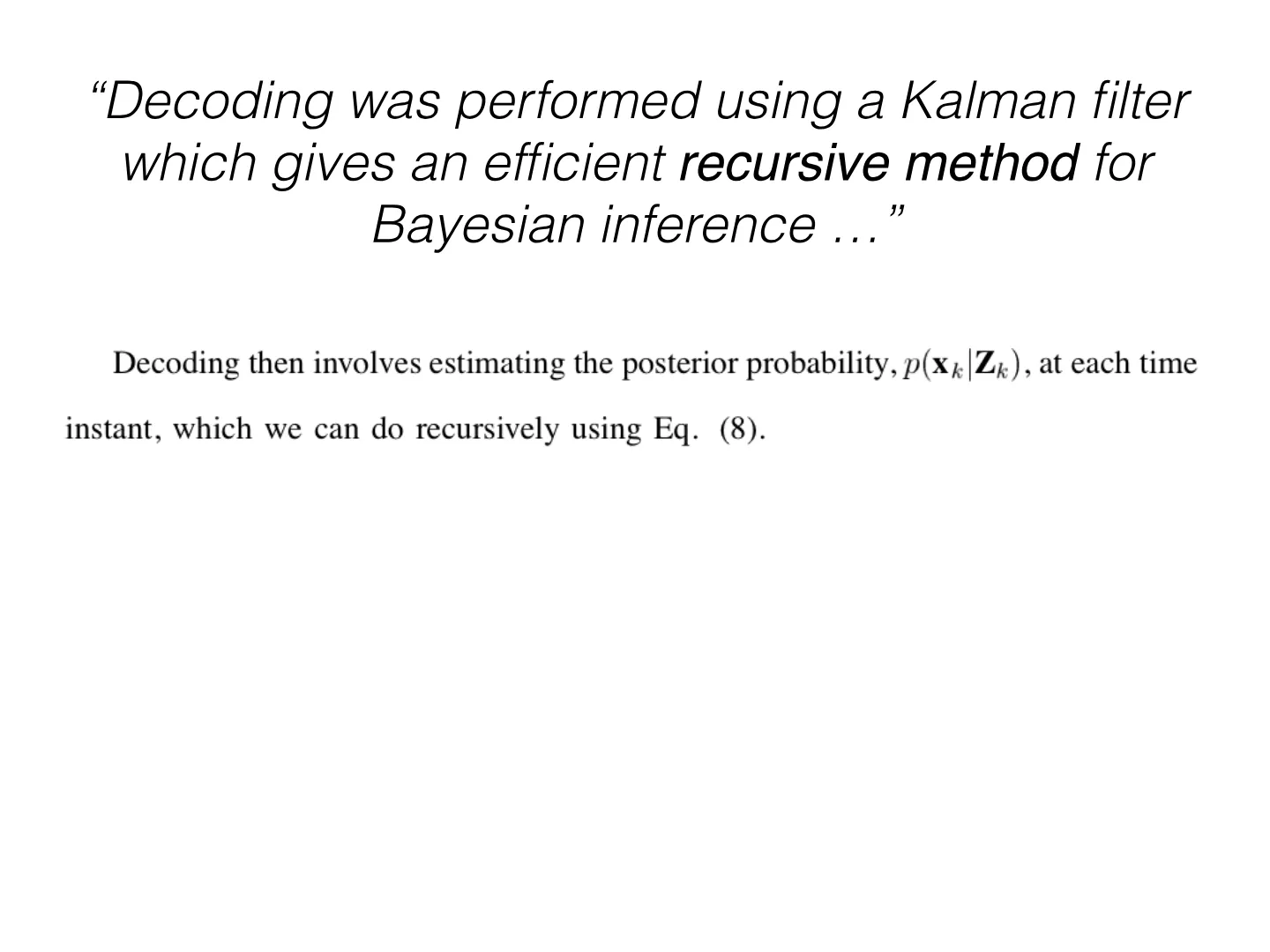
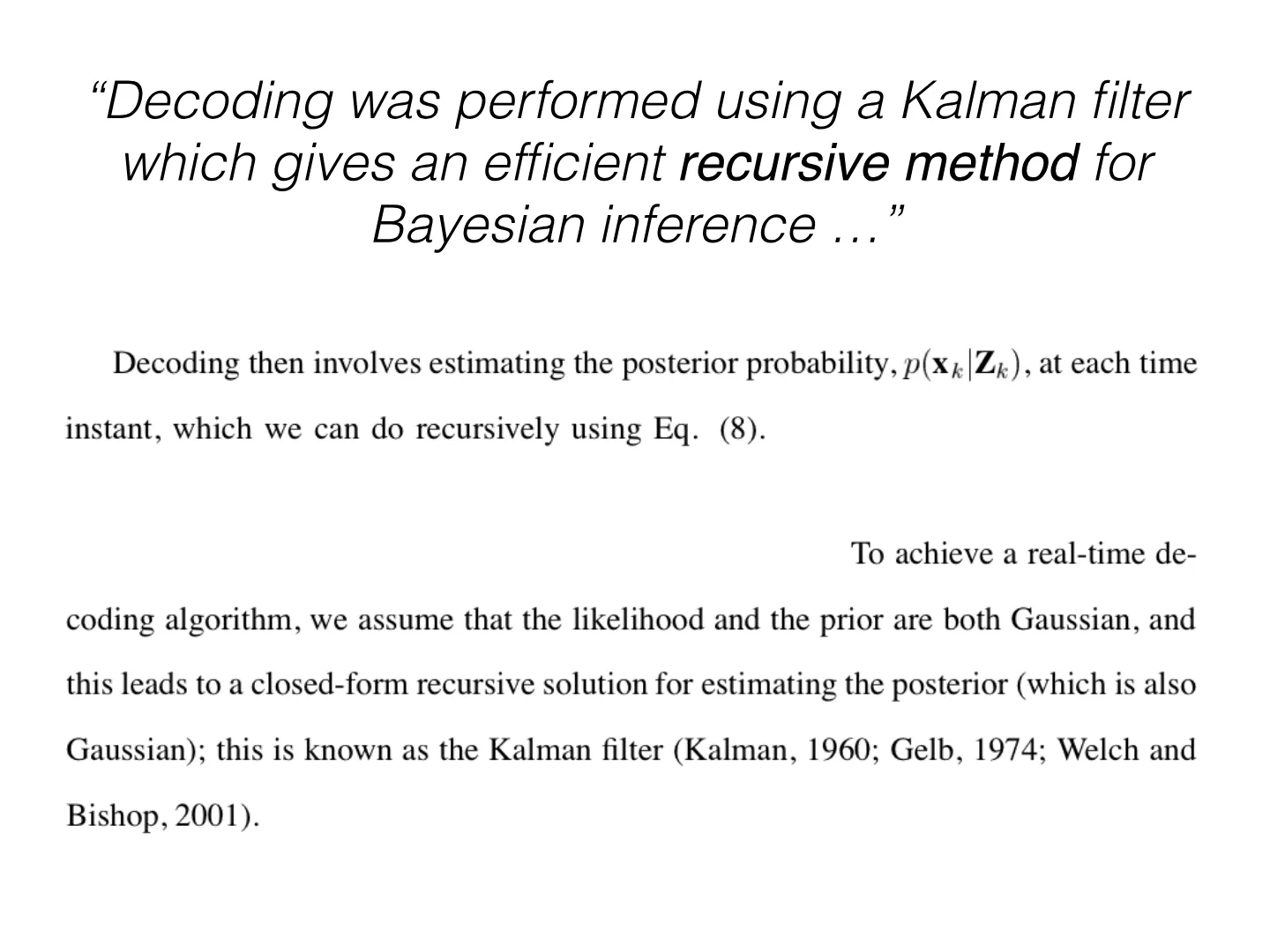
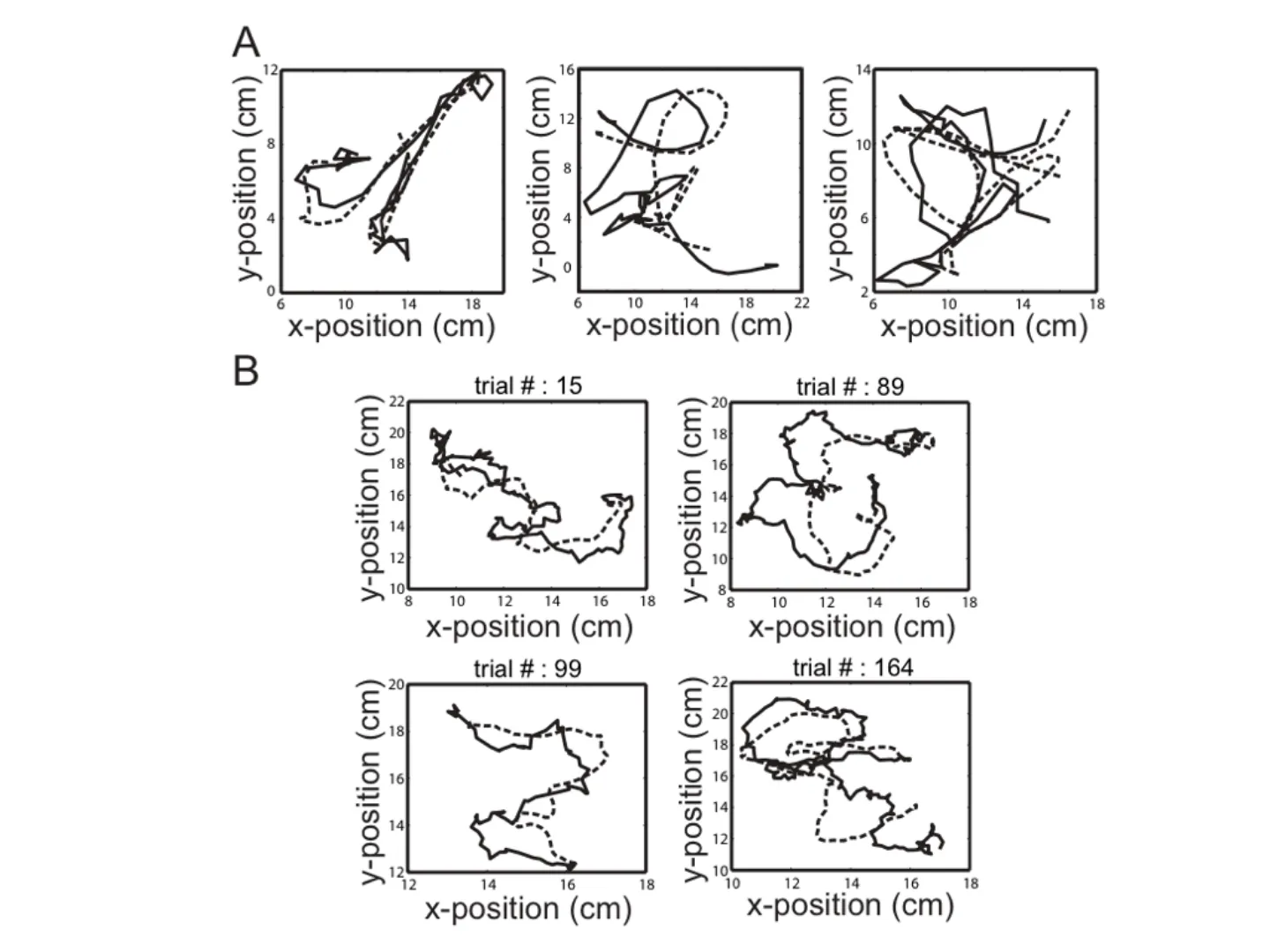
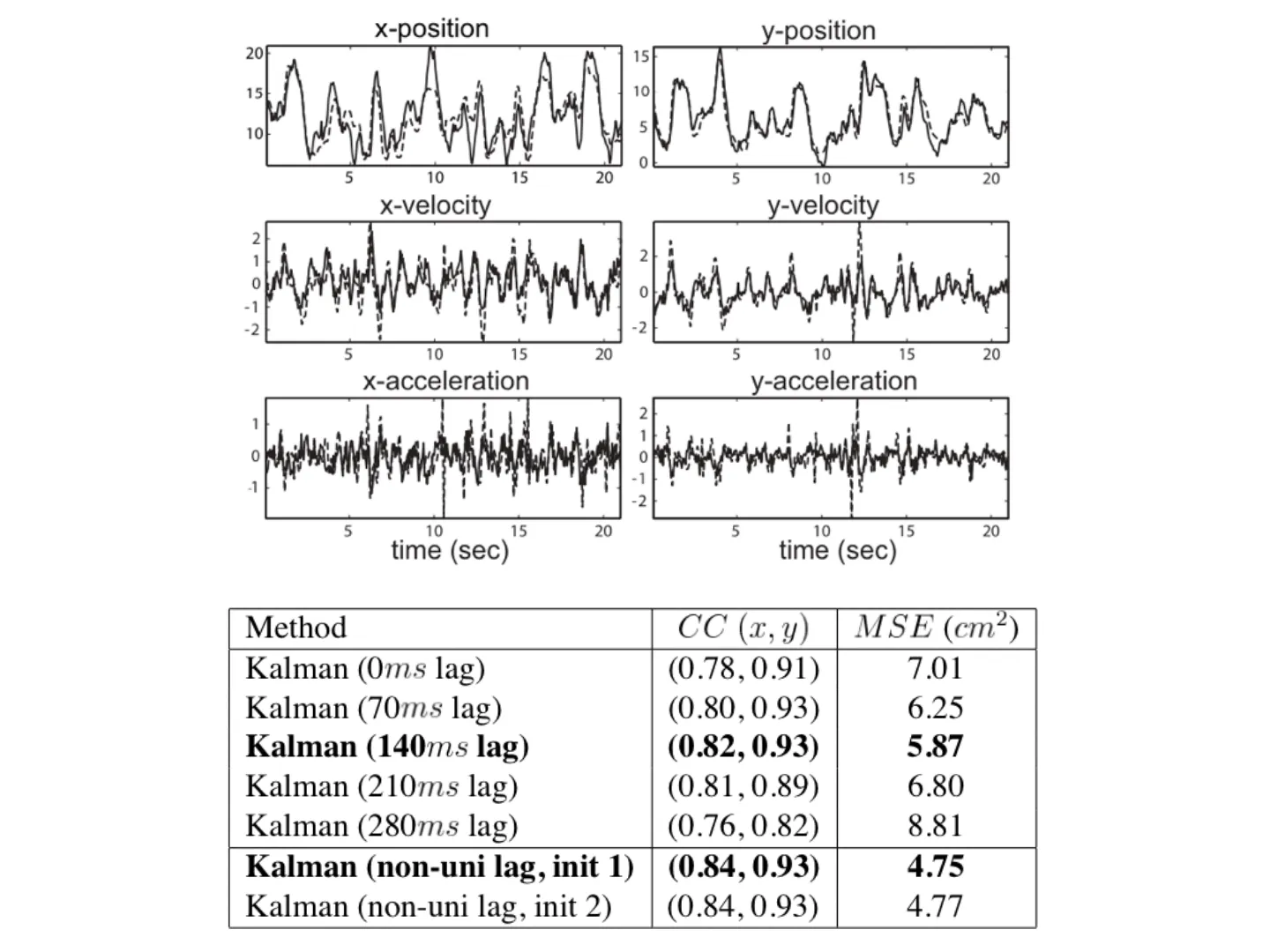
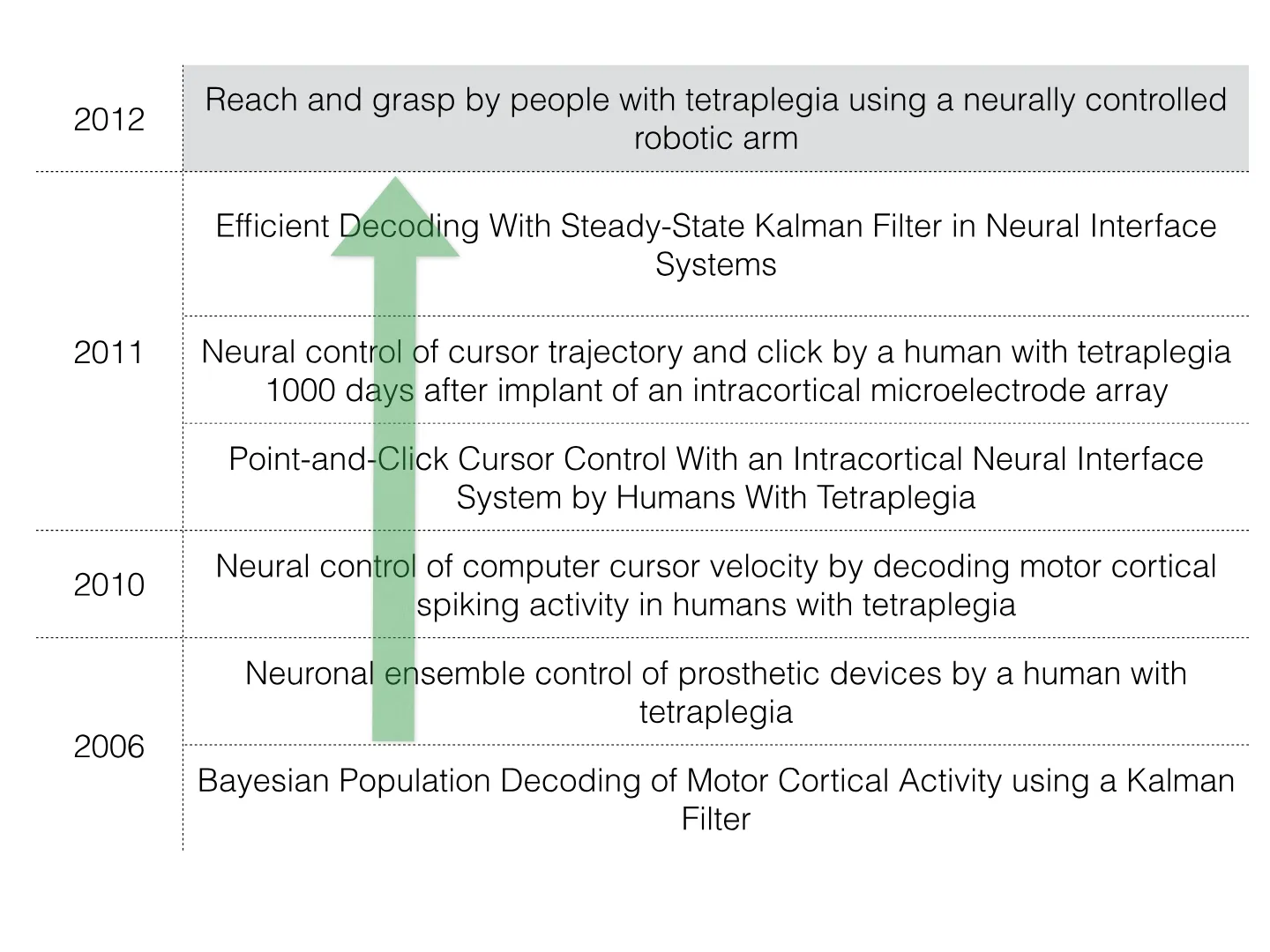
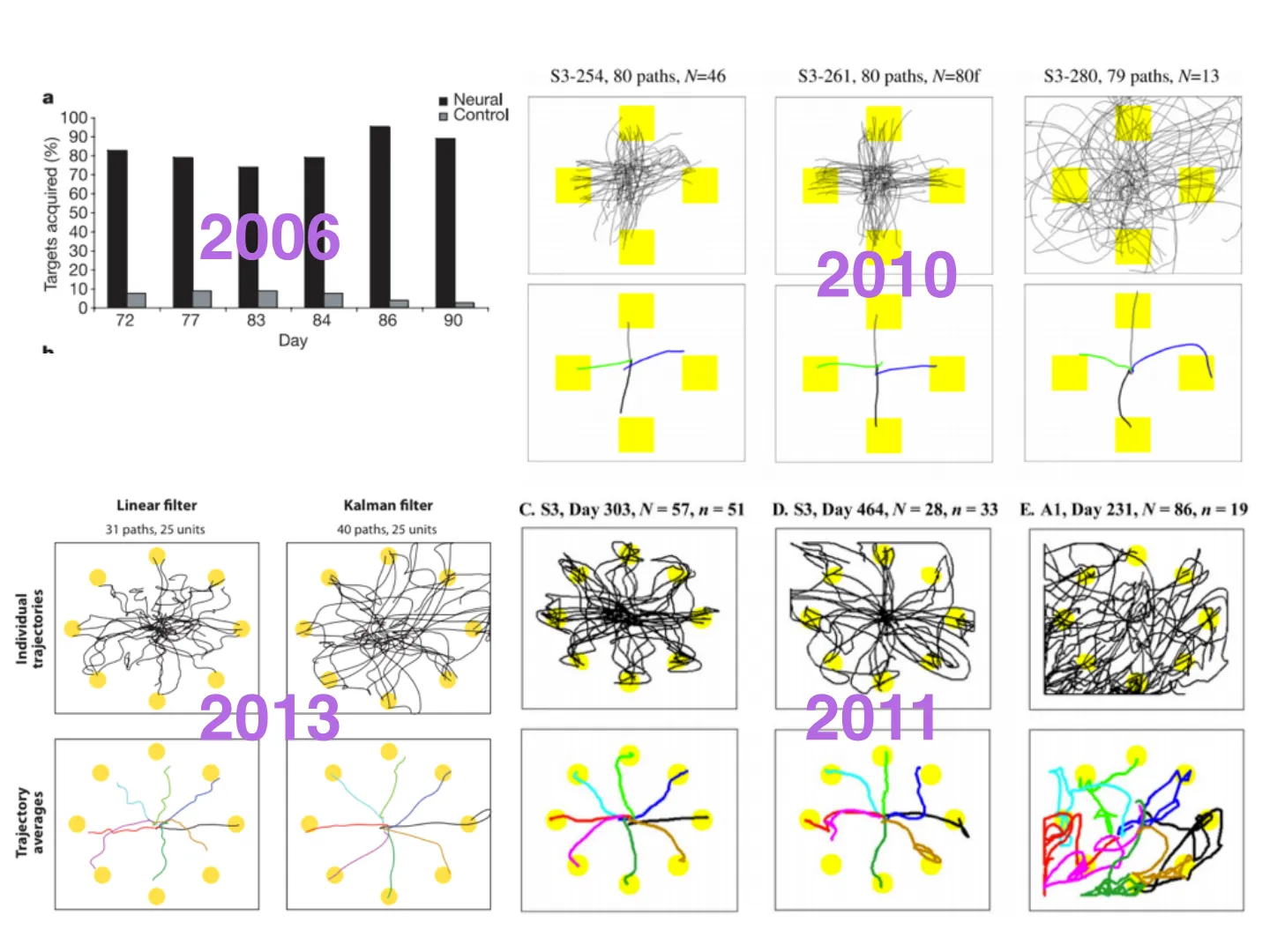
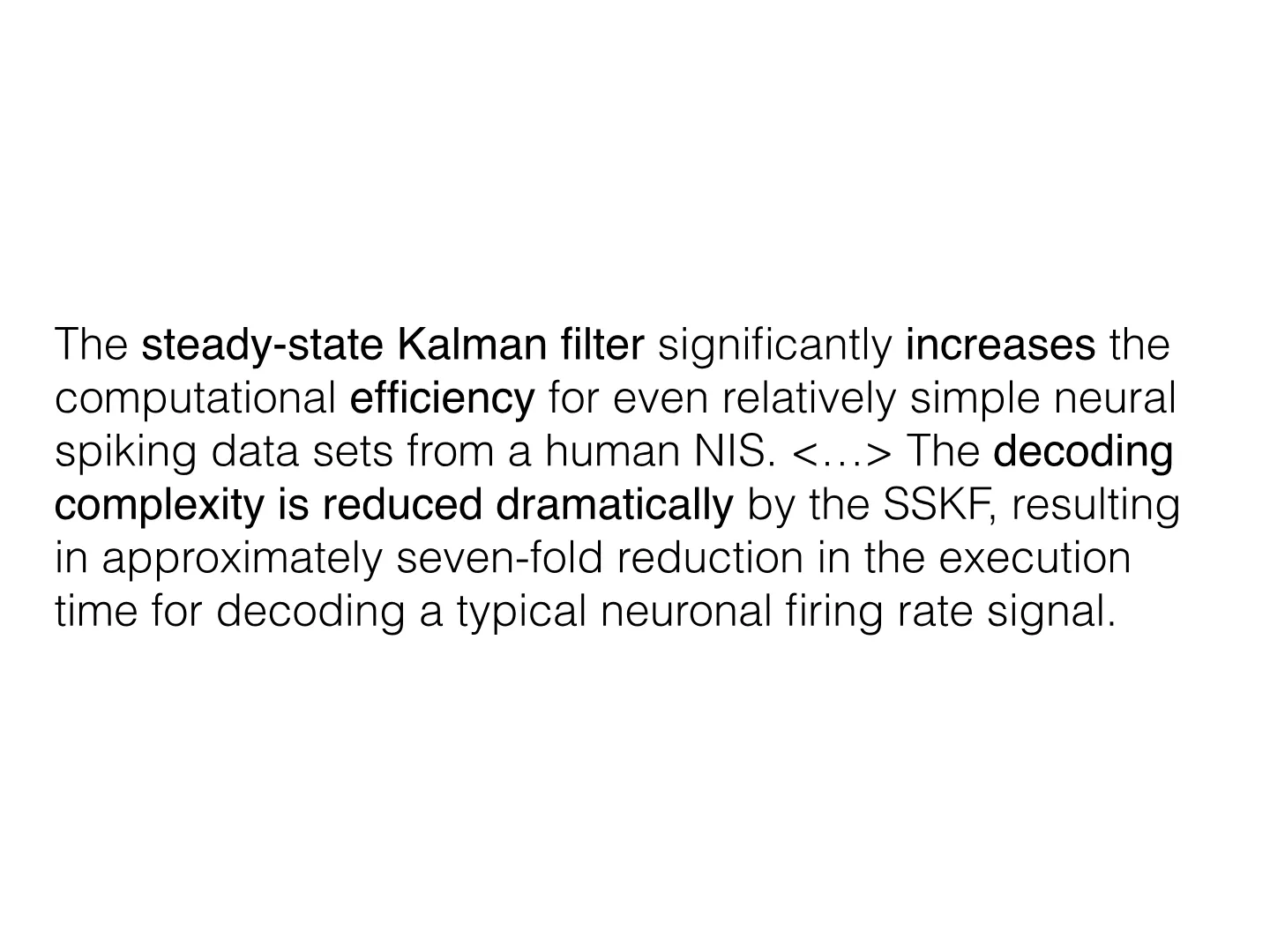
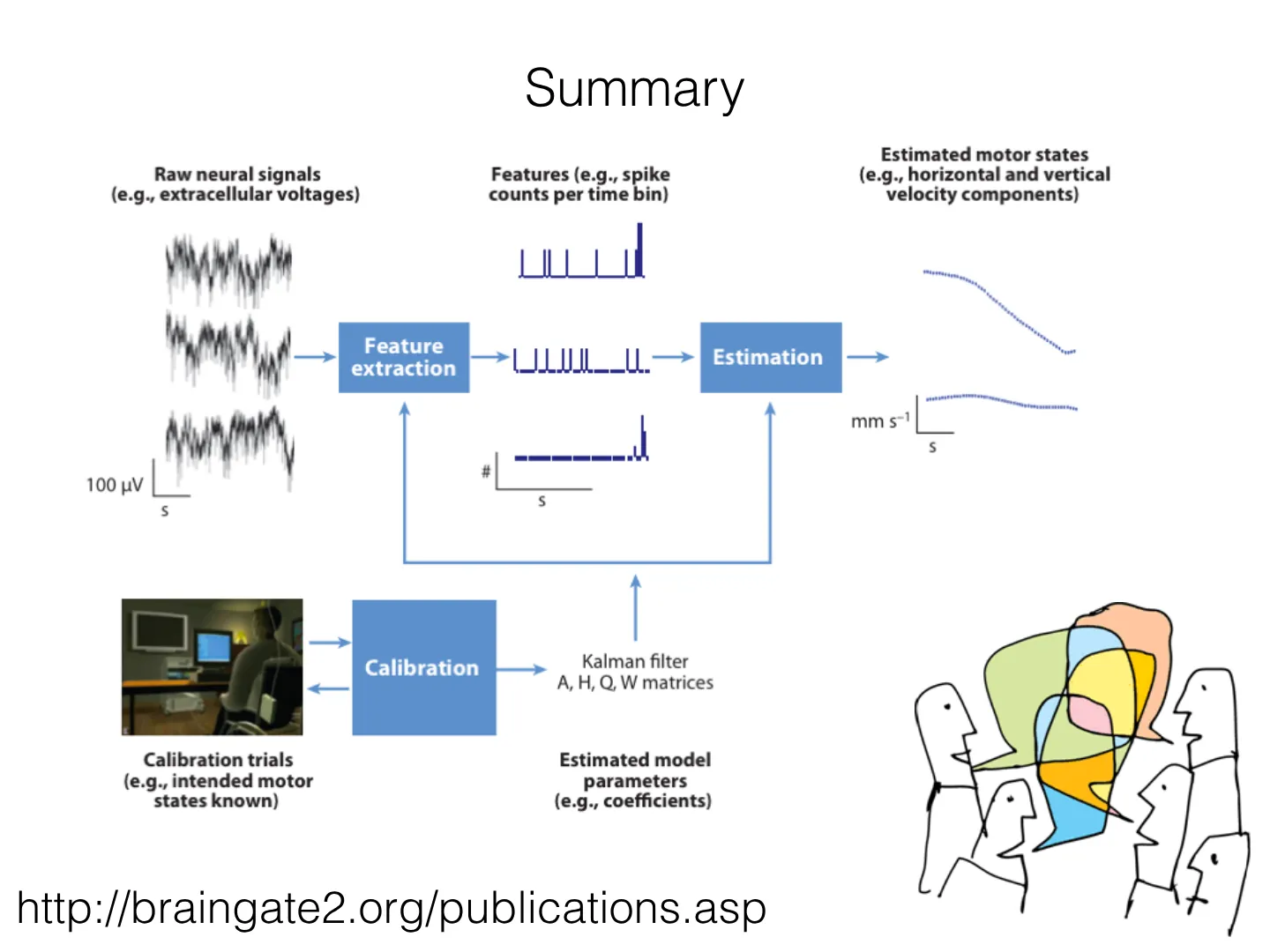
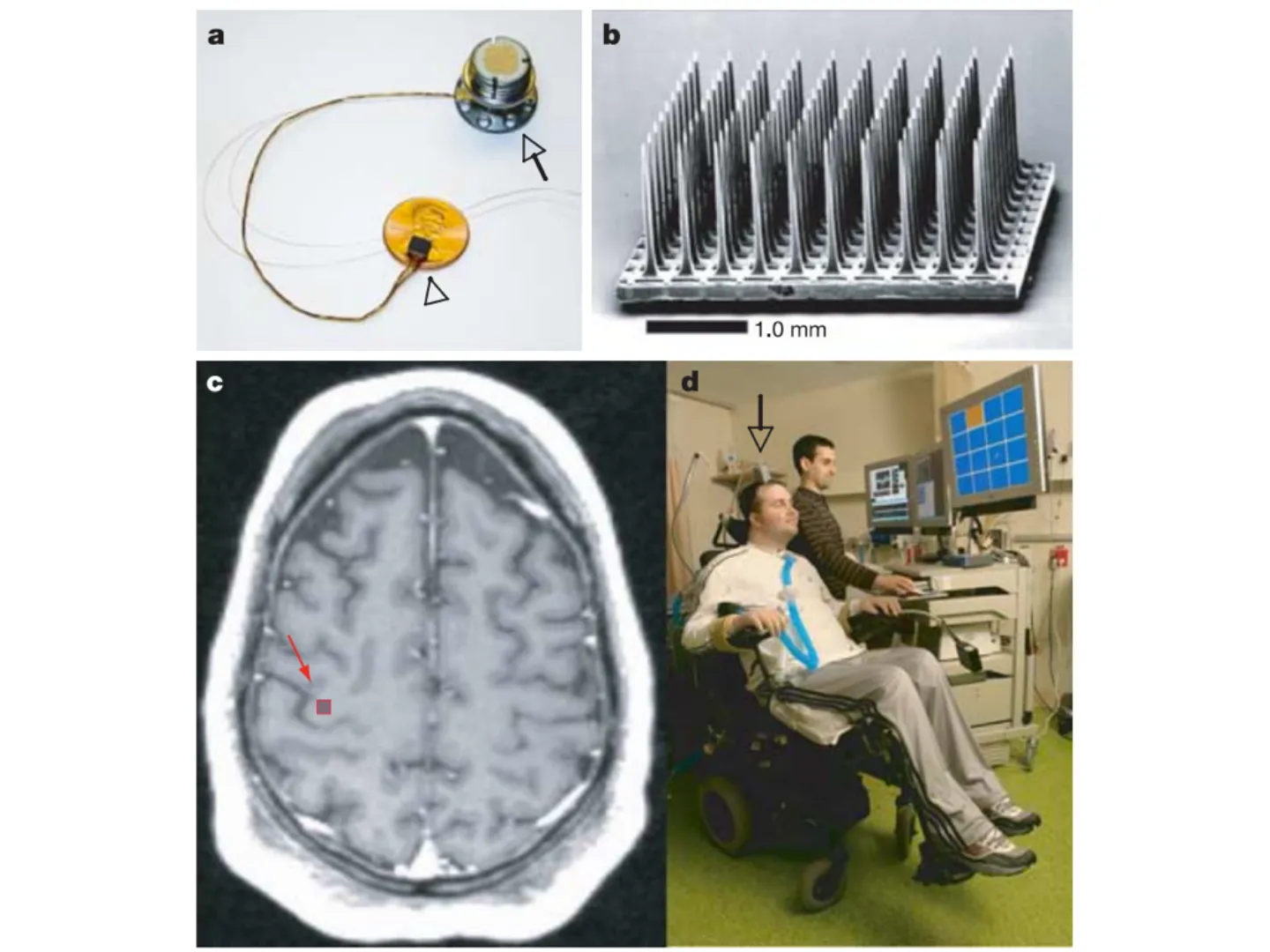
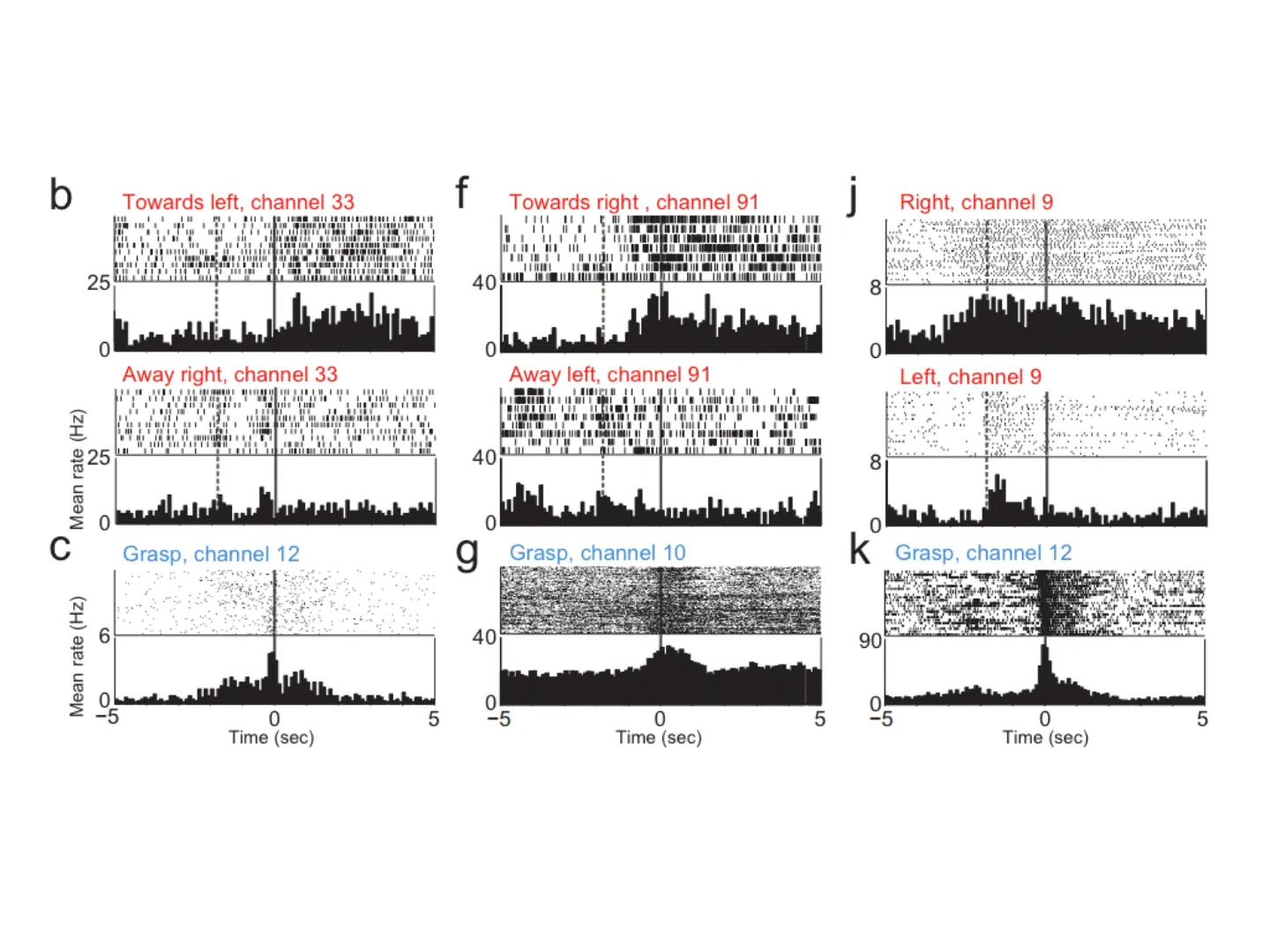
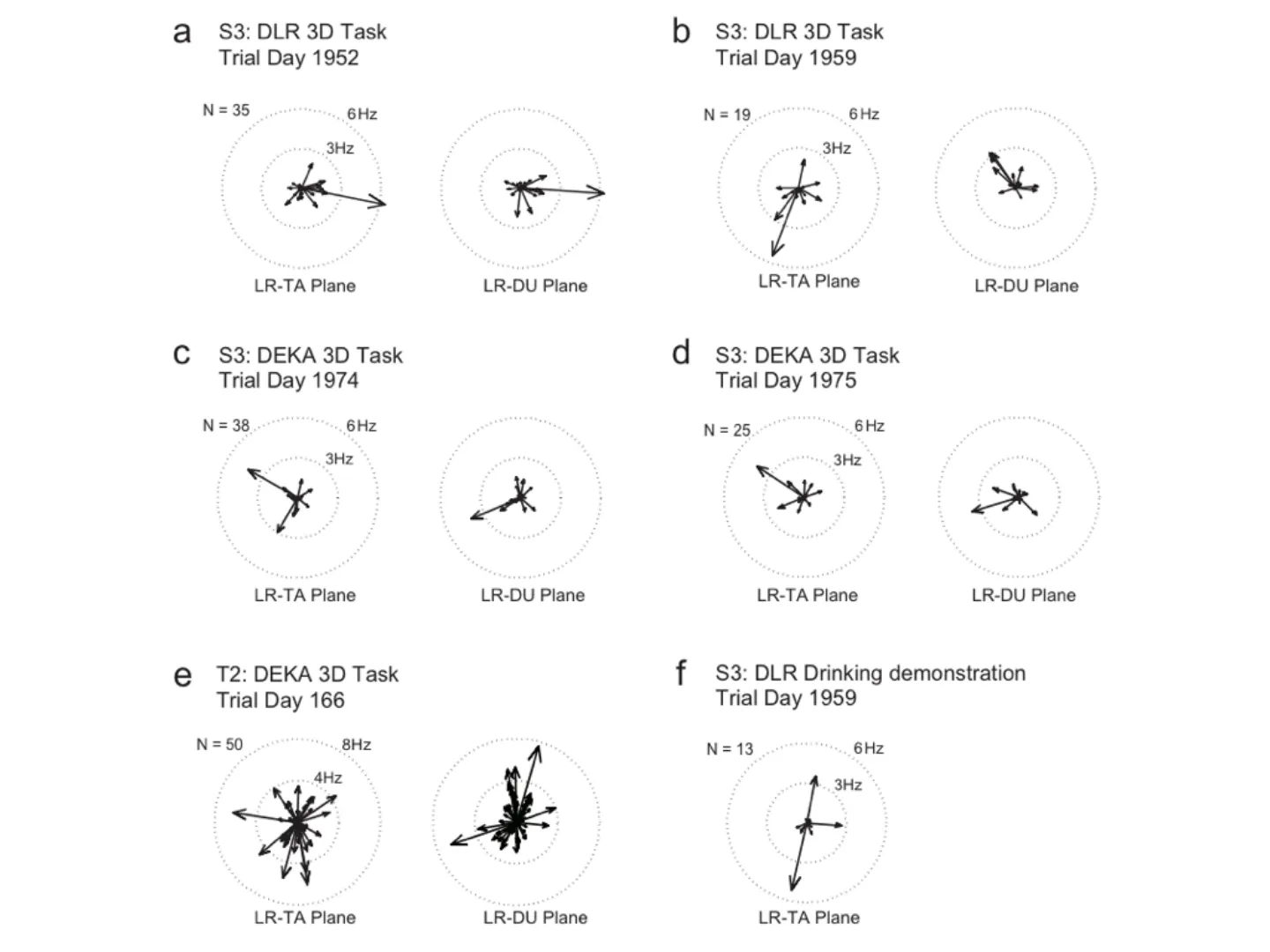
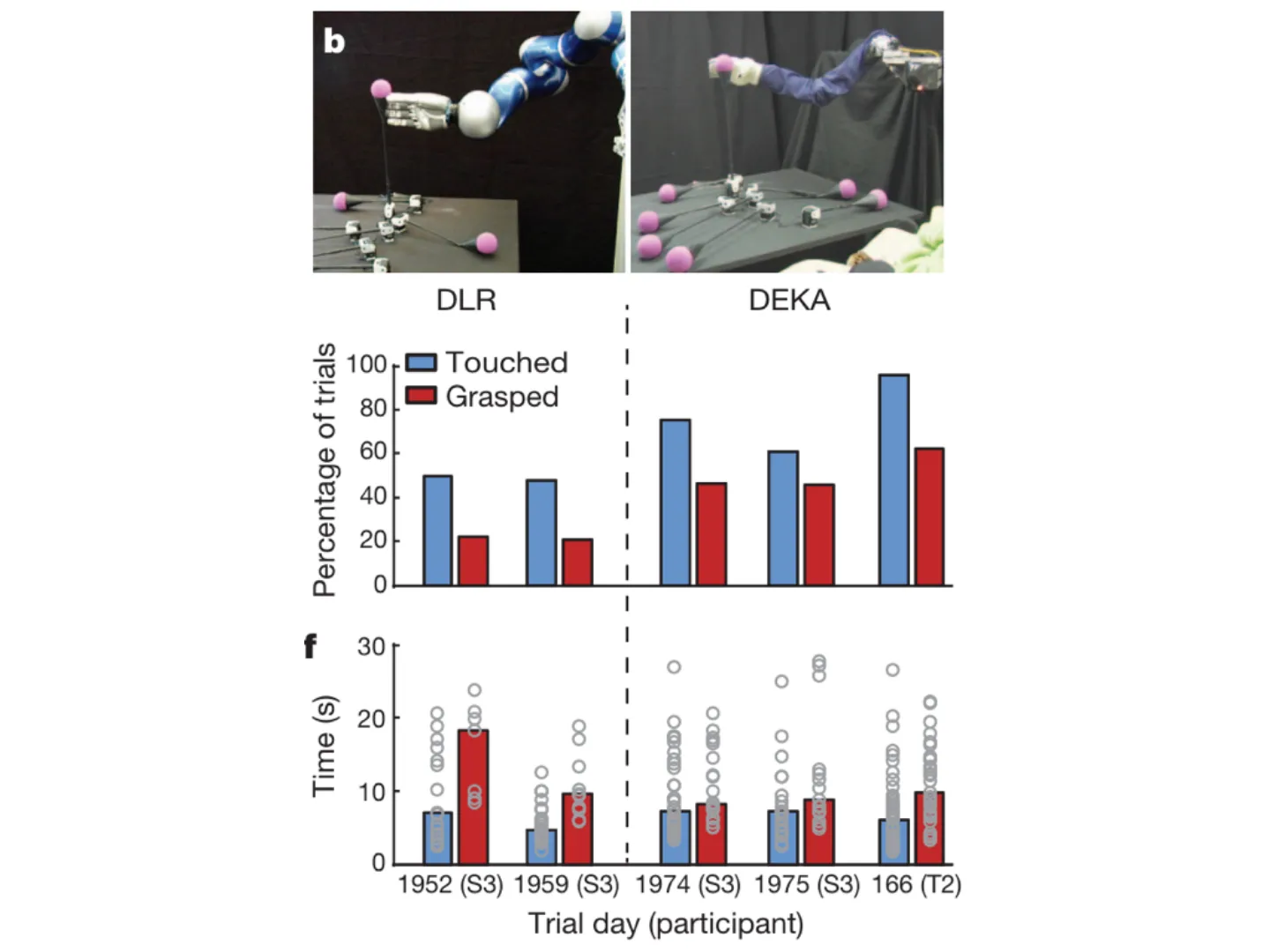
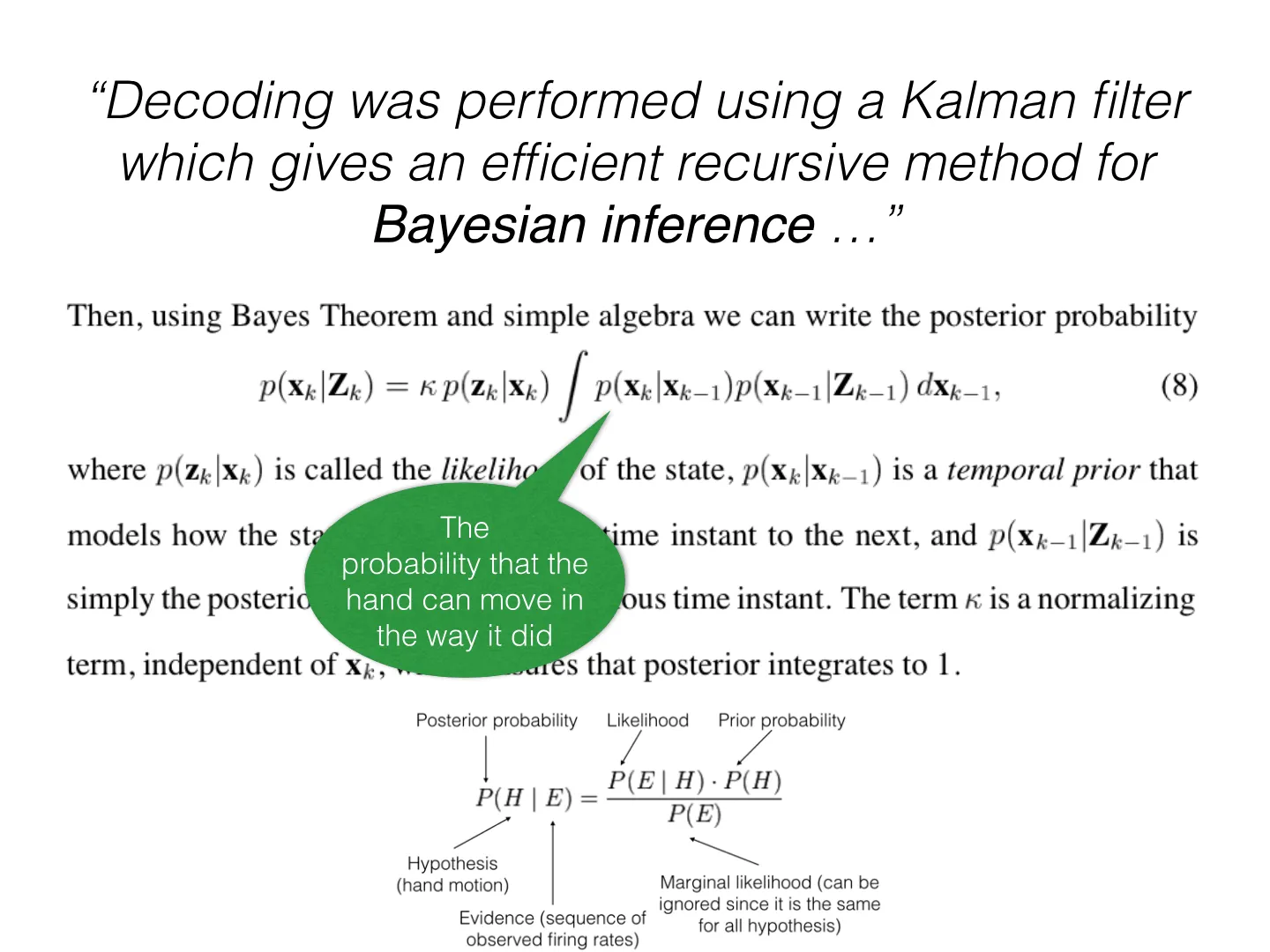
Slide 1 of 51: Reach and grasp by people with tetraplegia using a neurally controlled robotic arm Ilya Kuzovkin 11 April 2014, Tartu Leigh R. Hochberg et al. Nature, 17 May 2012 Paper overviewSlide 2 of 51Slide 3 of 51Slide 4 of 51Slide 5 of 51Slide 6 of 51Slide 7 of 51: etc…Slide 8 of 51: etc… How it works?Slide 9 of 51: 2012 Reach and grasp by people with tetraplegia using a neurally controlled robotic arm 2011 Efficient Decoding With Steady-State Kalman Filter in Neural Interface Systems Neural control of cursor trajectory and click by a human with tetraplegia 1000 days after implant of an…Slide 10 of 51: 2012 Reach and grasp by people with tetraplegia using a neurally controlled robotic arm 2011 Efficient Decoding With Steady-State Kalman Filter in Neural Interface Systems Neural control of cursor trajectory and click by a human with tetraplegia 1000 days after implant of an…Slide 11 of 51: “… uses Bayesian inference techniques to estimate hand motion from the firing rates of multiple neurons.” “Decoding was performed using a Kalman filter which gives an efficient recursive method for Bayesian inference …”Slide 12 of 51: “… uses Bayesian inference techniques to estimate hand motion from the firing rates of multiple neurons.”Slide 13 of 51: “… uses Bayesian inference techniques to estimate hand motion from the firing rates of multiple neurons.”Slide 14 of 51: “… uses Bayesian inference techniques to estimate hand motion from the firing rates of multiple neurons.” Hypothesis (hand motion) Evidence (sequence of observed firing rates) Posterior probability Prior probability Likelihood Marginal likelihood (can be ignored since it is the…Slide 15 of 51: “… uses Bayesian inference techniques to estimate hand motion from the firing rates of multiple neurons.”Slide 16 of 51: “… uses Bayesian inference techniques to estimate hand motion from the firing rates of multiple neurons.” “ Likelihood term models the probability of firing rates given a particular hand motion”Slide 17 of 51: “… uses Bayesian inference techniques to estimate hand motion from the firing rates of multiple neurons.” “ Likelihood term models the probability of firing rates given a particular hand motion” “ linear Gaussian model could be used to approximate this likelihood and could be…Slide 18 of 51: “… uses Bayesian inference techniques to estimate hand motion from the firing rates of multiple neurons.” “ Likelihood term models the probability of firing rates given a particular hand motion” “ linear Gaussian model could be used to approximate this likelihood and could be…Slide 19 of 51: Neural CodingSlide 20 of 51: Neural Coding of Hand KinematicsSlide 21 of 51: Neural Coding of Hand KinematicsSlide 22 of 51: Neural Coding of Hand KinematicsSlide 23 of 51: Neural Coding of Hand Kinematics Experiment 1: 23/25 neurons are correctly described by equations (4) and (5) ! Experiment 2: 39/42 neurons correctly described by (4) and (5)Slide 24 of 51: Neural Coding of Hand Kinematics Experiment 1: 23/25 neurons are correctly described by equations (4) and (5) ! Experiment 2: 39/42 neurons correctly described by (4) and (5) The relationship between the kinematics of the arm and the behavior of the neurons is strongSlide 25 of 51: Learning the modelSlide 26 of 51: Detour: Multivariate normal distributionSlide 27 of 51: Detour: Multivariate normal distributionSlide 28 of 51: Detour: Multivariate normal distribution Why covariance matrix and not just a vector of variances?Slide 29 of 51: DefinitionsSlide 30 of 51: DefinitionsSlide 31 of 51: Parameters of the modelSlide 32 of 51: Parameters of the model H is the relation between the firing rates of each of the neurons and states of the arm Q is covariance matrix of the noiseSlide 33 of 51: Parameters of the model H is the relation between the firing rates of each of the neurons and states of the arm Q is covariance matrix of the noise A is the relation between the state at time k+1 and the state at time k W is covariance matrix of the noiseSlide 34 of 51: Parameters of the model H is the relation between the firing rates of each of the neurons and states of the arm Q is covariance matrix of the noise A is the relation between the state at time k+1 and the state at time k W is covariance matrix of the noise Matrices A , H, Q, W is…Slide 35 of 51: The LearningSlide 36 of 51: DecodingSlide 37 of 51: “Decoding was performed using a Kalman filter which gives an efficient recursive method for Bayesian inference …” Note that now x and z and everything else refer to the test dataSlide 38 of 51: “Decoding was performed using a Kalman filter which gives an efficient recursive method for Bayesian inference …”Slide 39 of 51: “Decoding was performed using a Kalman filter which gives an efficient recursive method for Bayesian inference …” The probability that the hand can move in the way it didSlide 40 of 51: “Decoding was performed using a Kalman filter which gives an efficient recursive method for Bayesian inference …” The probability that the hand can move in the way it did The probability that hand can end up in the state where it was in time k-1Slide 41 of 51: “… the Kalman filter operates recursively on streams of noisy input data to produce a statistically optimal estimate of the underlying system state.” (Wikipedia) “Decoding was performed using a Kalman filter which gives an efficient recursive method for Bayesian inference …”Slide 42 of 51: “Decoding was performed using a Kalman filter which gives an efficient recursive method for Bayesian inference …”Slide 43 of 51: “Decoding was performed using a Kalman filter which gives an efficient recursive method for Bayesian inference …”Slide 44 of 51: “Decoding was performed using a Kalman filter which gives an efficient recursive method for Bayesian inference …”Slide 45 of 51: ResultsSlide 46 of 51Slide 47 of 51Slide 48 of 51: 2012 Reach and grasp by people with tetraplegia using a neurally controlled robotic arm 2011 Efficient Decoding With Steady-State Kalman Filter in Neural Interface Systems Neural control of cursor trajectory and click by a human with tetraplegia 1000 days after implant of an…Slide 49 of 51: 2006 2010 2011 2013Slide 50 of 51: The steady-state Kalman filter significantly increases the computational efficiency for even relatively simple neural spiking data sets from a human NIS. <…> The decoding complexity is reduced dramatically by the SSKF, resulting in approximately seven-fold reduction in the…Slide 51 of 51: Summary http://braingate2.org/publications.asp
1 / 51

Article Overview “Reach and grasp by people with tetraplegia using a neurally controlled robotic arm”

This presentation is an article overview given at the Computational Neuroscience seminar at the University of Tartu. In my opinion, at the moment this is the most prominent BCI system out there.

Download PDF