neuroscience · slides · talks & lectures

Adaptive Interactive Learning for Brain-Computer Interfaces

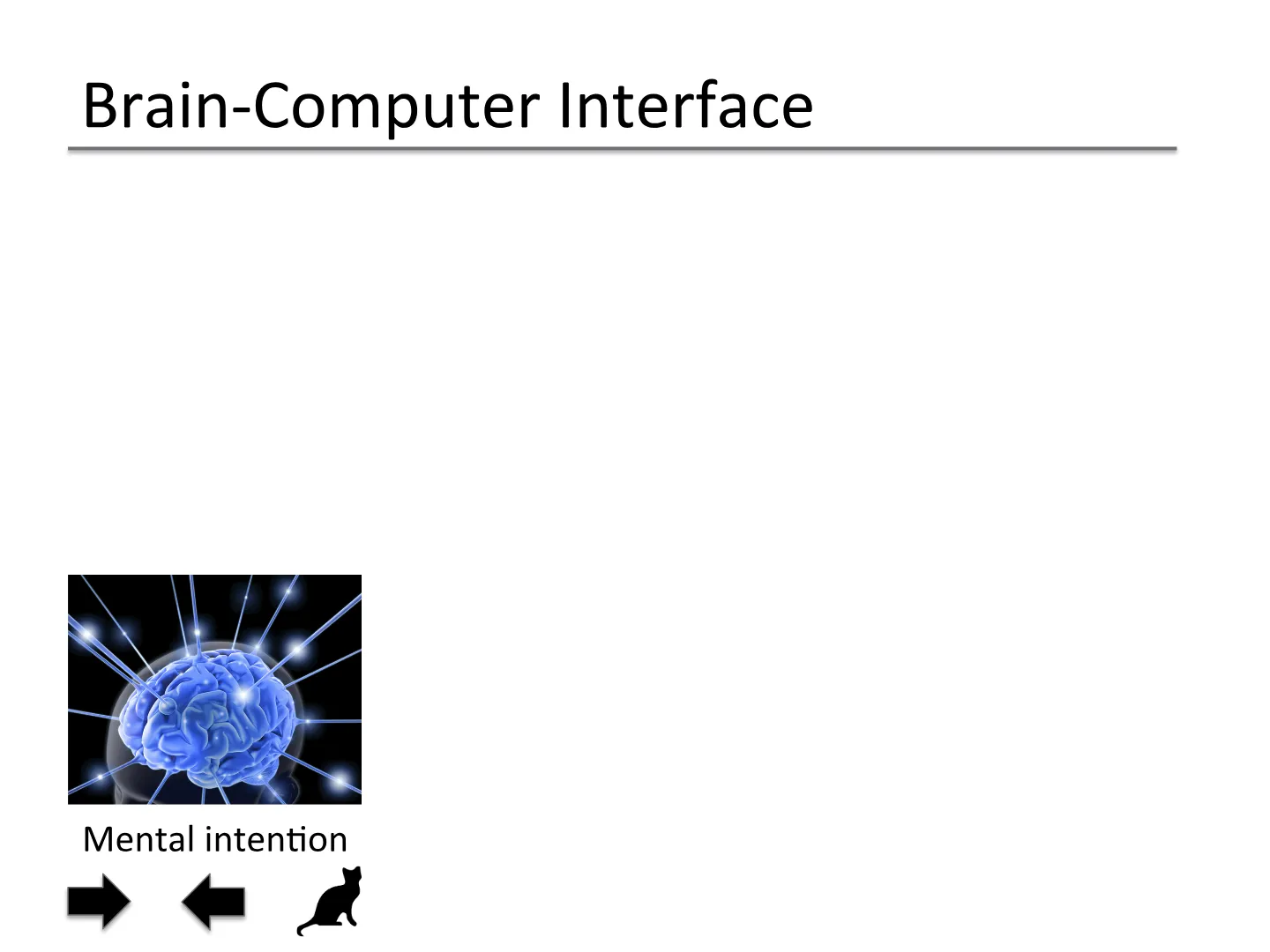
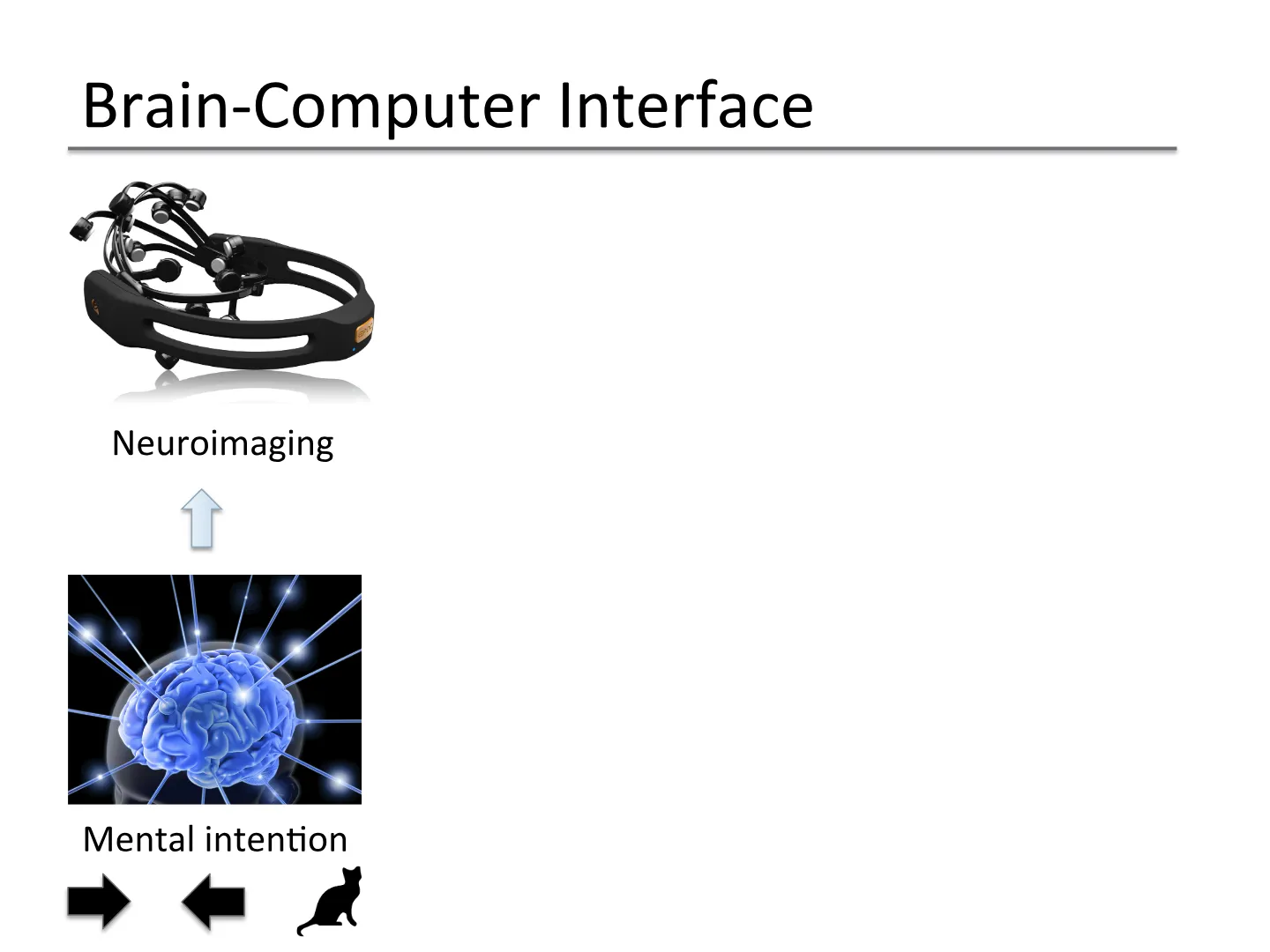
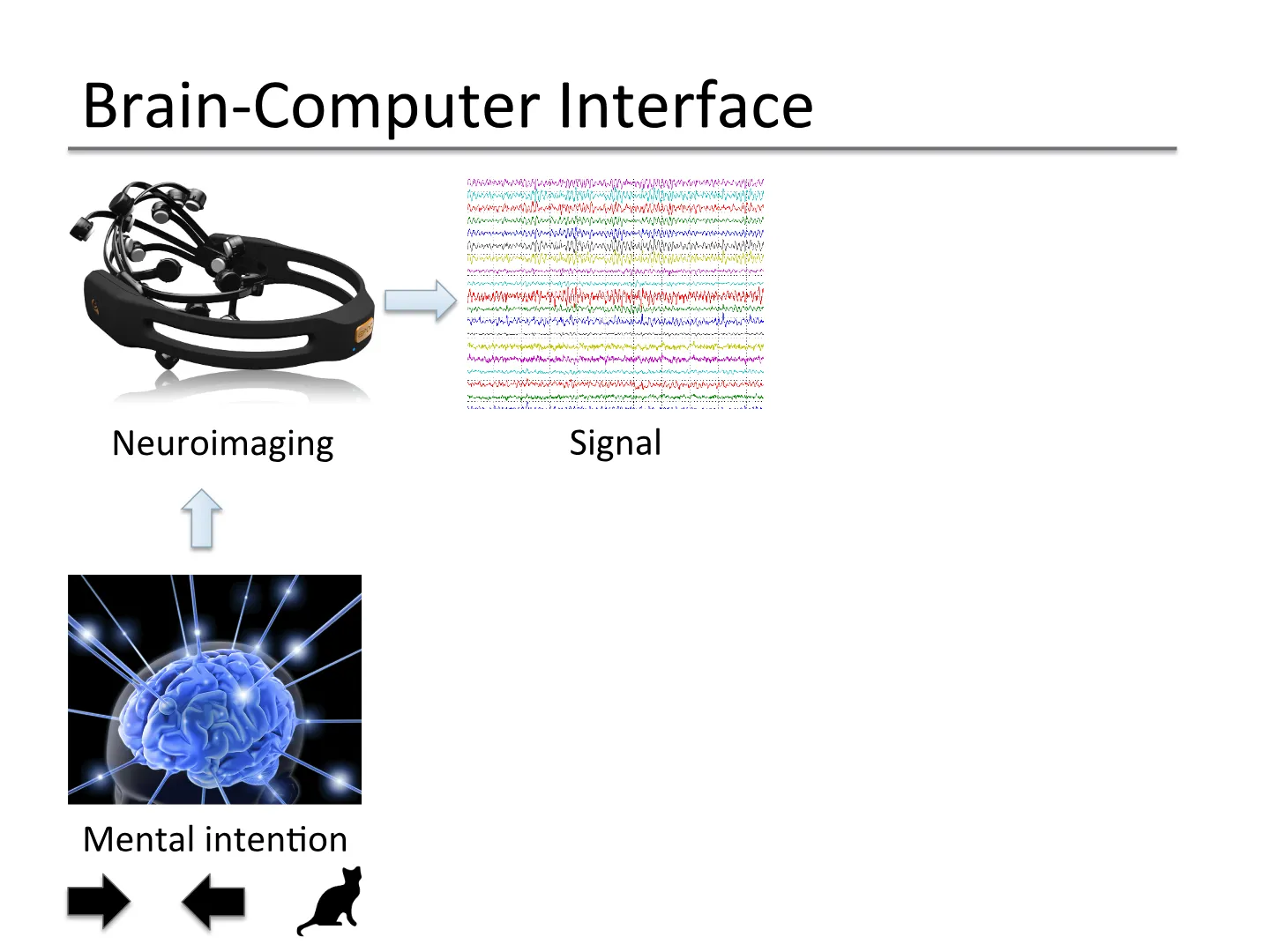
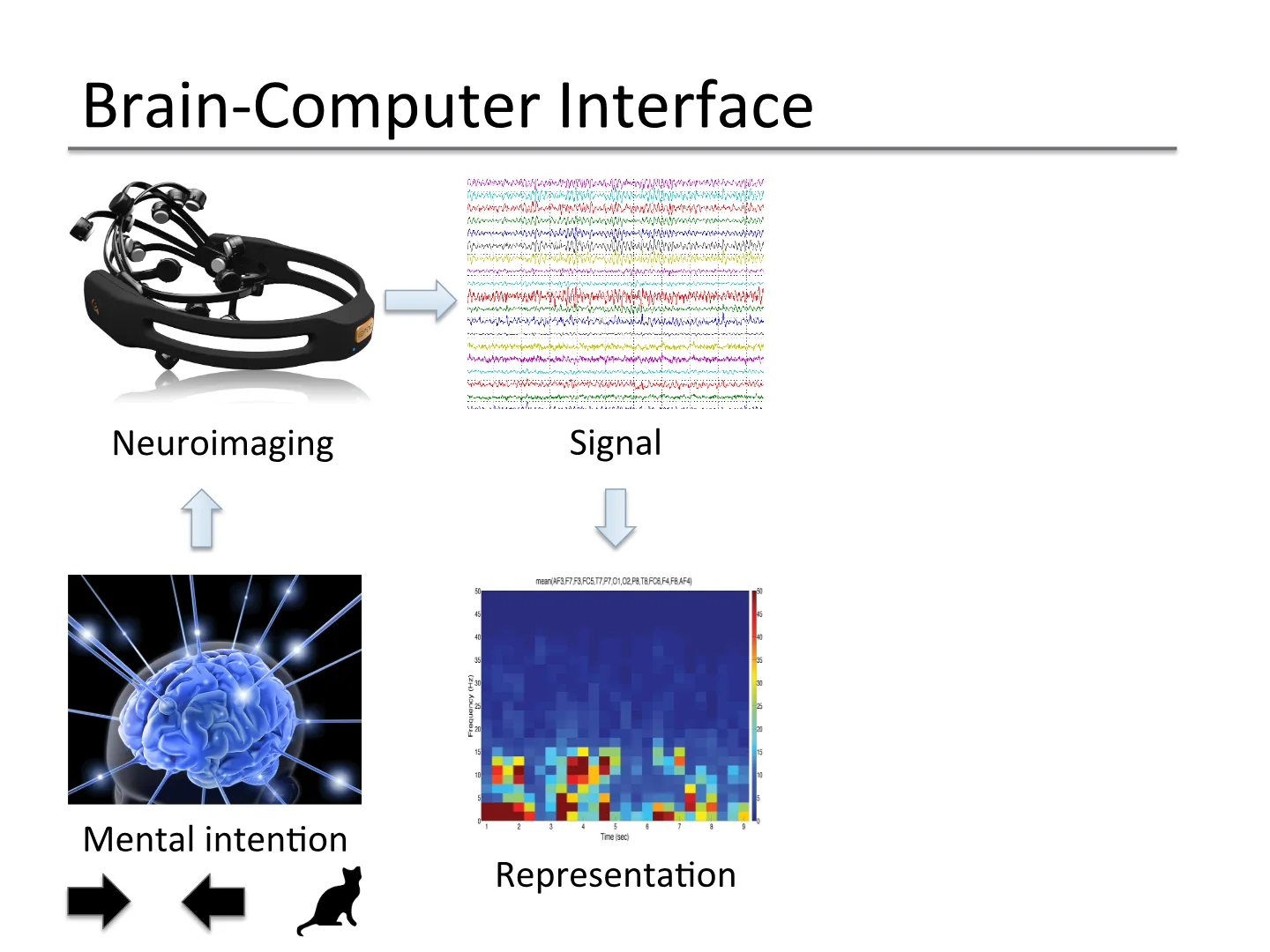
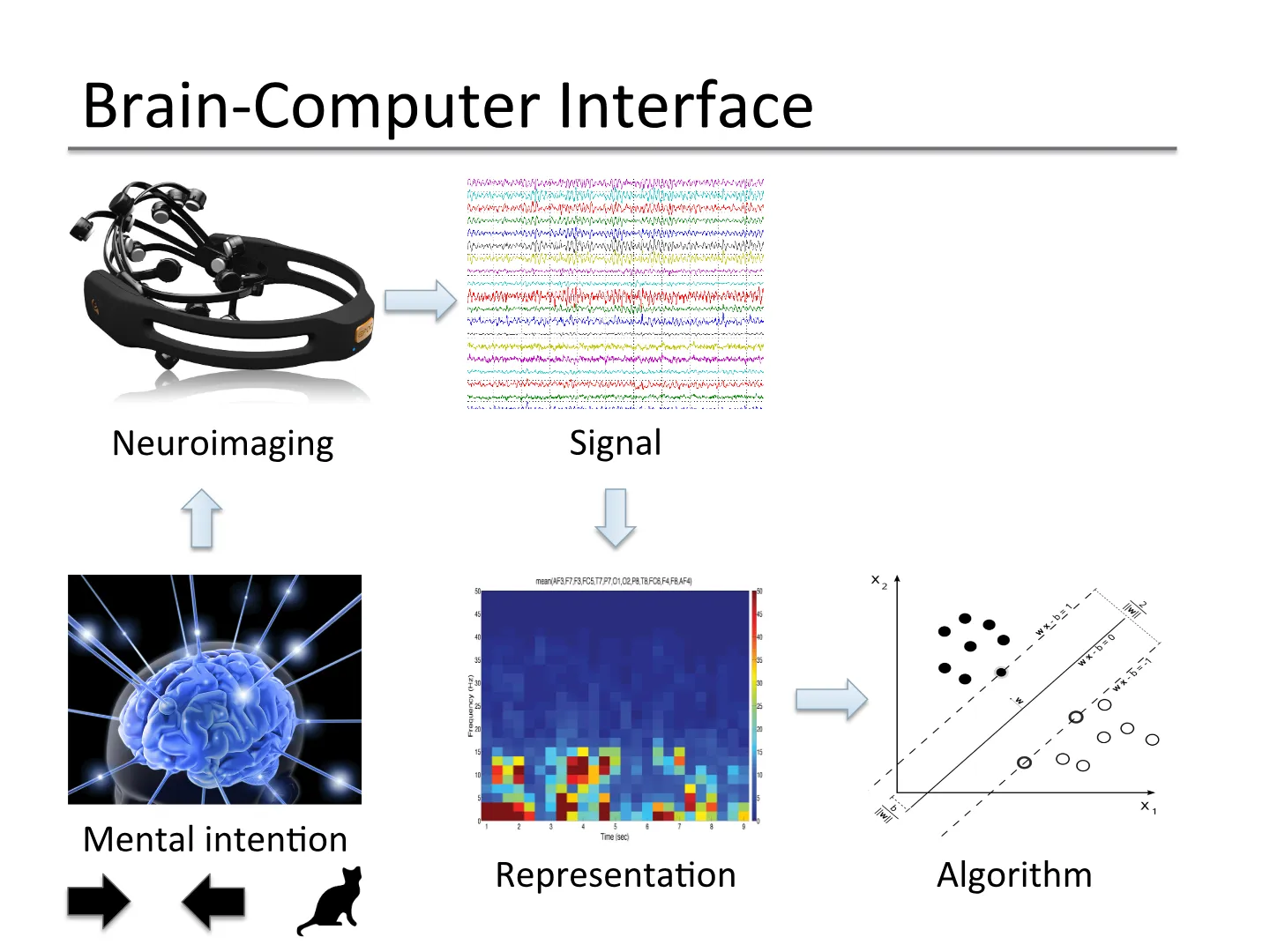
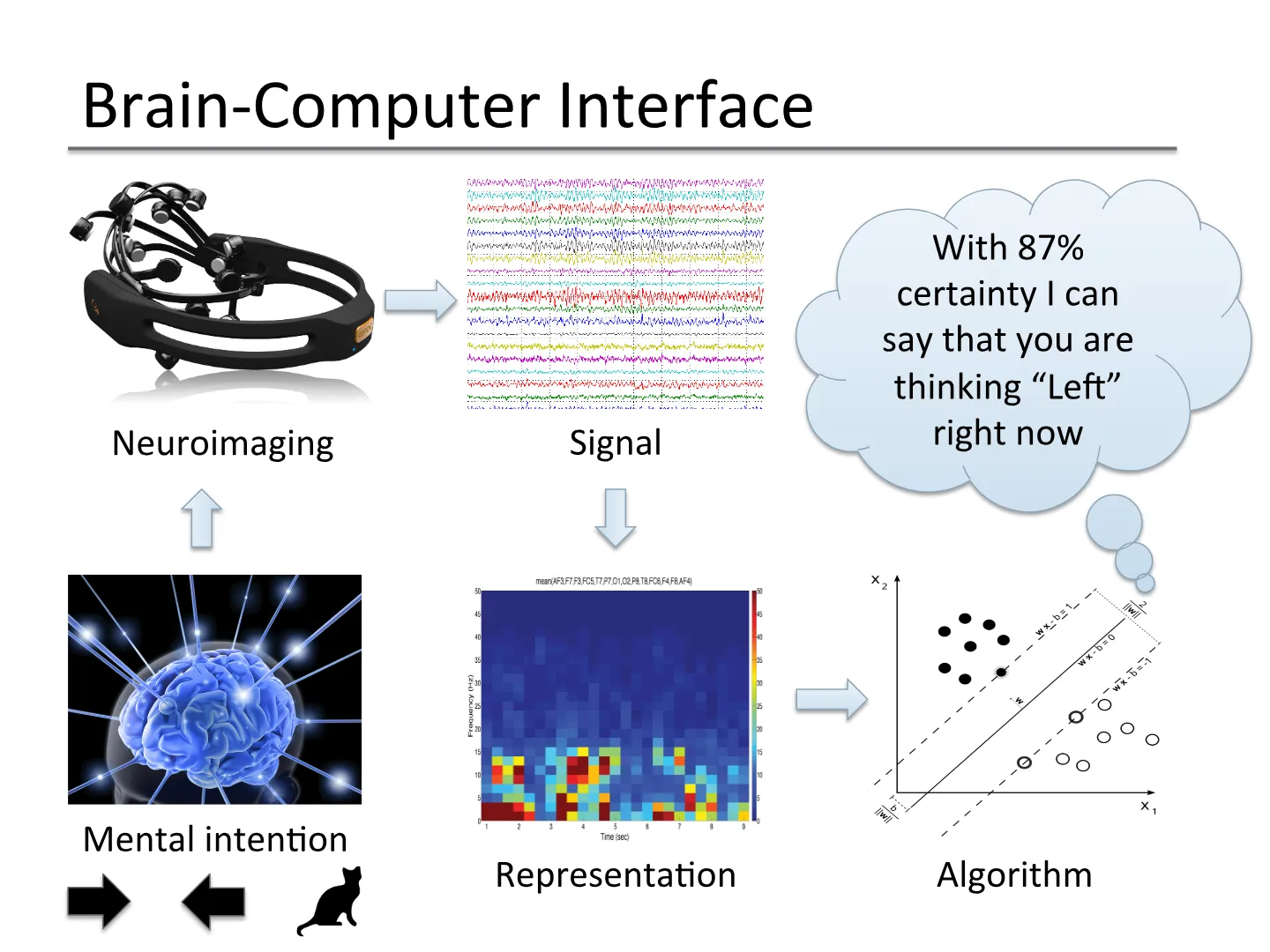
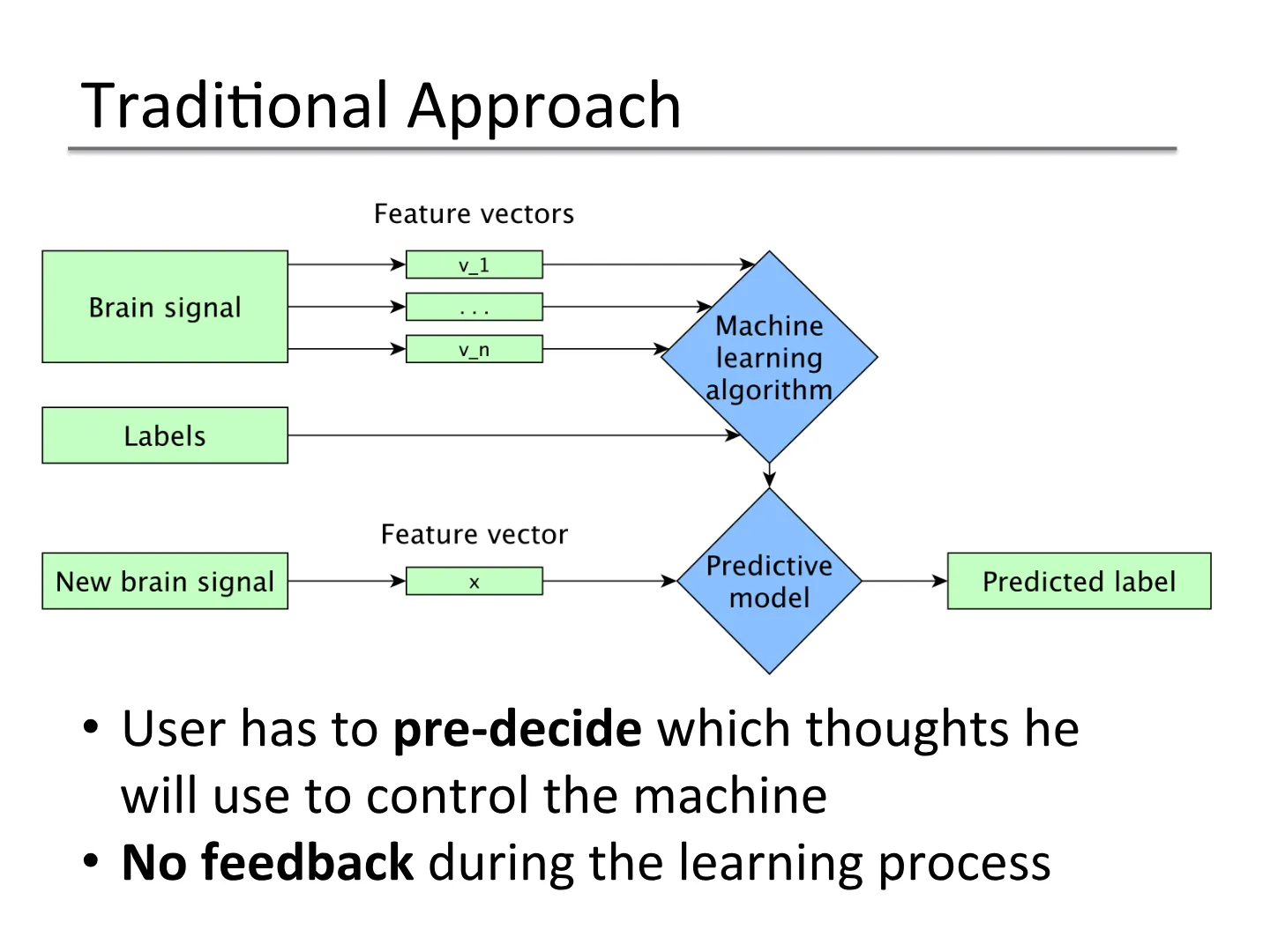
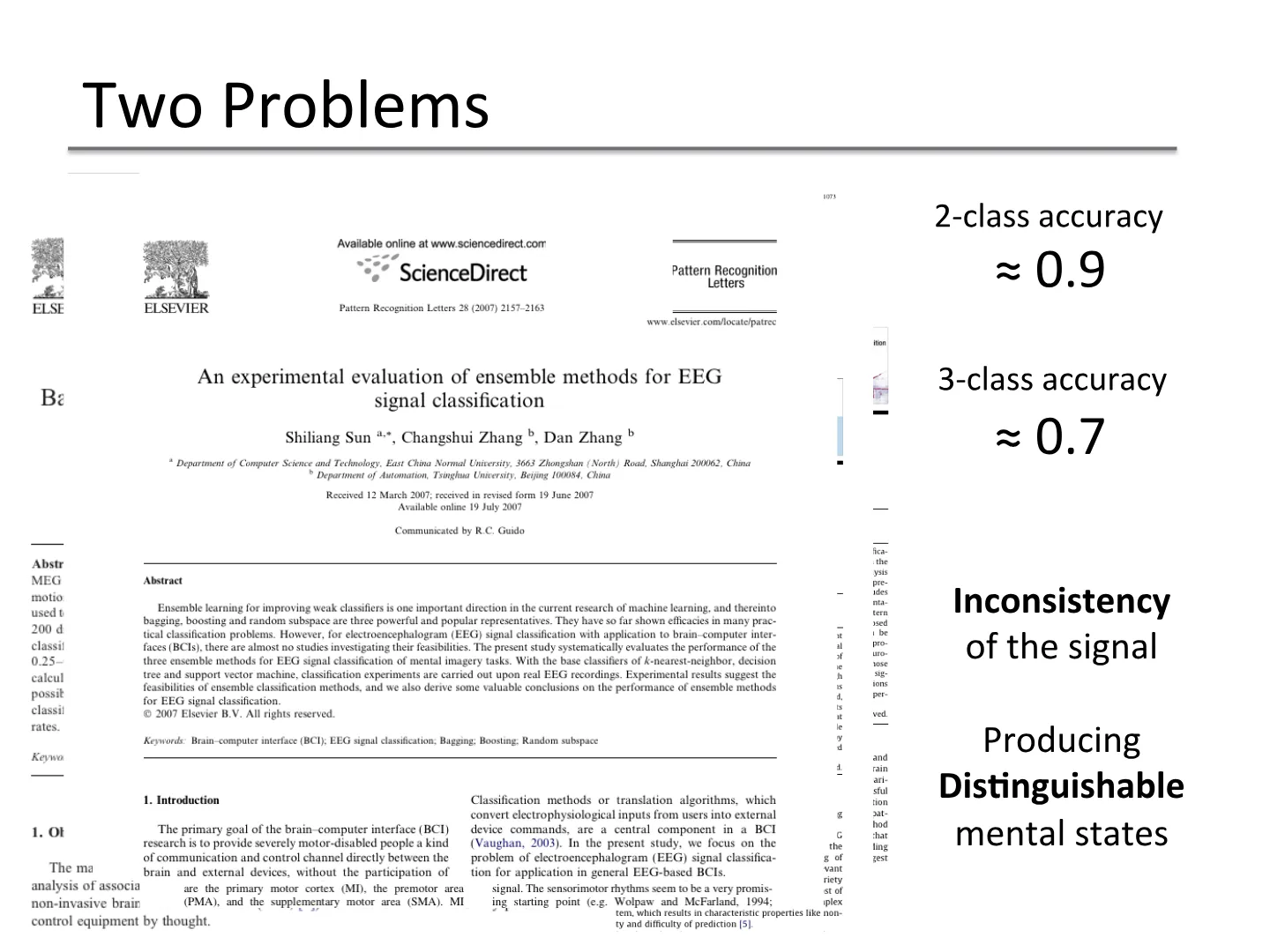
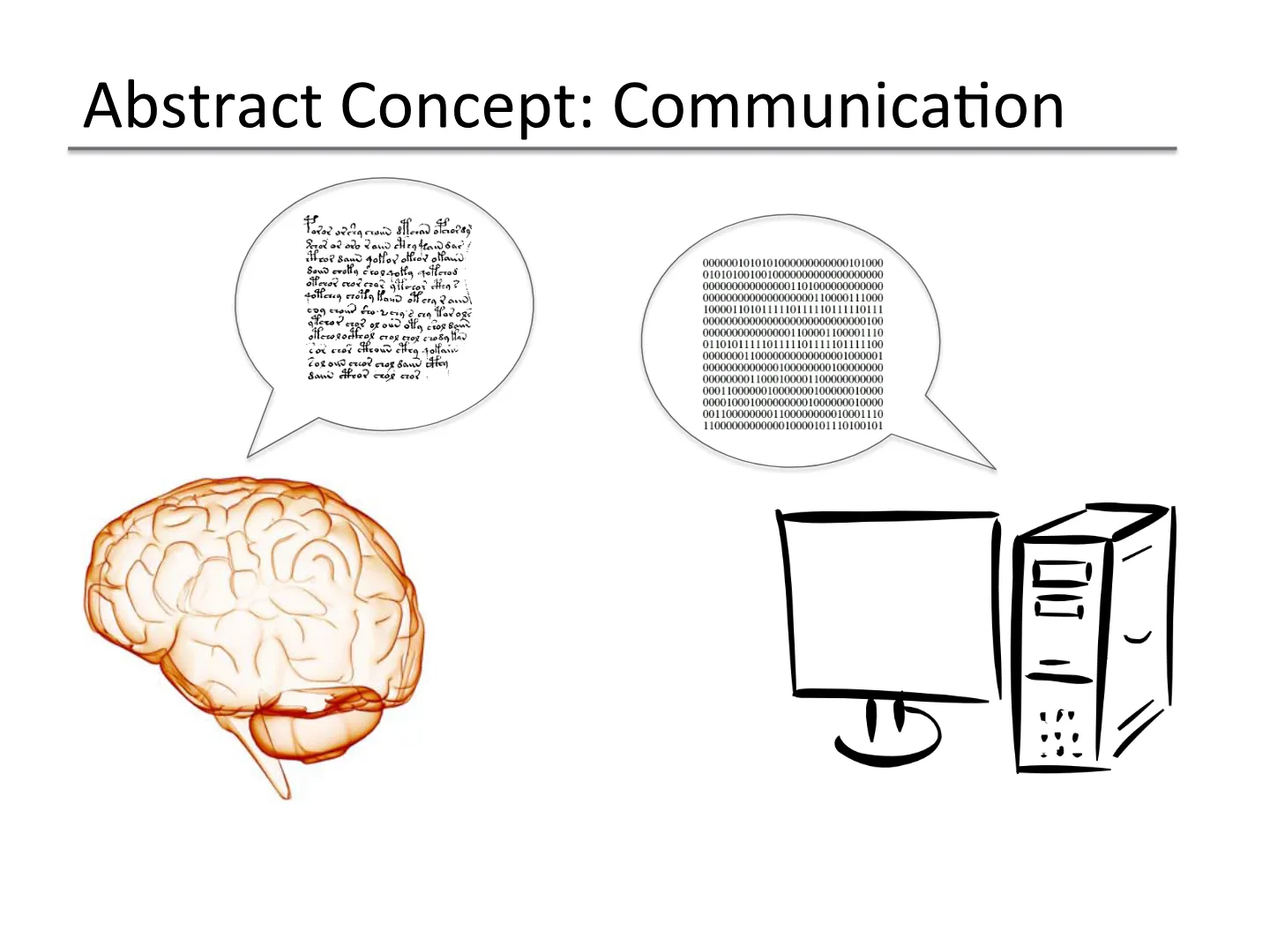
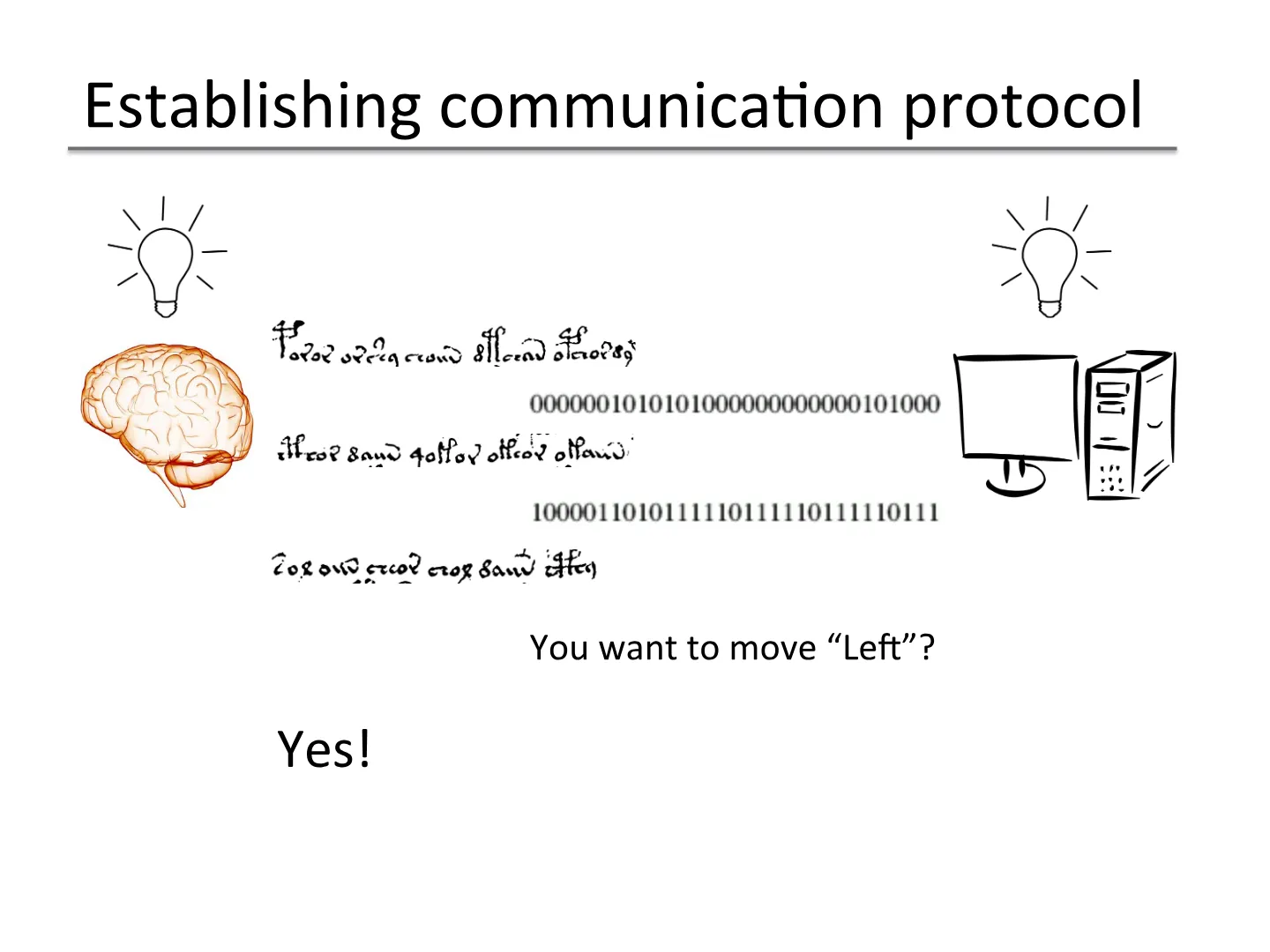
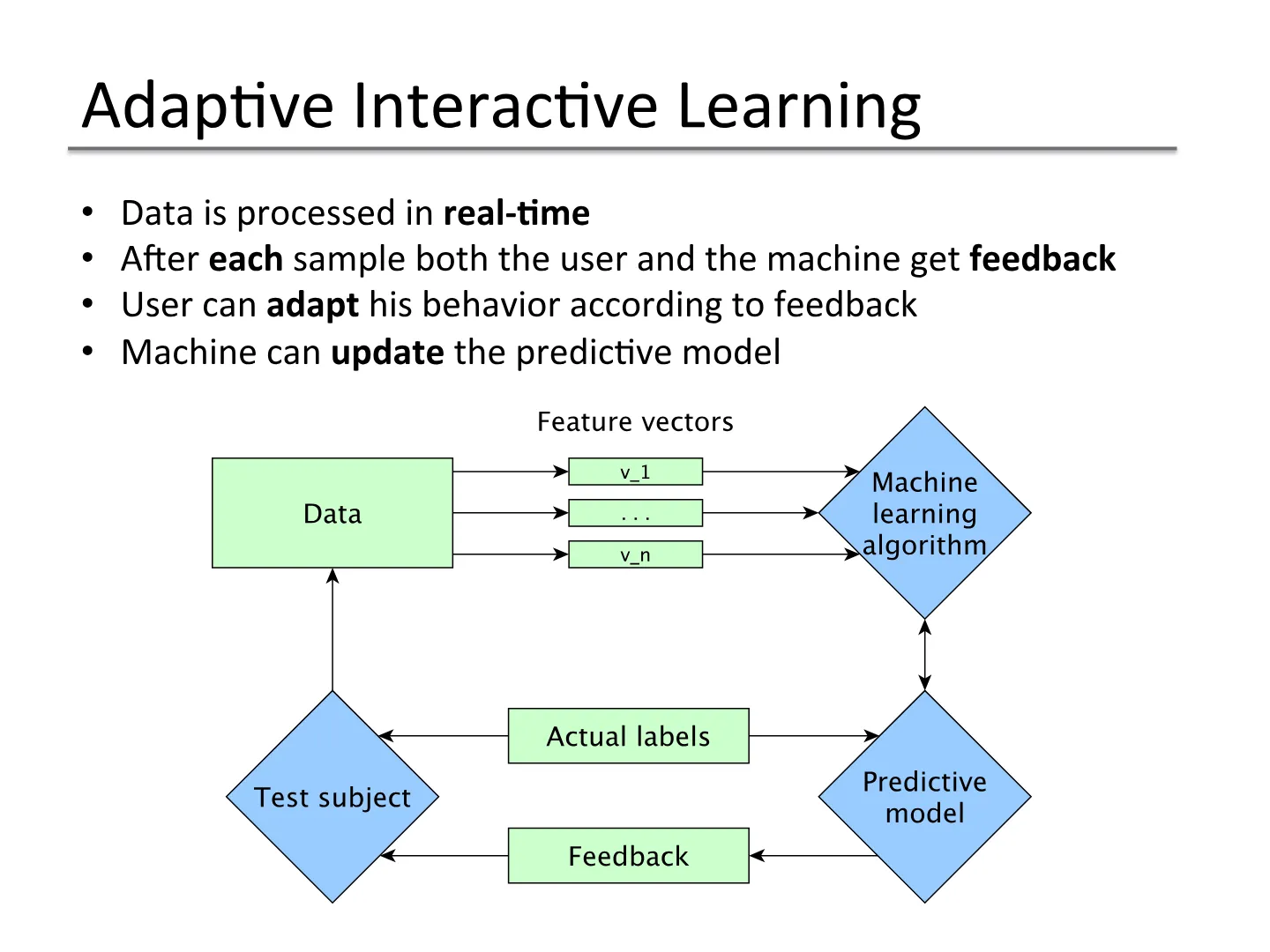
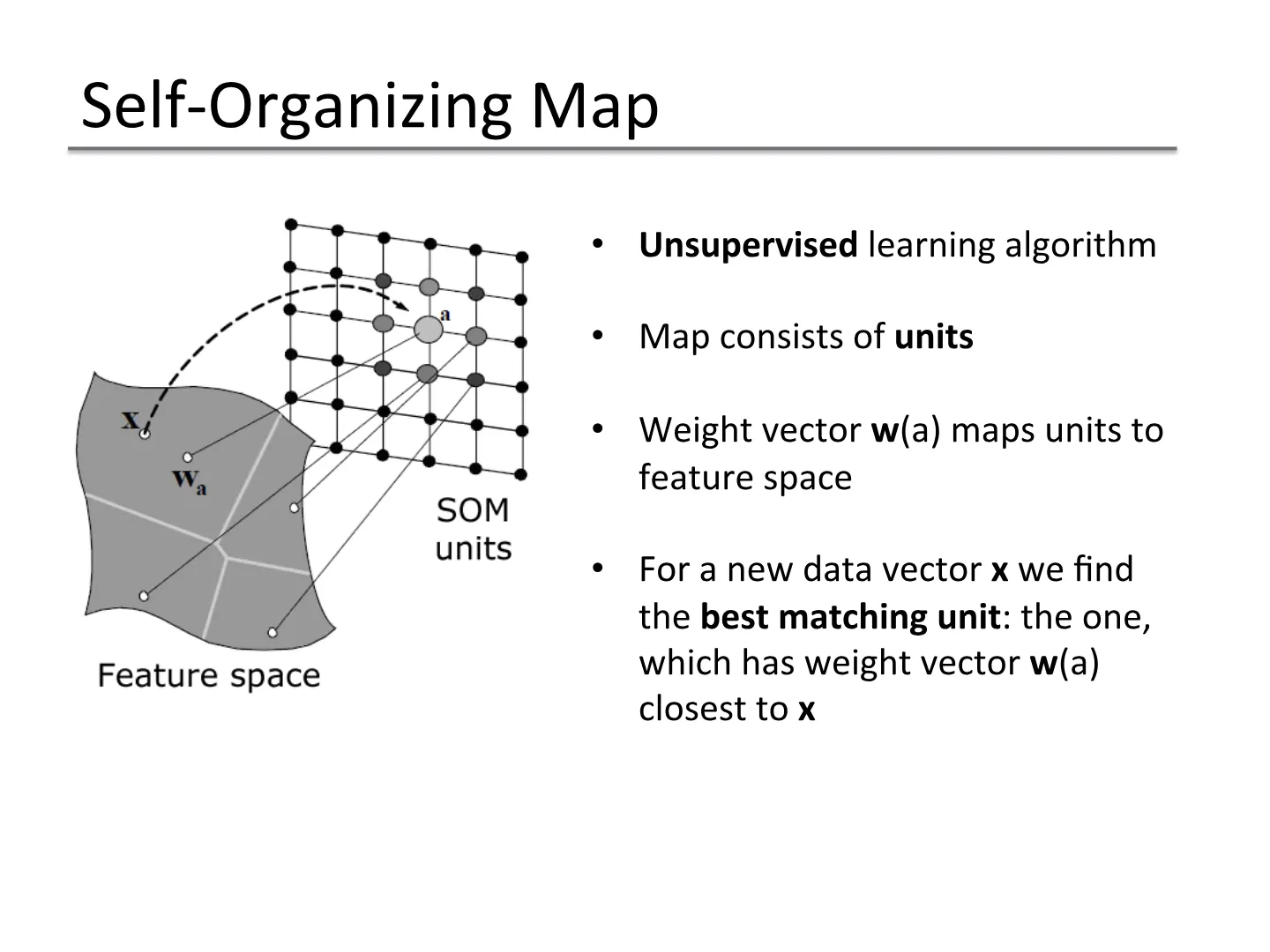
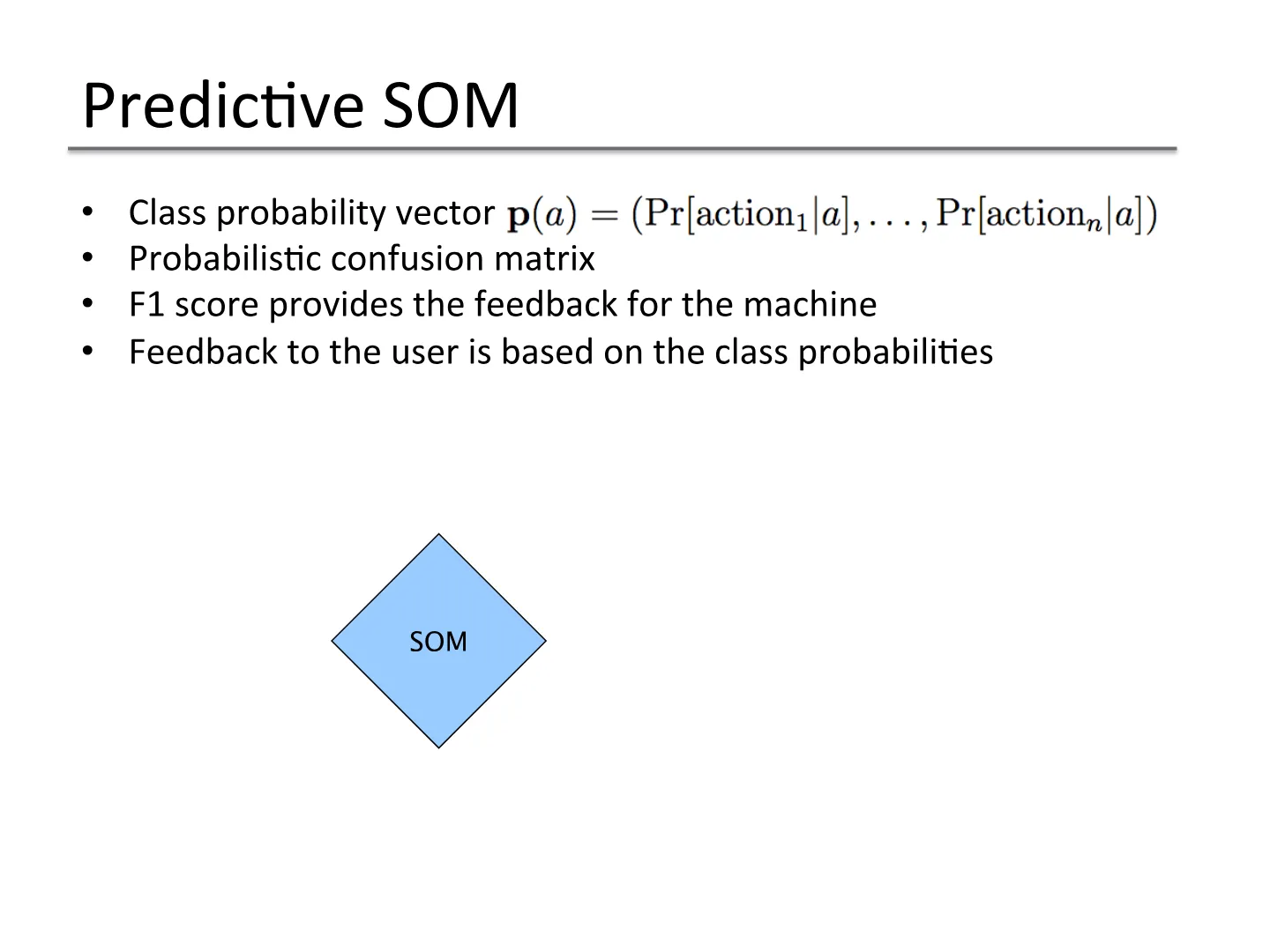
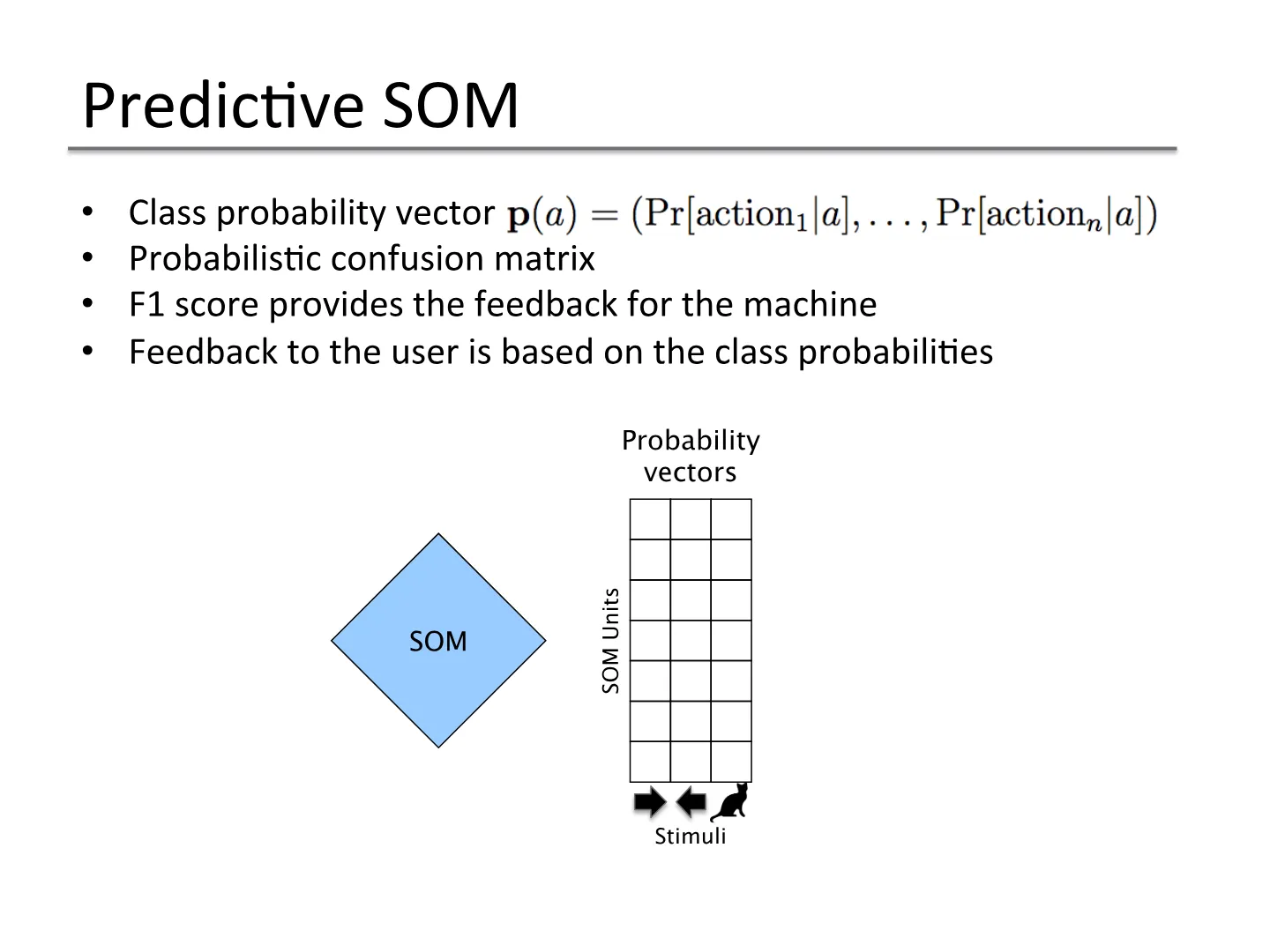
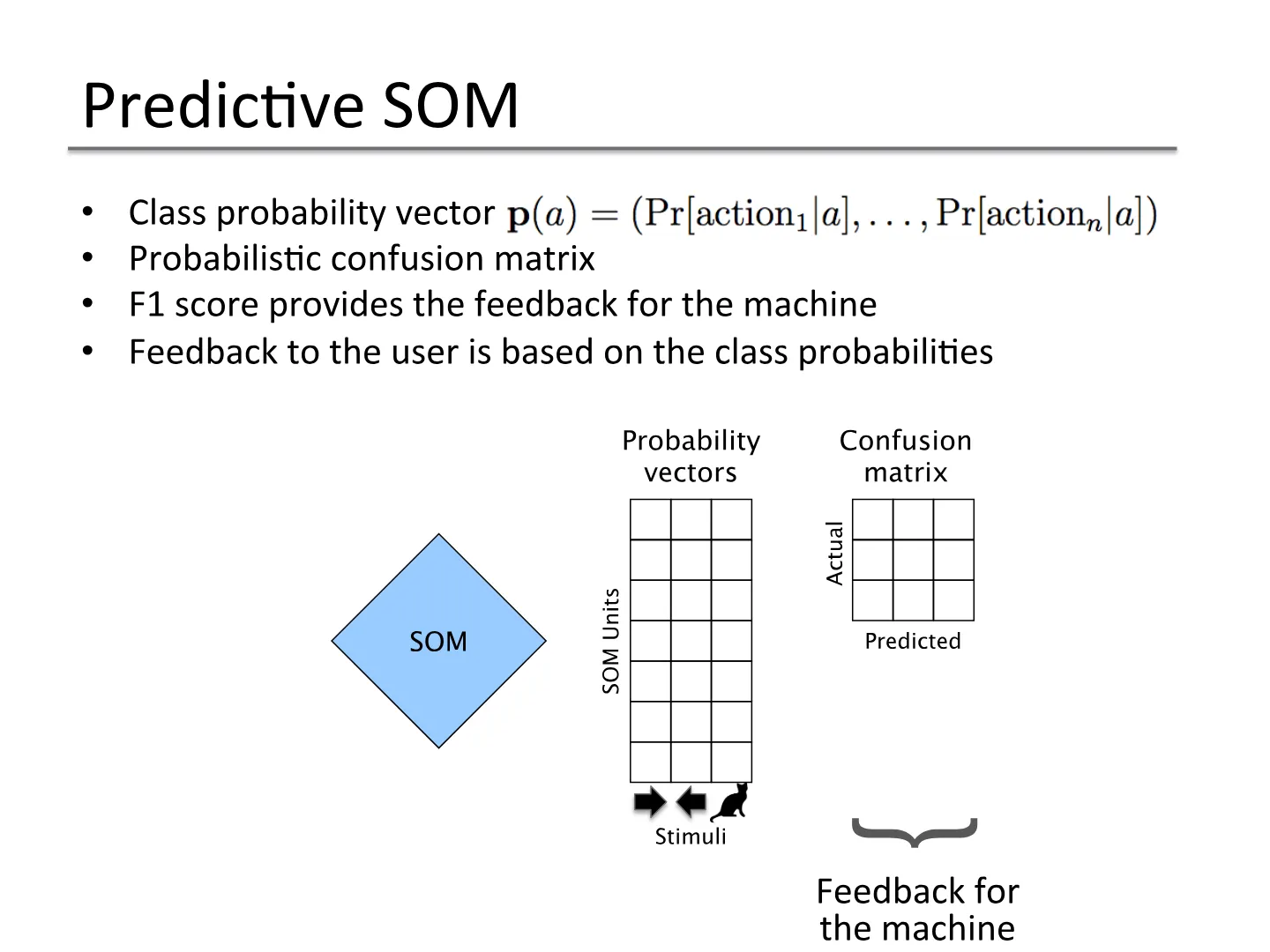
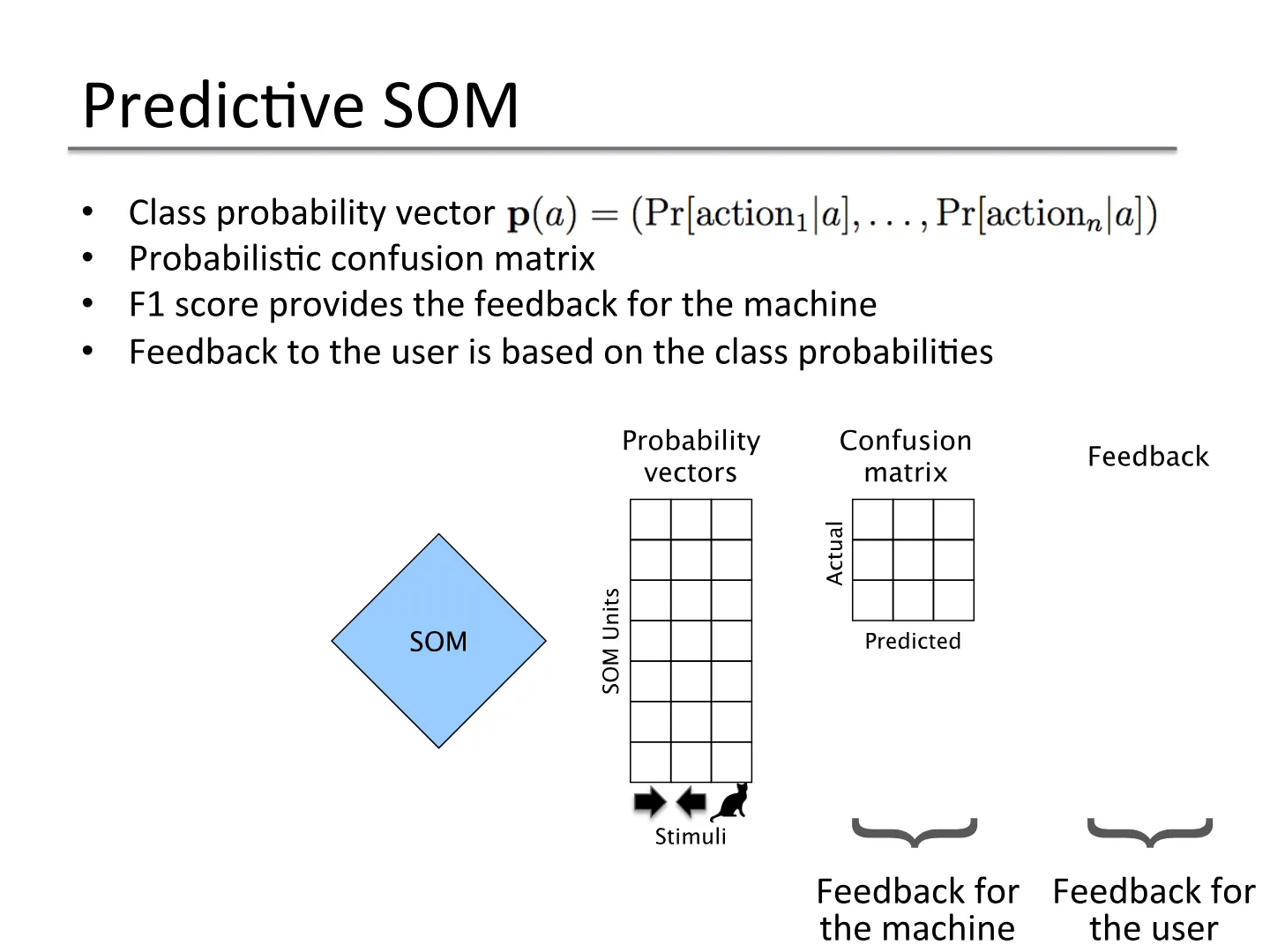
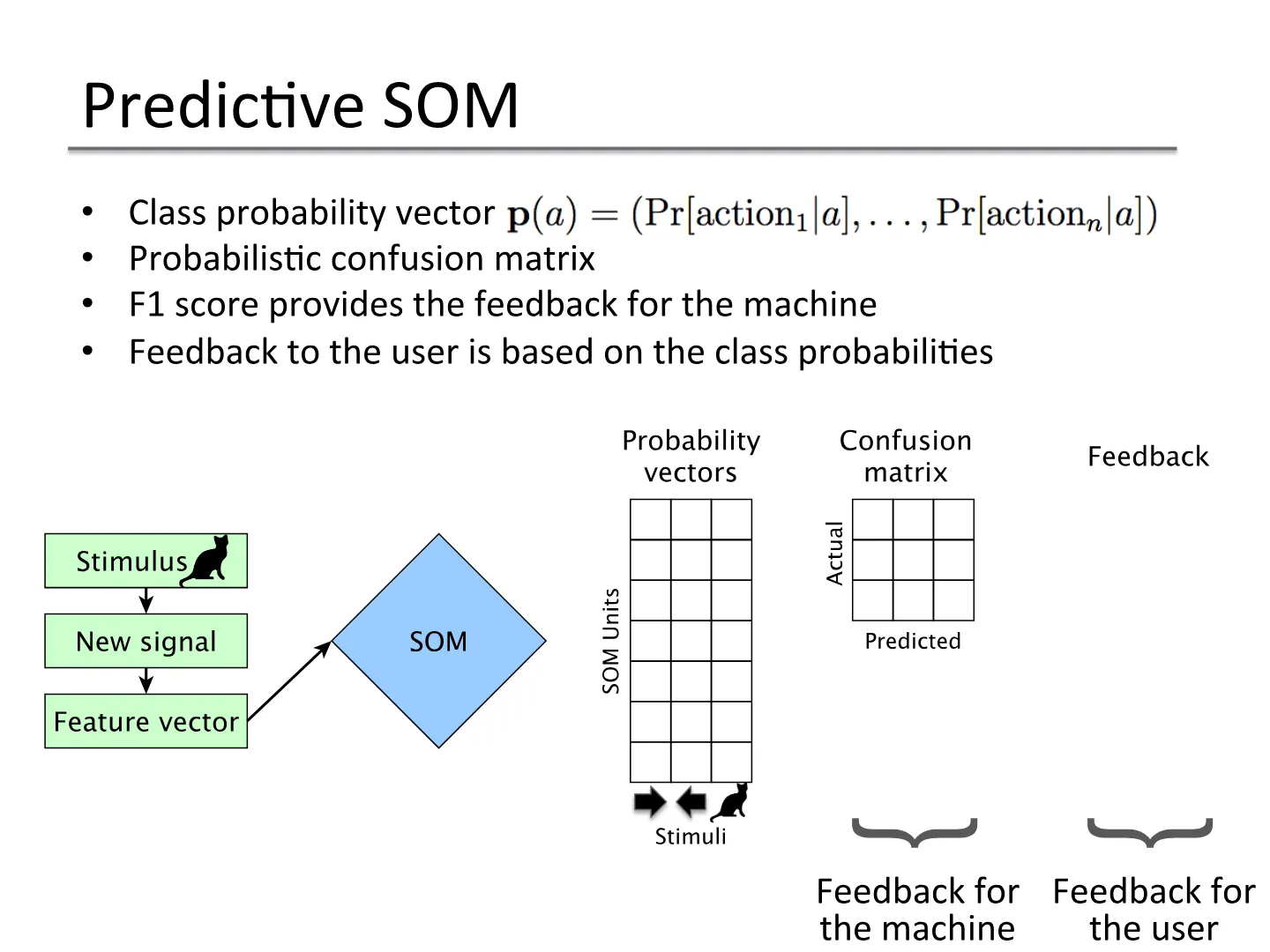
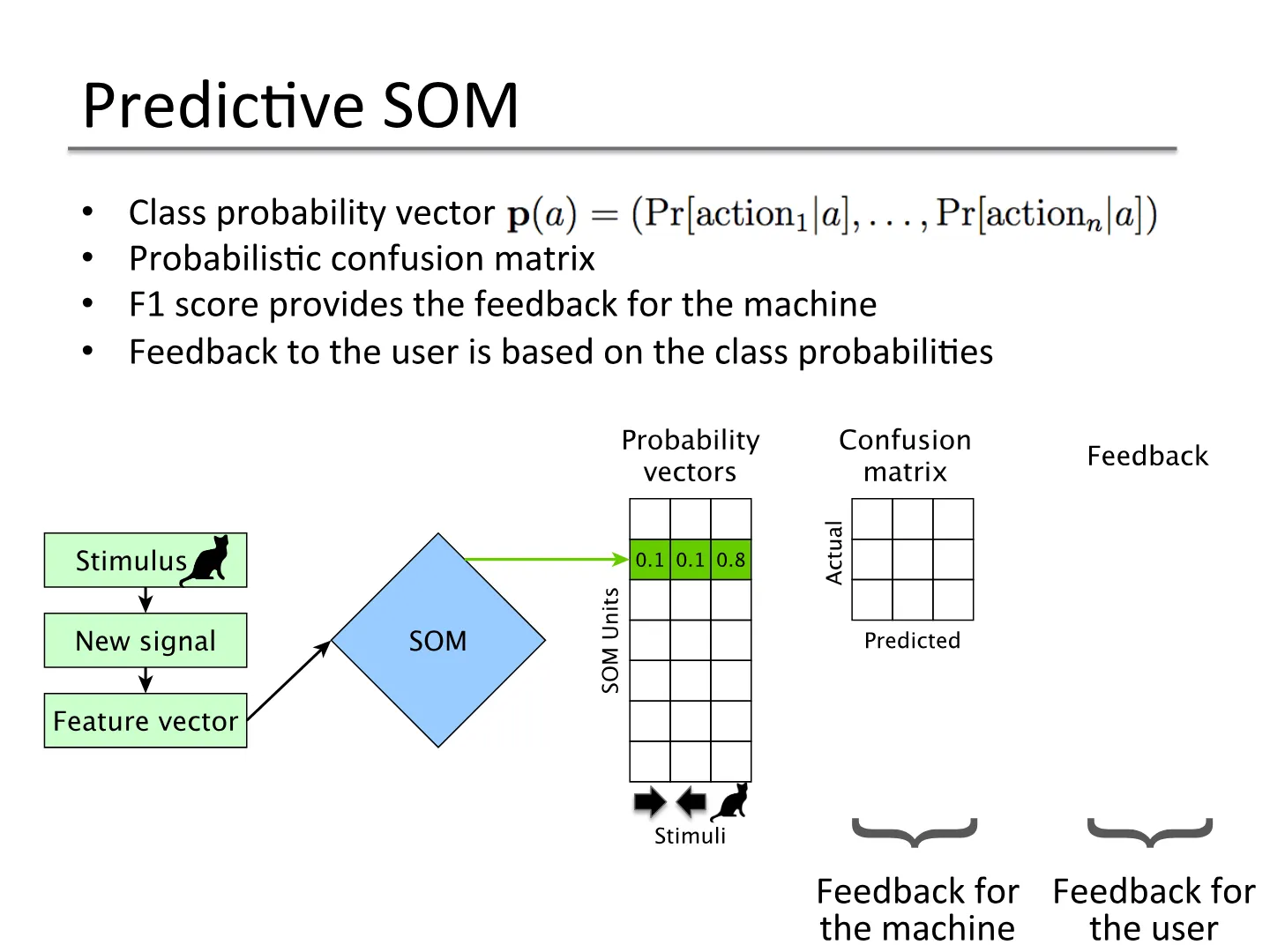
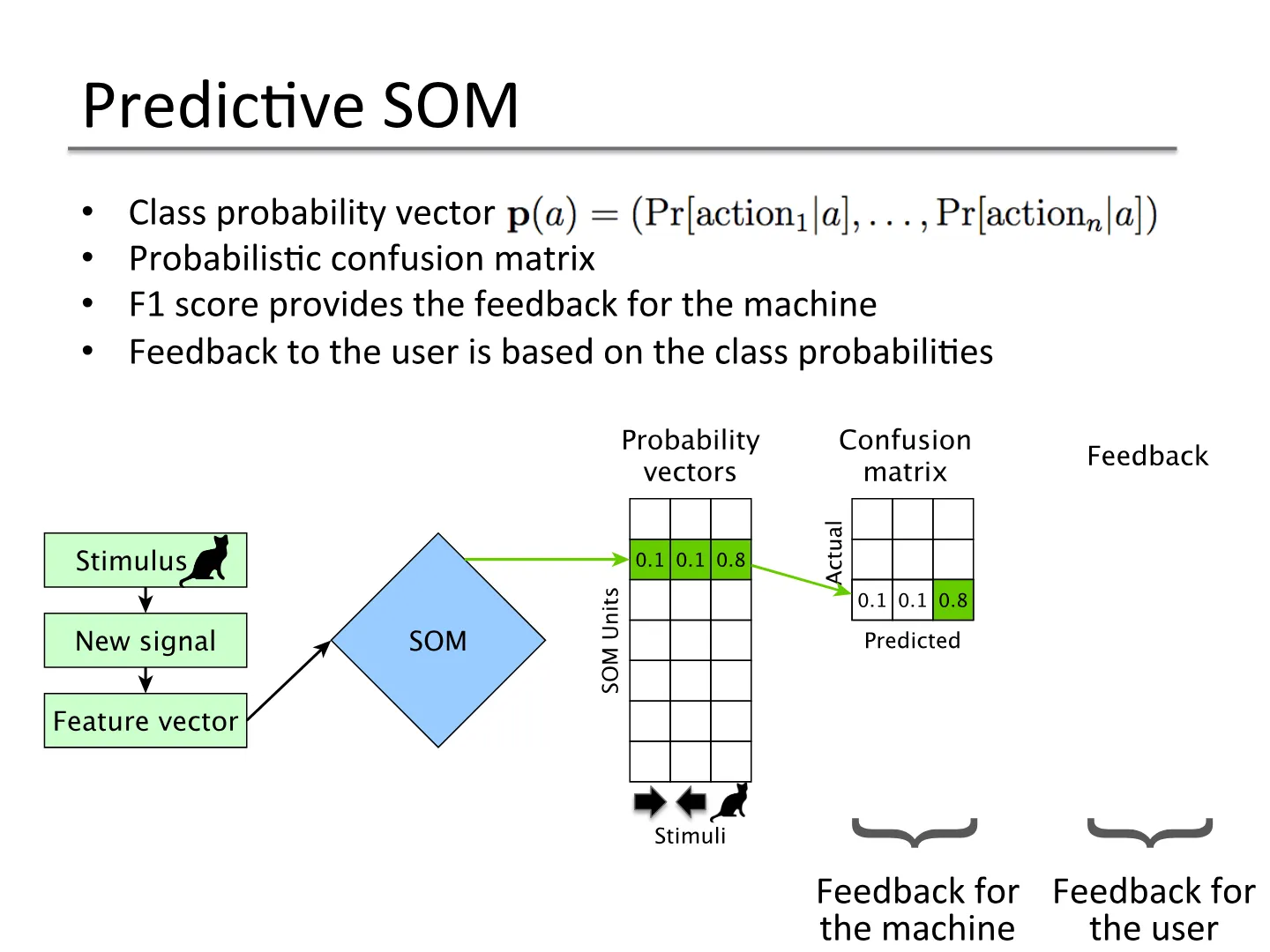
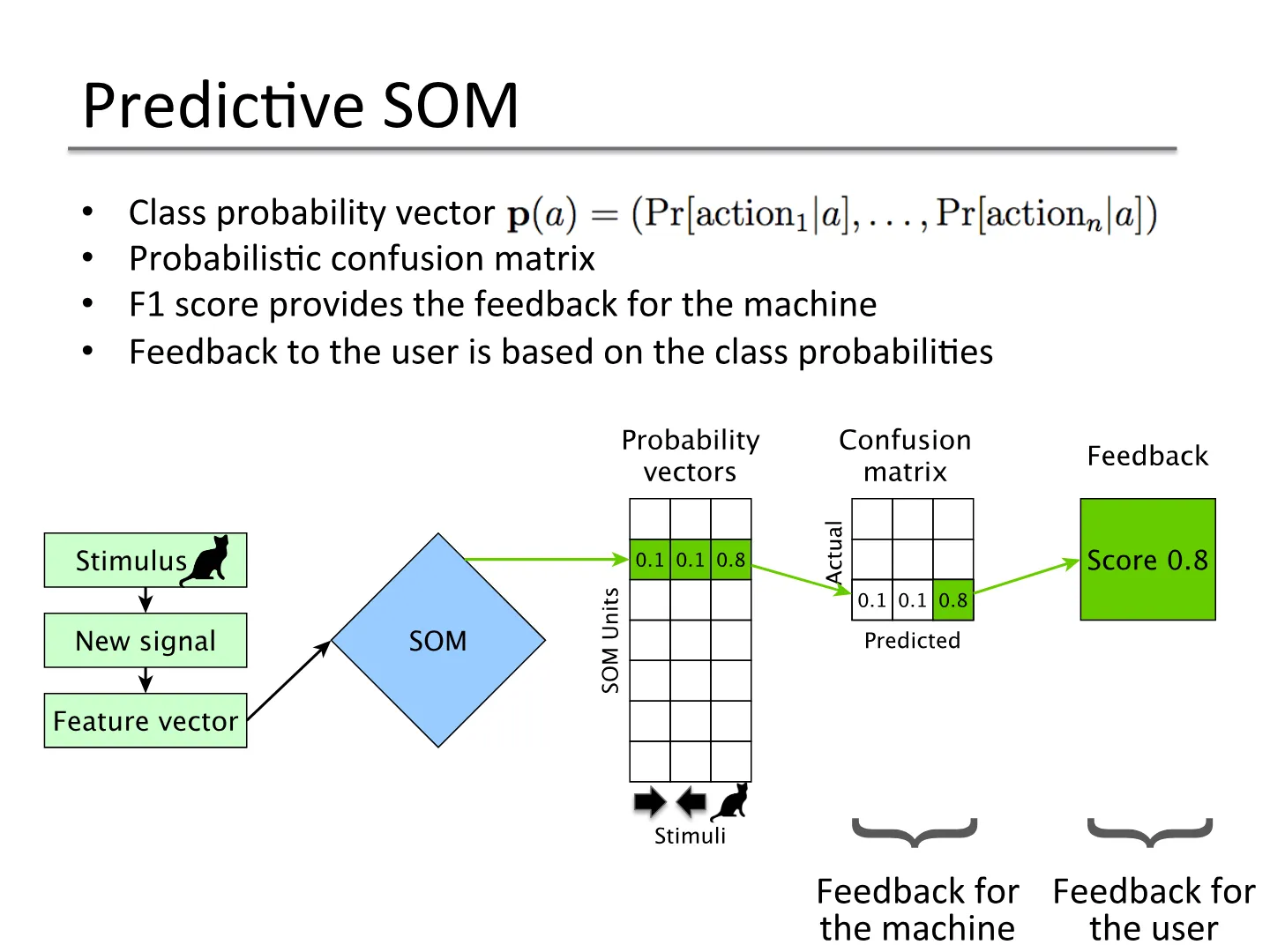
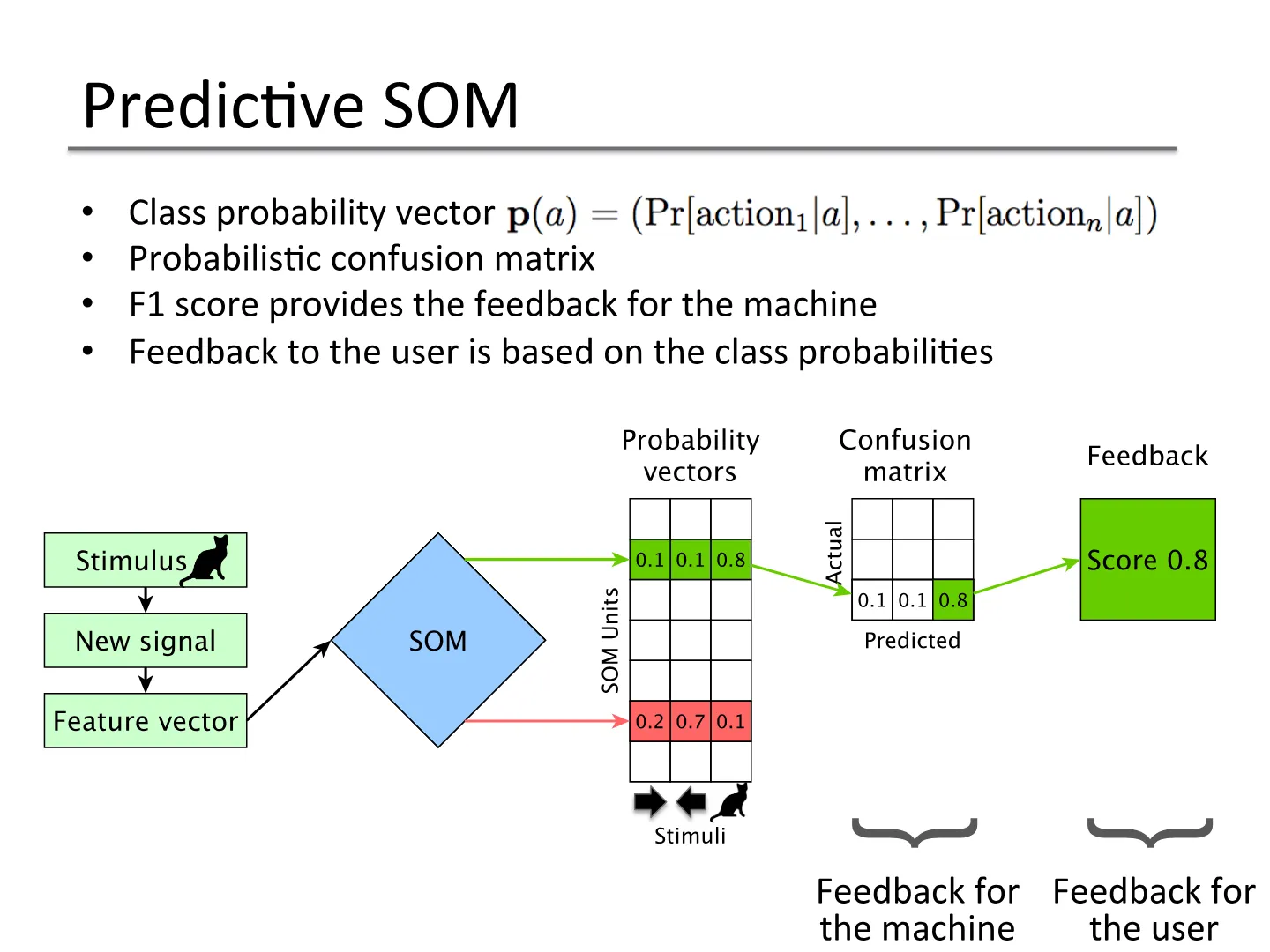
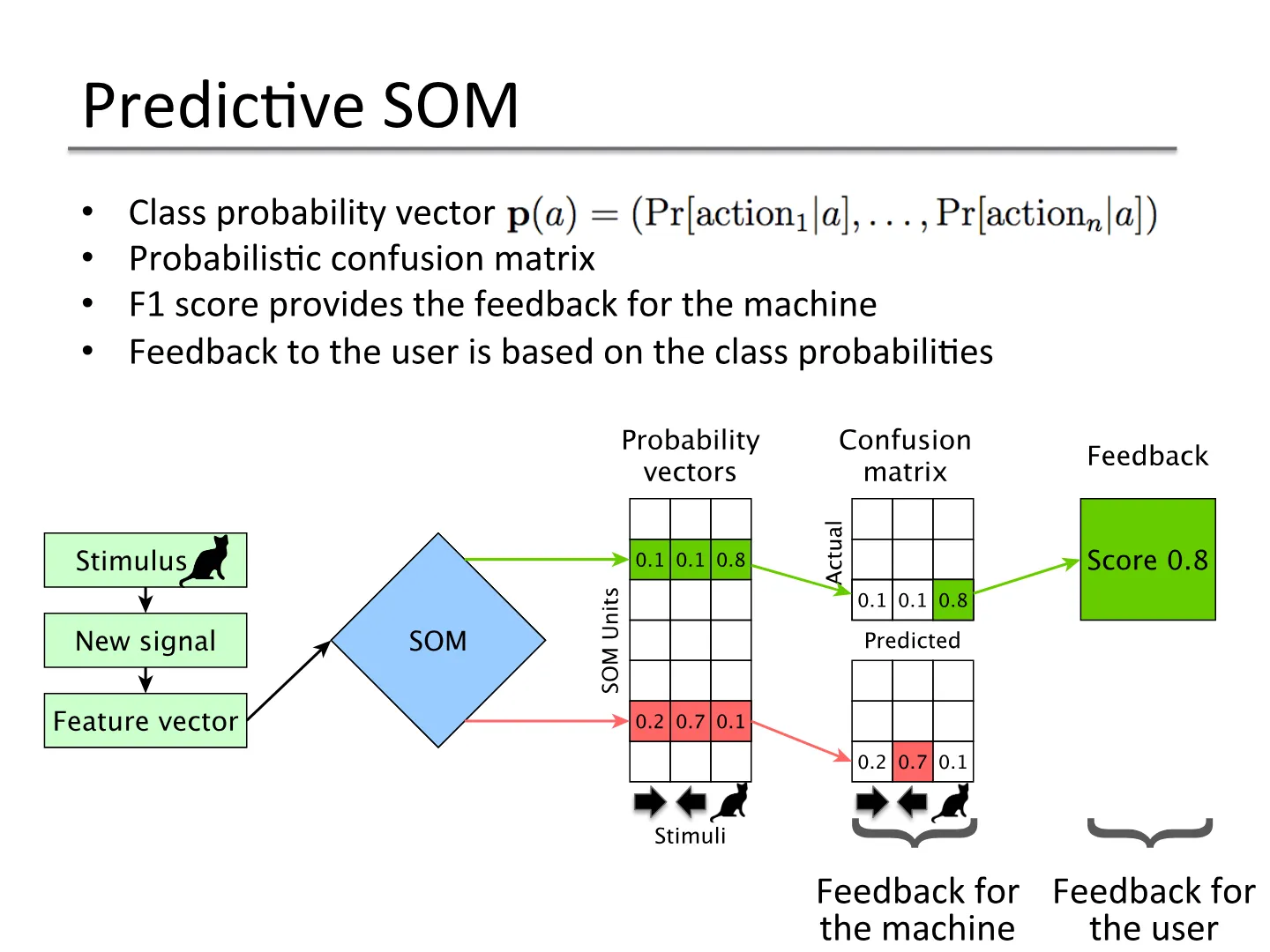
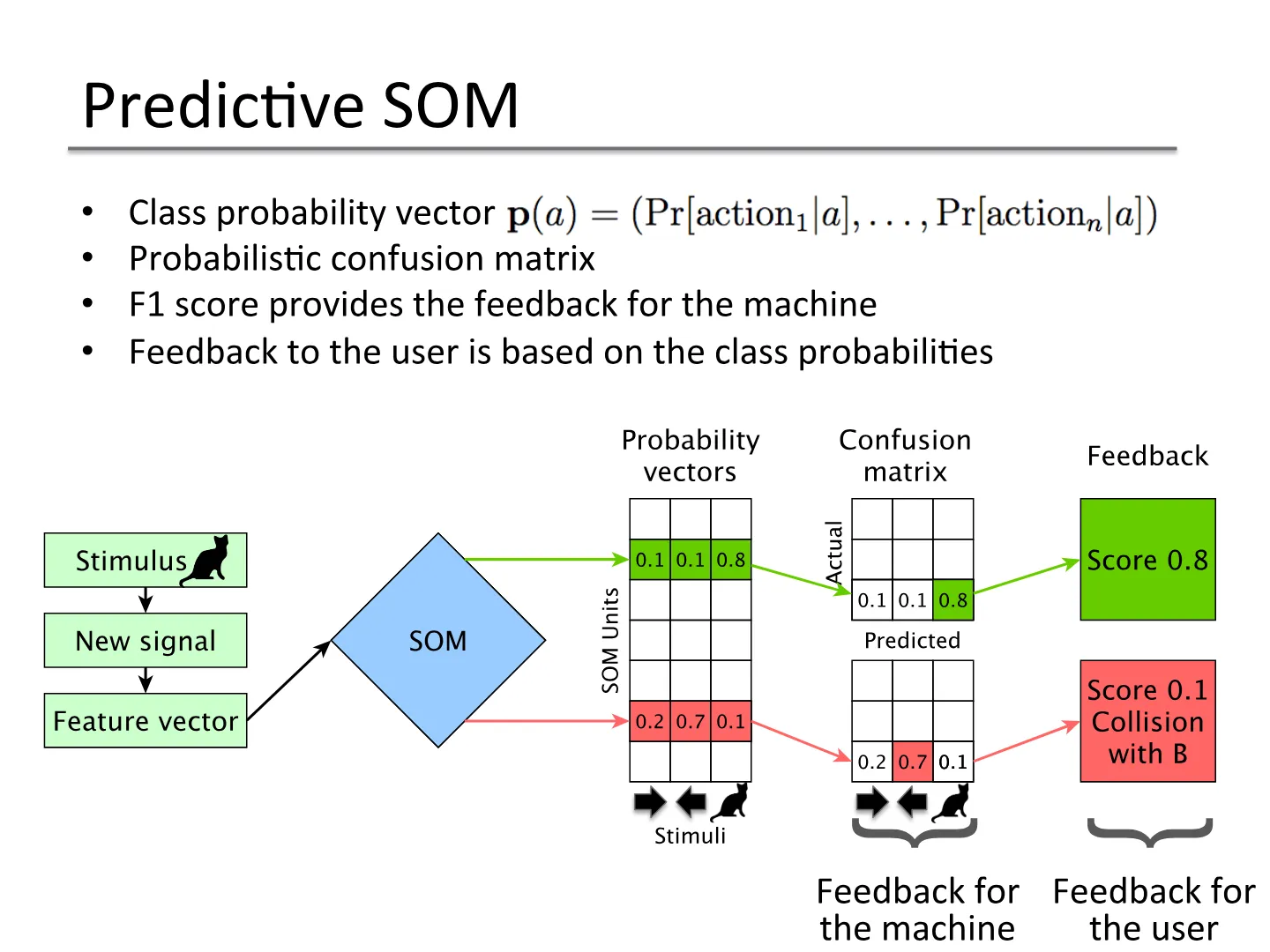
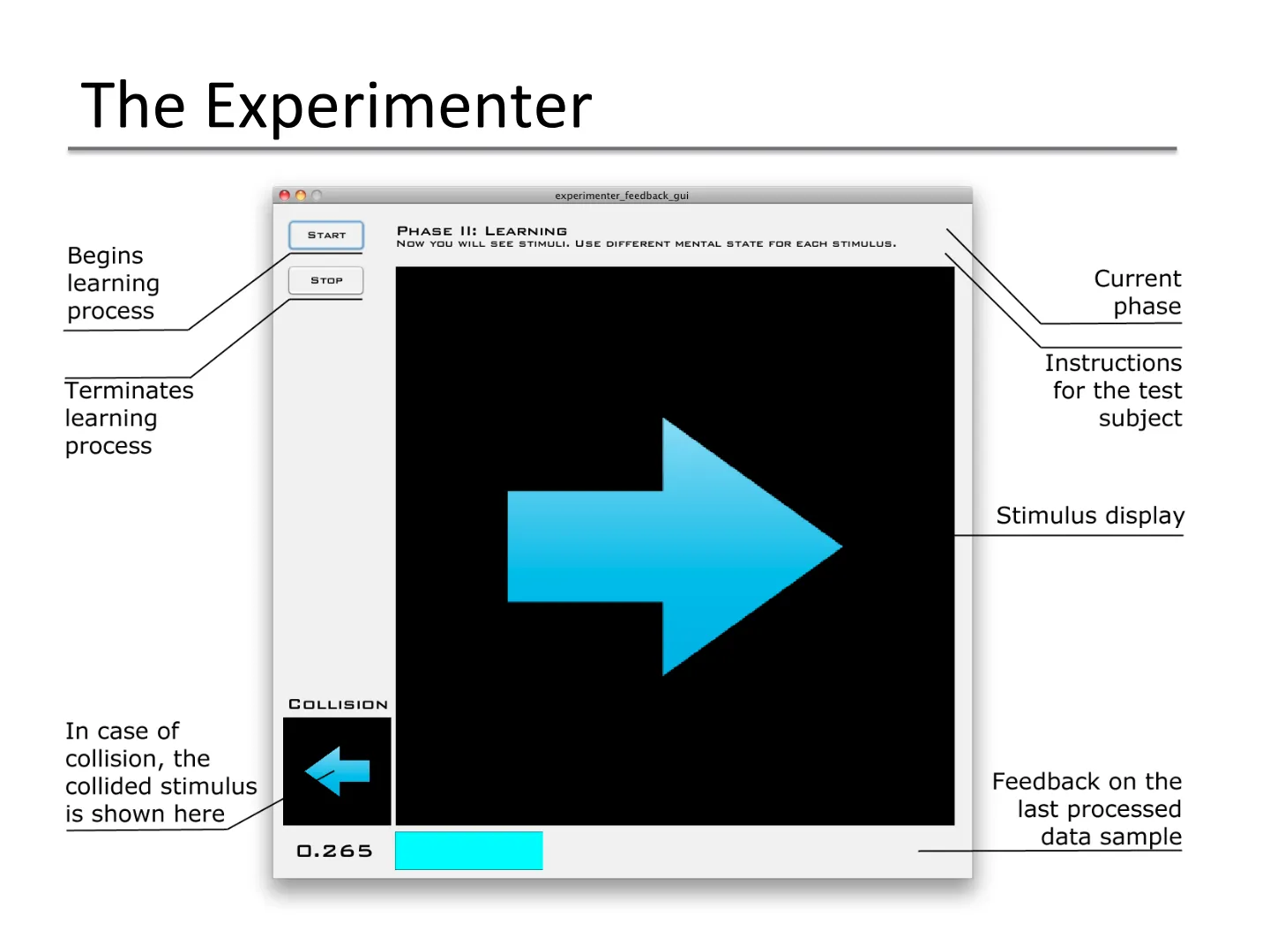
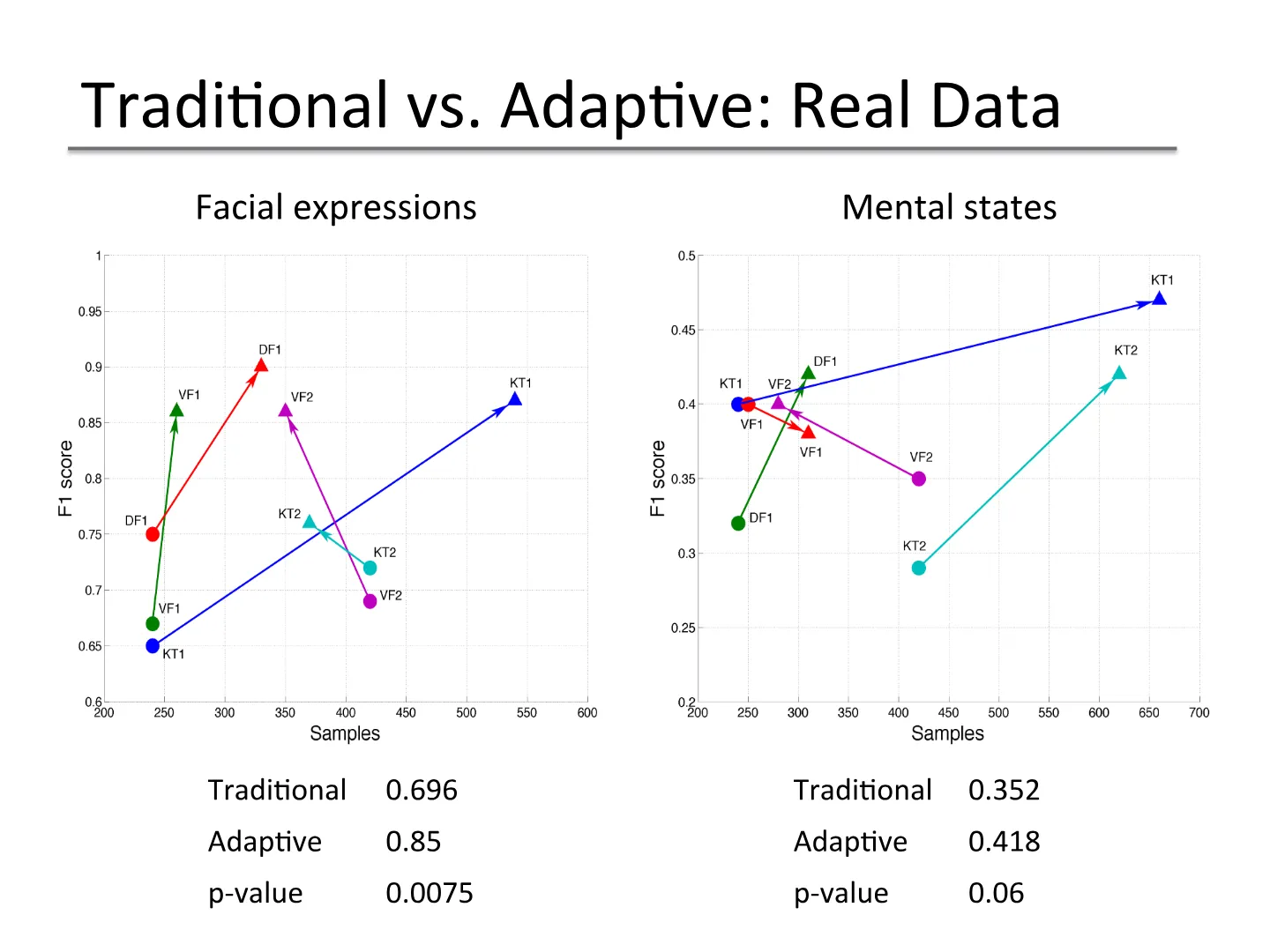
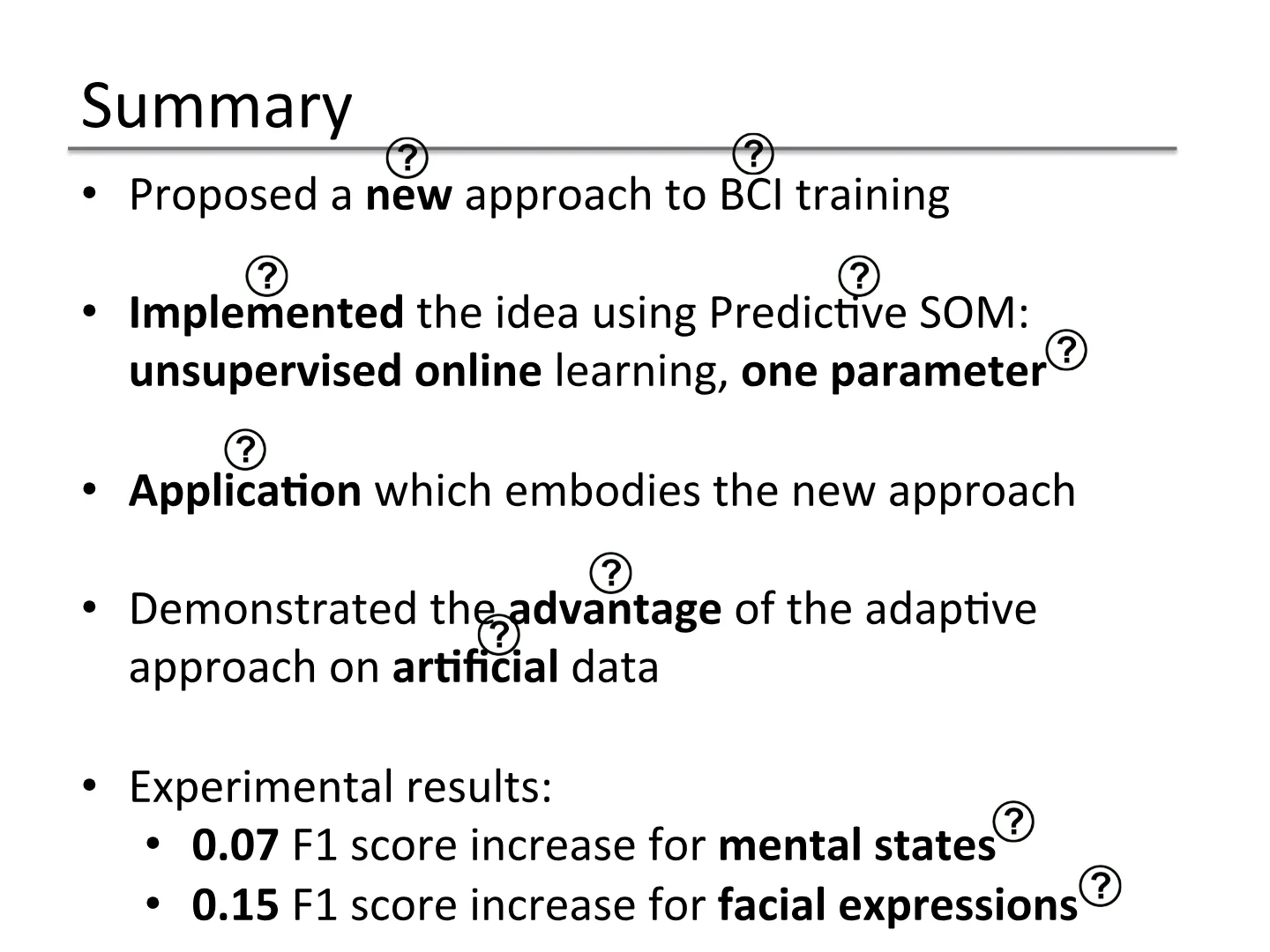
Slide 1 of 27: Adap%ve Interac%ve Learning: a Novel Approach to Training Brain-­‐Computer Interface Systems Supervised by Konstan%n Tretyakov Ilya Kuzovkin University of Tartu, 2013Slide 2 of 27: Mental inten%on Brain-­‐Computer InterfaceSlide 3 of 27: Mental inten%on Brain-­‐Computer Interface NeuroimagingSlide 4 of 27: Mental inten%on Signal Brain-­‐Computer Interface NeuroimagingSlide 5 of 27: Mental inten%on Signal Representa%on Brain-­‐Computer Interface NeuroimagingSlide 6 of 27: Mental inten%on Signal Representa%on Algorithm Brain-­‐Computer Interface NeuroimagingSlide 7 of 27: Mental inten%on Signal Representa%on Algorithm With 87% certainty I can say that you are thinking “LeQ” right now Brain-­‐Computer Interface NeuroimagingSlide 8 of 27: Tradi%onal Approach • User has to pre-­‐decide which thoughts he will use to control the machine • No feedback during the learning processSlide 9 of 27: Two Problems 2-­‐class accuracy 3-­‐class accuracy ≈ 0.9 ≈ 0.7 Inconsistency of the signal Producing Dis5nguishable mental statesSlide 10 of 27: Abstract Concept: Communica%onSlide 11 of 27: You want to move “LeQ”? Yes! Establishing communica%on protocolSlide 12 of 27: Adap%ve Interac%ve Learning • Data is processed in real-­‐5me • AQer each sample both the user and the machine get feedback • User can adapt his behavior according to feedback • Machine can update the predic%ve modelSlide 13 of 27: Self-­‐Organizing Map • Unsupervised learning algorithm • Map consists of units • Weight vector w (a) maps units to feature space • For a new data vector x we find the best matching unit : the one, which has weight vector w (a) closest to xSlide 14 of 27: Predic%ve SOM • Class probability vector • Probabilis%c confusion matrix • F1 score provides the feedback for the machine • Feedback to the user is based on the class probabili%esSlide 15 of 27: Predic%ve SOM • Class probability vector • Probabilis%c confusion matrix • F1 score provides the feedback for the machine • Feedback to the user is based on the class probabili%esSlide 16 of 27: Predic%ve SOM • Class probability vector • Probabilis%c confusion matrix • F1 score provides the feedback for the machine • Feedback to the user is based on the class probabili%es } Feedback for the machineSlide 17 of 27: Predic%ve SOM • Class probability vector • Probabilis%c confusion matrix • F1 score provides the feedback for the machine • Feedback to the user is based on the class probabili%es } Feedback for the machine } Feedback for the userSlide 18 of 27: Predic%ve SOM • Class probability vector • Probabilis%c confusion matrix • F1 score provides the feedback for the machine • Feedback to the user is based on the class probabili%es } Feedback for the machine } Feedback for the userSlide 19 of 27: Predic%ve SOM • Class probability vector • Probabilis%c confusion matrix • F1 score provides the feedback for the machine • Feedback to the user is based on the class probabili%es } Feedback for the machine } Feedback for the userSlide 20 of 27: Predic%ve SOM • Class probability vector • Probabilis%c confusion matrix • F1 score provides the feedback for the machine • Feedback to the user is based on the class probabili%es } Feedback for the machine } Feedback for the userSlide 21 of 27: Predic%ve SOM • Class probability vector • Probabilis%c confusion matrix • F1 score provides the feedback for the machine • Feedback to the user is based on the class probabili%es } Feedback for the machine } Feedback for the userSlide 22 of 27: Predic%ve SOM • Class probability vector • Probabilis%c confusion matrix • F1 score provides the feedback for the machine • Feedback to the user is based on the class probabili%es } Feedback for the machine } Feedback for the userSlide 23 of 27: Predic%ve SOM • Class probability vector • Probabilis%c confusion matrix • F1 score provides the feedback for the machine • Feedback to the user is based on the class probabili%es } Feedback for the machine } Feedback for the userSlide 24 of 27: Predic%ve SOM • Class probability vector • Probabilis%c confusion matrix • F1 score provides the feedback for the machine • Feedback to the user is based on the class probabili%es } Feedback for the machine } Feedback for the userSlide 25 of 27: The ExperimenterSlide 26 of 27: Tradi%onal 0.696 Tradi%onal 0.352 Adap%ve 0.85 Adap%ve 0.418 p-­‐value 0.0075 p-­‐value 0.06 Tradi%onal vs. Adap%ve: Real Data Facial expressions Mental statesSlide 27 of 27: Summary • Proposed a new approach to BCI training • Implemented the idea using Predic%ve SOM: unsupervised online learning, one parameter • Applica5on which embodies the new approach • Demonstrated the advantage of the adap%ve approach on ar5ficial data • Experimental results: •…
1 / 27

In this presentation I briefly describe my master’s thesis.

Download PDF