machine learning, ai, cs · slides

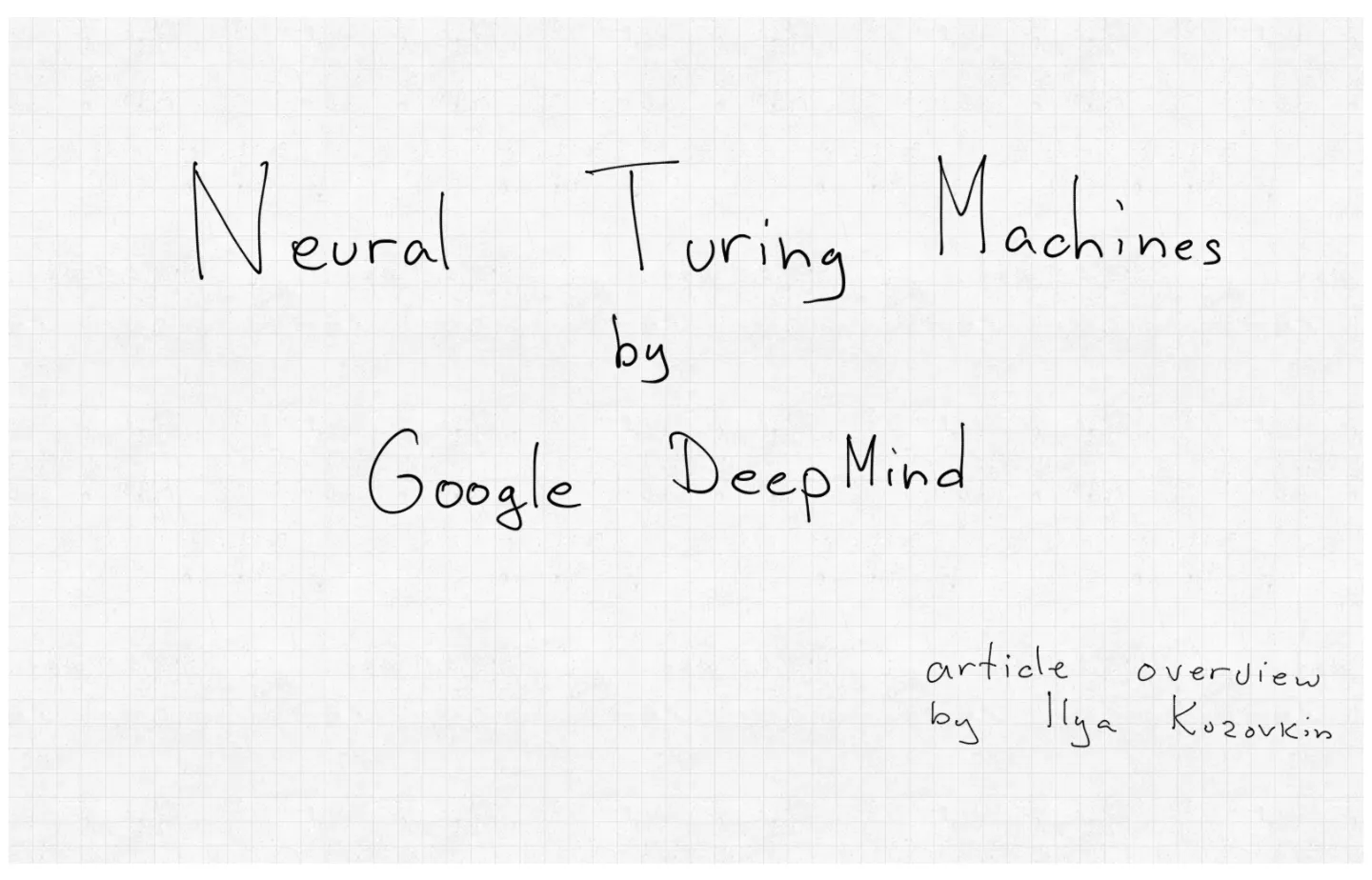
Paper overview | Neural Turing Machines by Google DeepMind
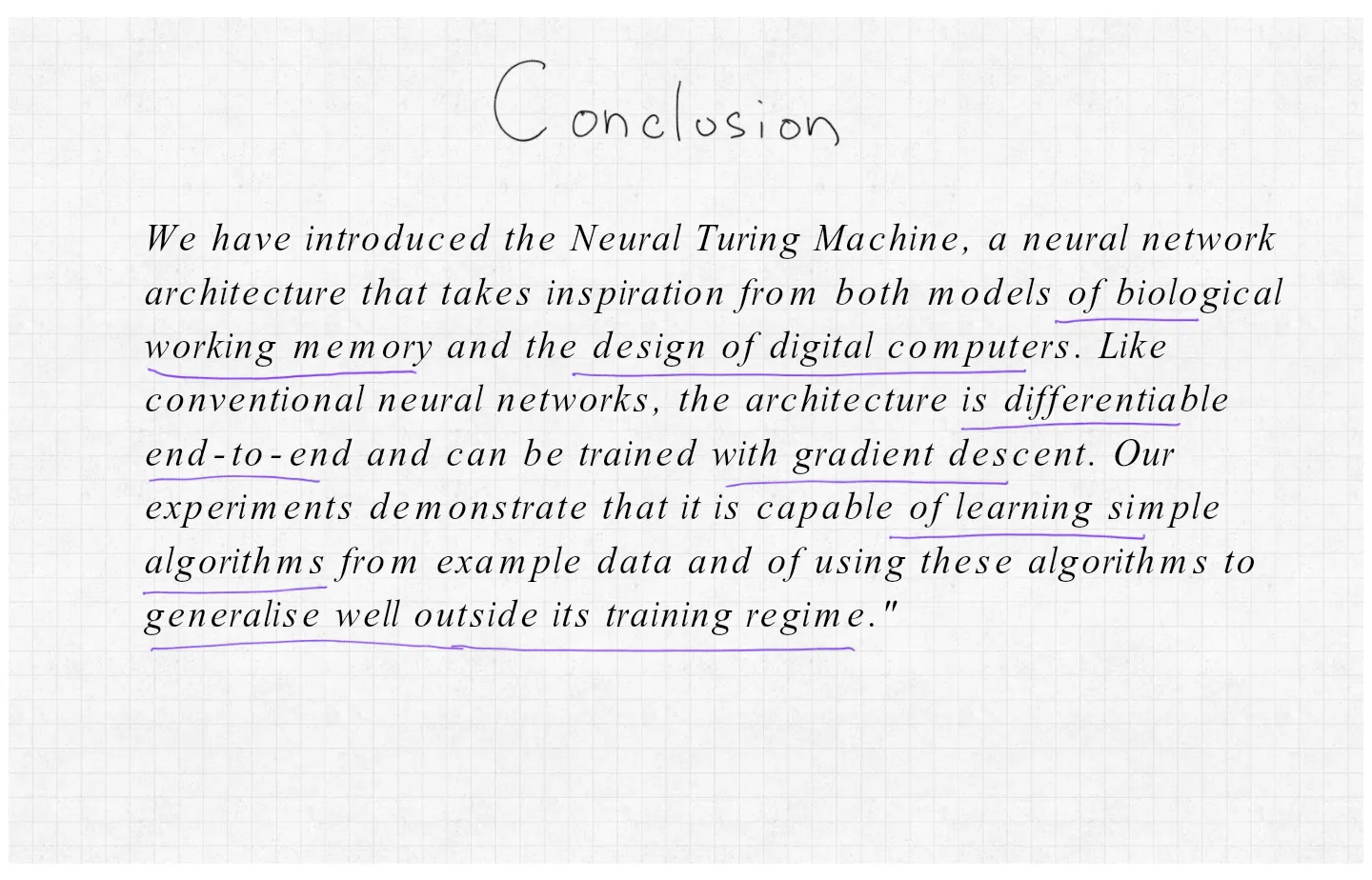
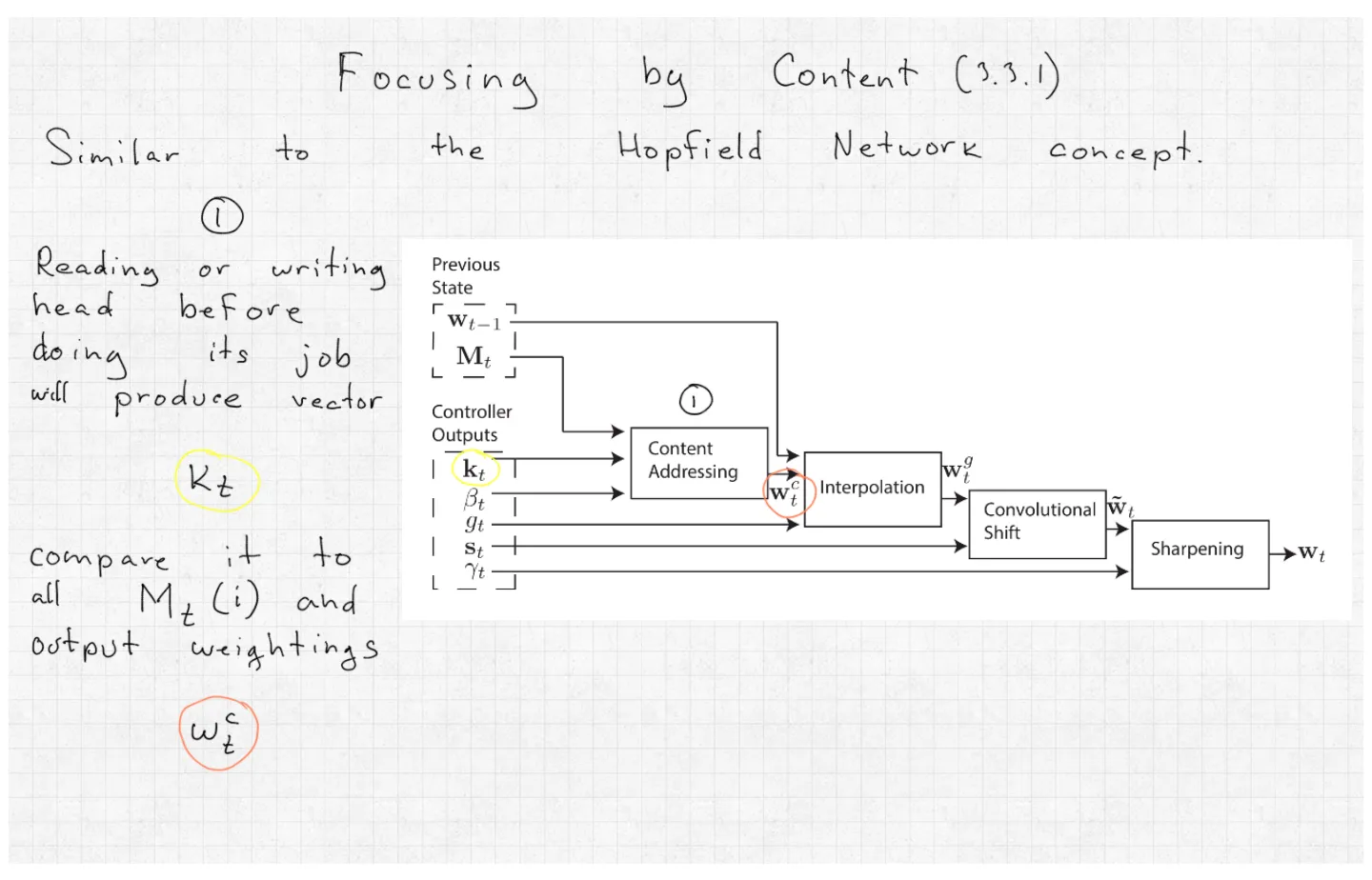
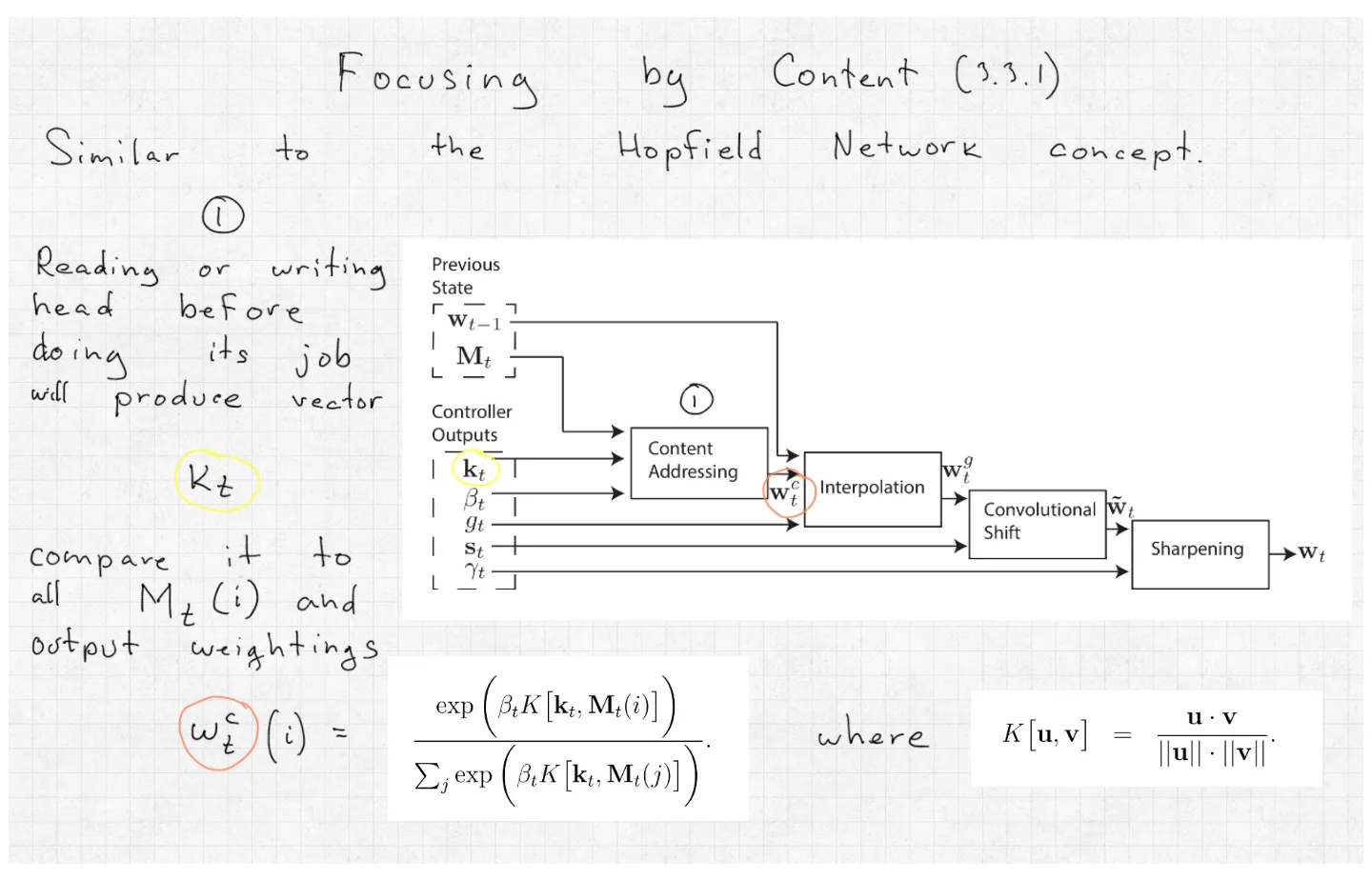
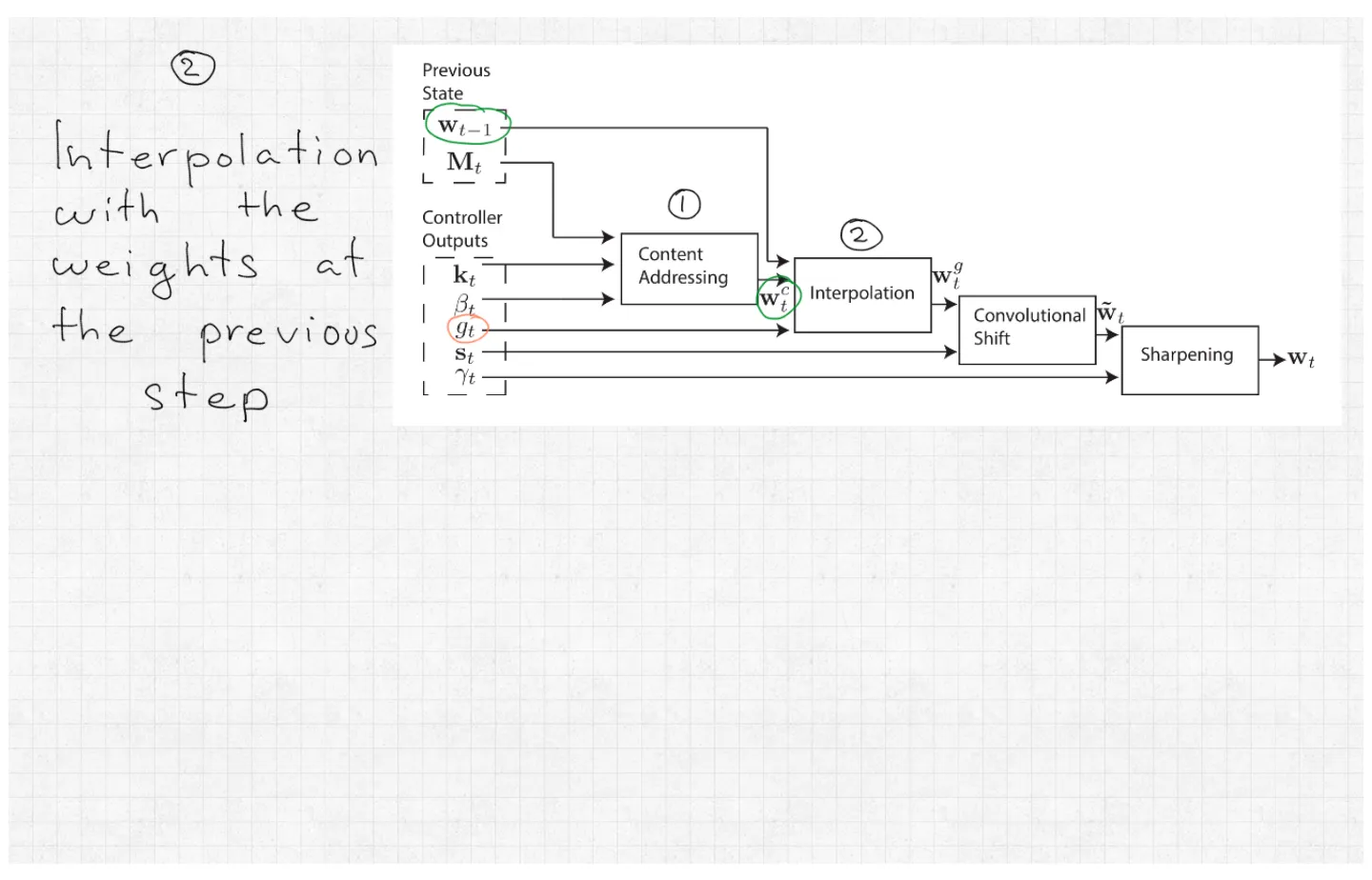
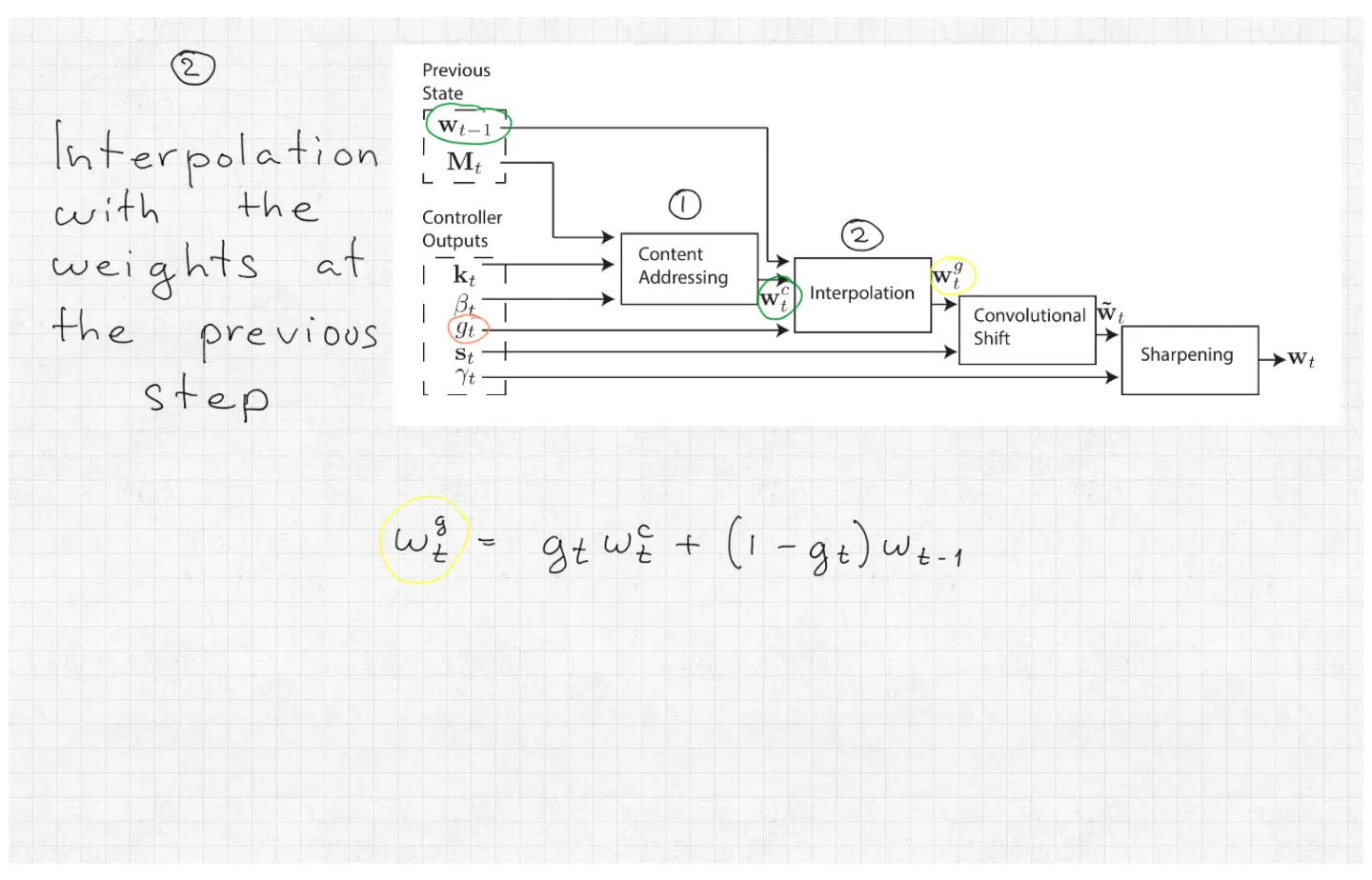
Slide 1 of 89Slide 2 of 89: We have introduced the Neural Turing Machine, a neural network architecture that takes inspiration from both models of biological working memory and the design of digital computers. Like conventional neural networks, the architecture is differentiable end-to-end and can be…Slide 3 of 89Slide 4 of 89Slide 5 of 89Slide 6 of 89Slide 7 of 89Slide 8 of 89Slide 9 of 89Slide 10 of 89Slide 11 of 89Slide 12 of 89Slide 13 of 89Slide 14 of 89Slide 15 of 89Slide 16 of 89Slide 17 of 89Slide 18 of 89Slide 19 of 89Slide 20 of 89Slide 21 of 89Slide 22 of 89Slide 23 of 89Slide 24 of 89Slide 25 of 89Slide 26 of 89Slide 27 of 89Slide 28 of 89Slide 29 of 89Slide 30 of 89Slide 31 of 89Slide 32 of 89Slide 33 of 89Slide 34 of 89Slide 35 of 89Slide 36 of 89Slide 37 of 89Slide 38 of 89Slide 39 of 89Slide 40 of 89Slide 41 of 89Slide 42 of 89Slide 43 of 89Slide 44 of 89Slide 45 of 89Slide 46 of 89Slide 47 of 89Slide 48 of 89Slide 49 of 89Slide 50 of 89Slide 51 of 89Slide 52 of 89Slide 53 of 89Slide 54 of 89Slide 55 of 89Slide 56 of 89Slide 57 of 89Slide 58 of 89Slide 59 of 89Slide 60 of 89Slide 61 of 89Slide 62 of 89Slide 63 of 89Slide 64 of 89Slide 65 of 89Slide 66 of 89Slide 67 of 89Slide 68 of 89Slide 69 of 89Slide 70 of 89Slide 71 of 89Slide 72 of 89Slide 73 of 89Slide 74 of 89Slide 75 of 89Slide 76 of 89Slide 77 of 89Slide 78 of 89Slide 79 of 89Slide 80 of 89Slide 81 of 89Slide 82 of 89Slide 83 of 89Slide 84 of 89Slide 85 of 89Slide 86 of 89Slide 87 of 89Slide 88 of 89Slide 89 of 89
1 / 89

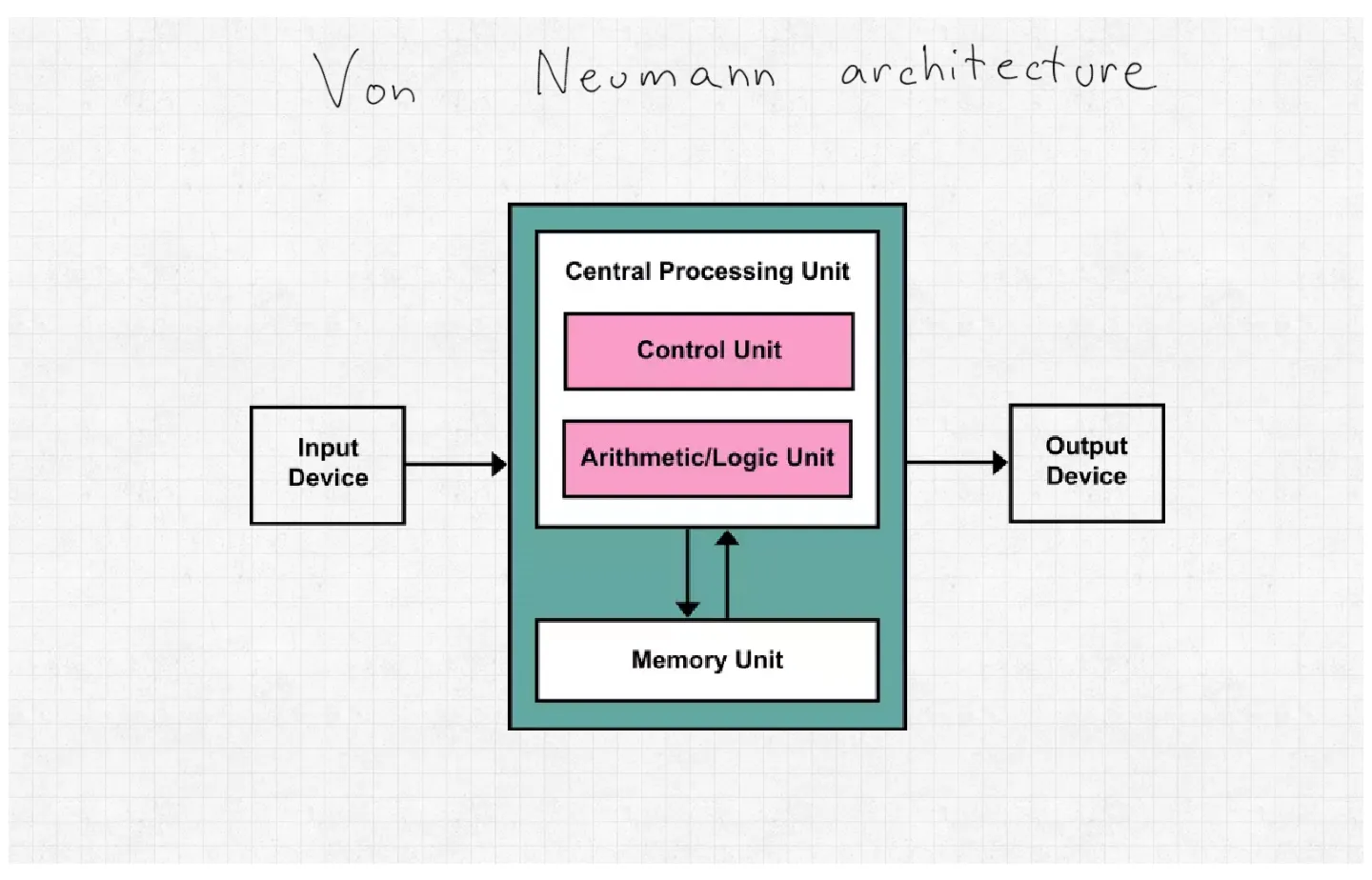
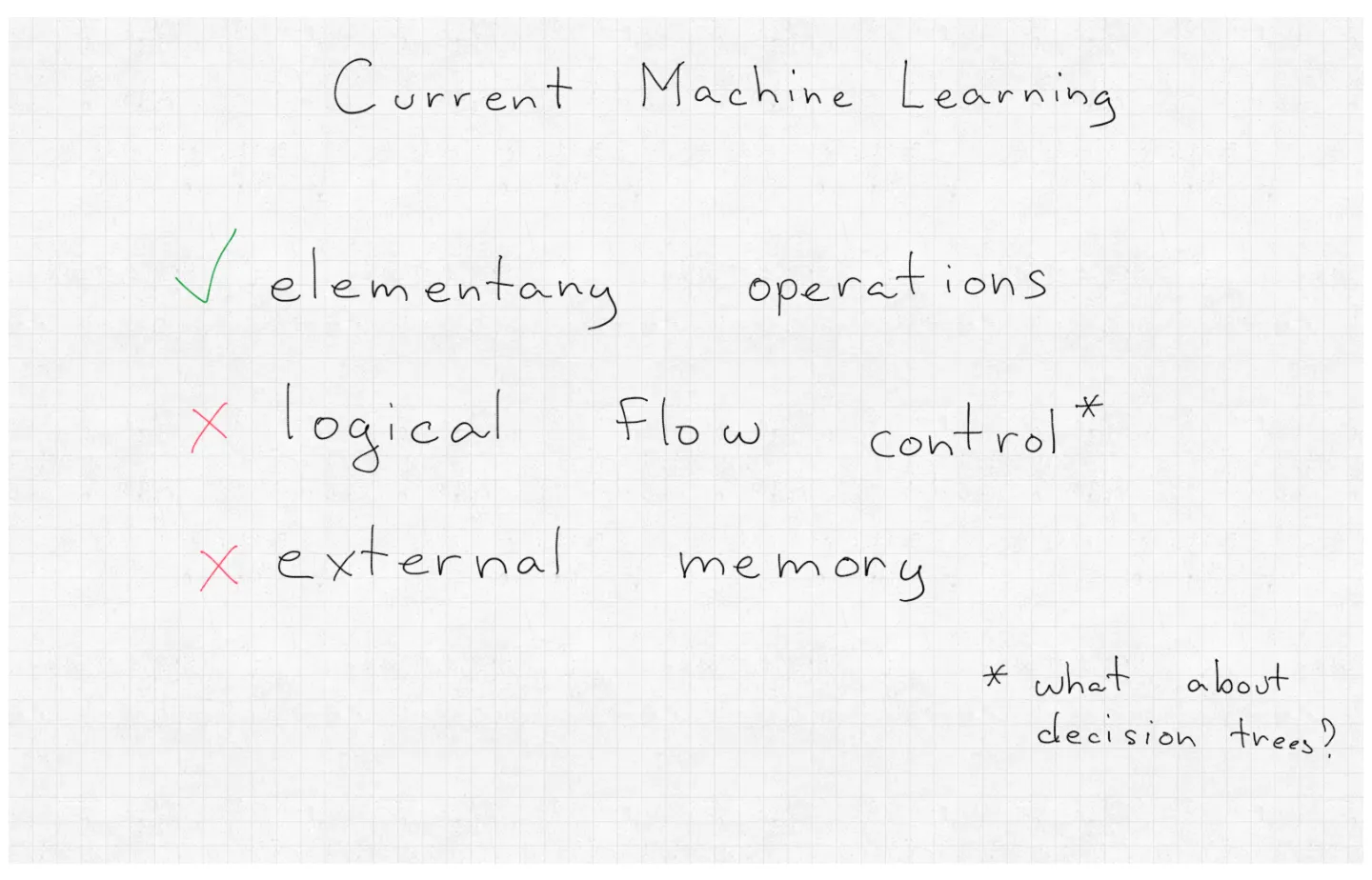
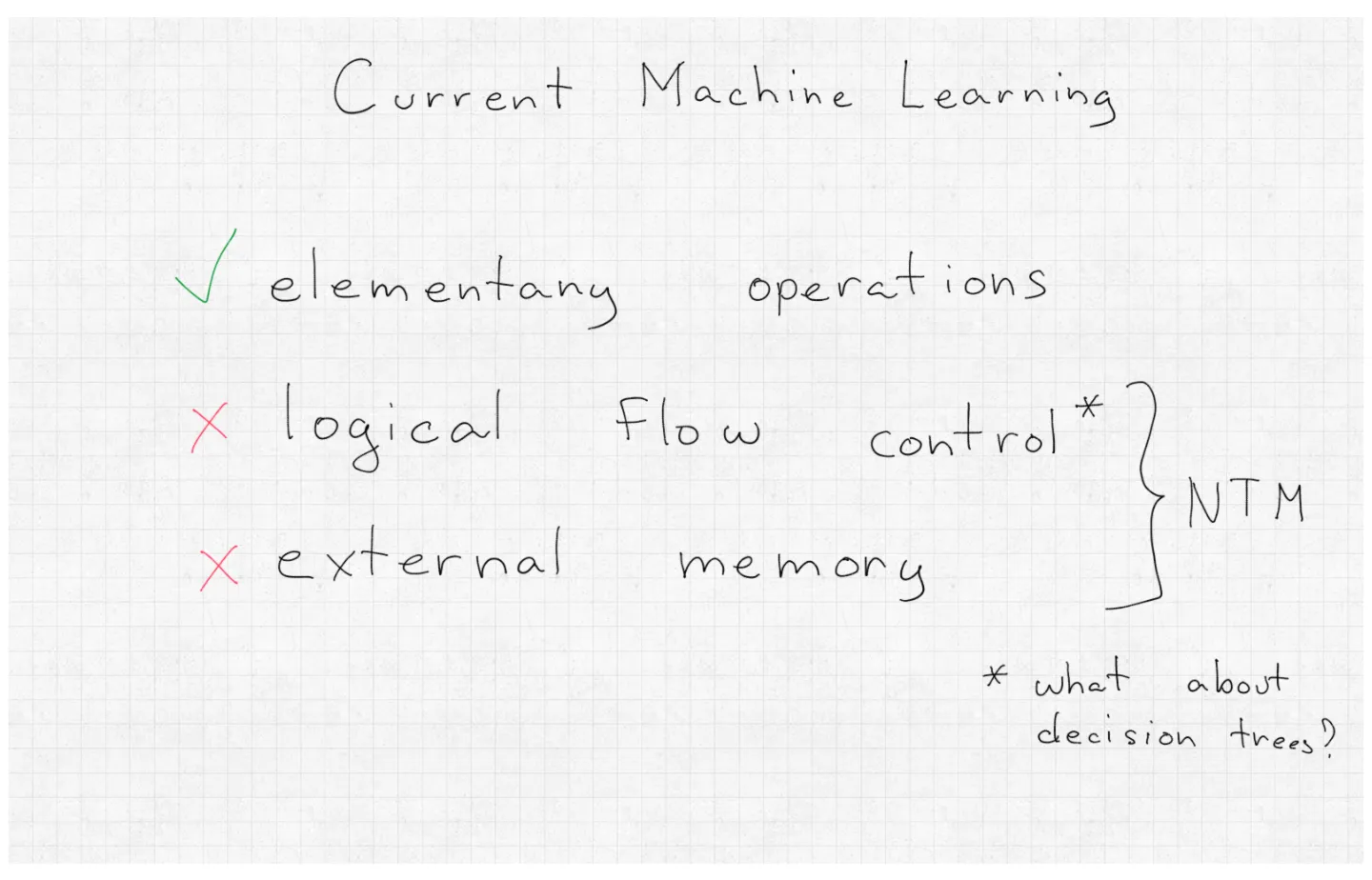
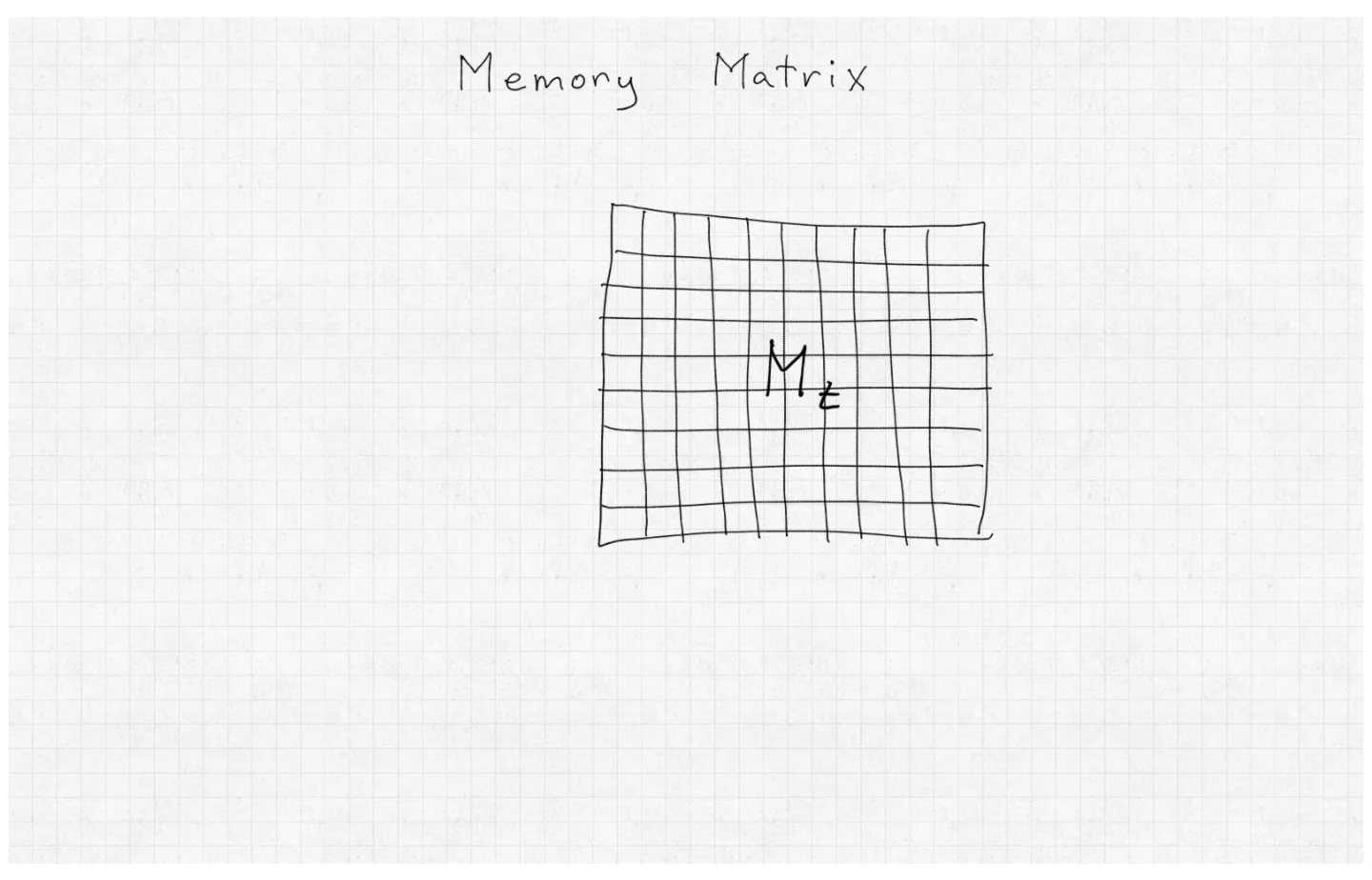
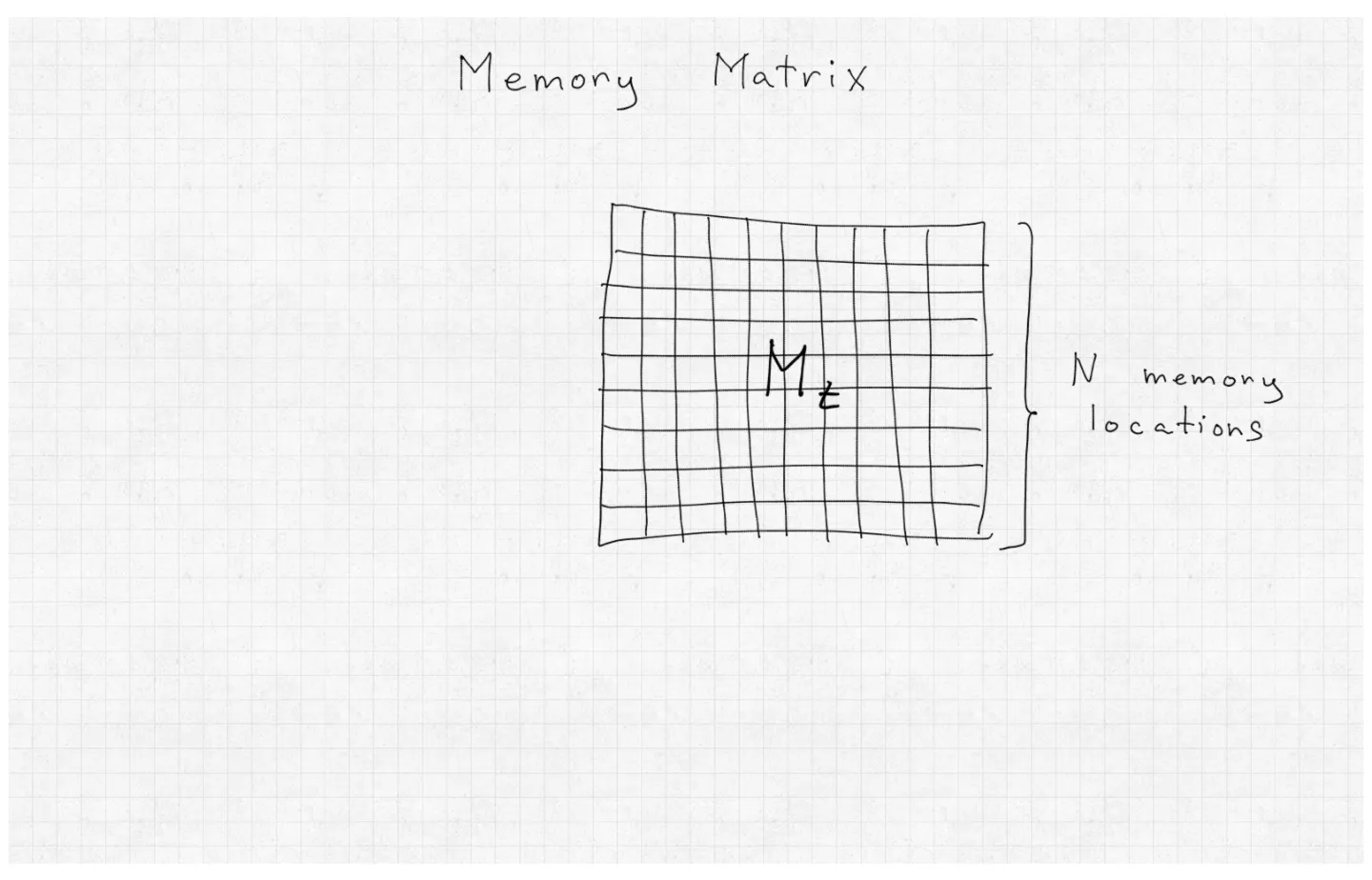
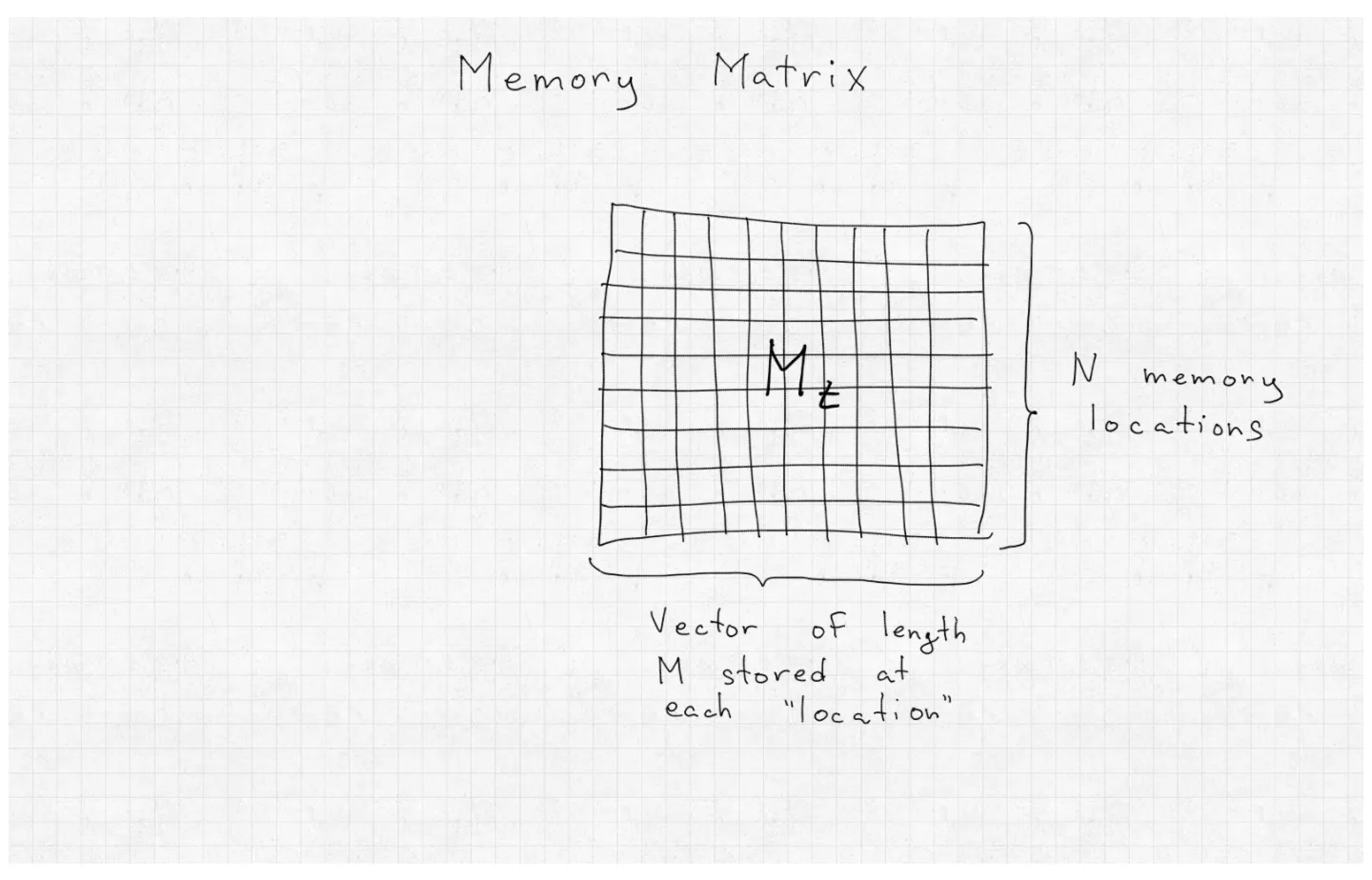
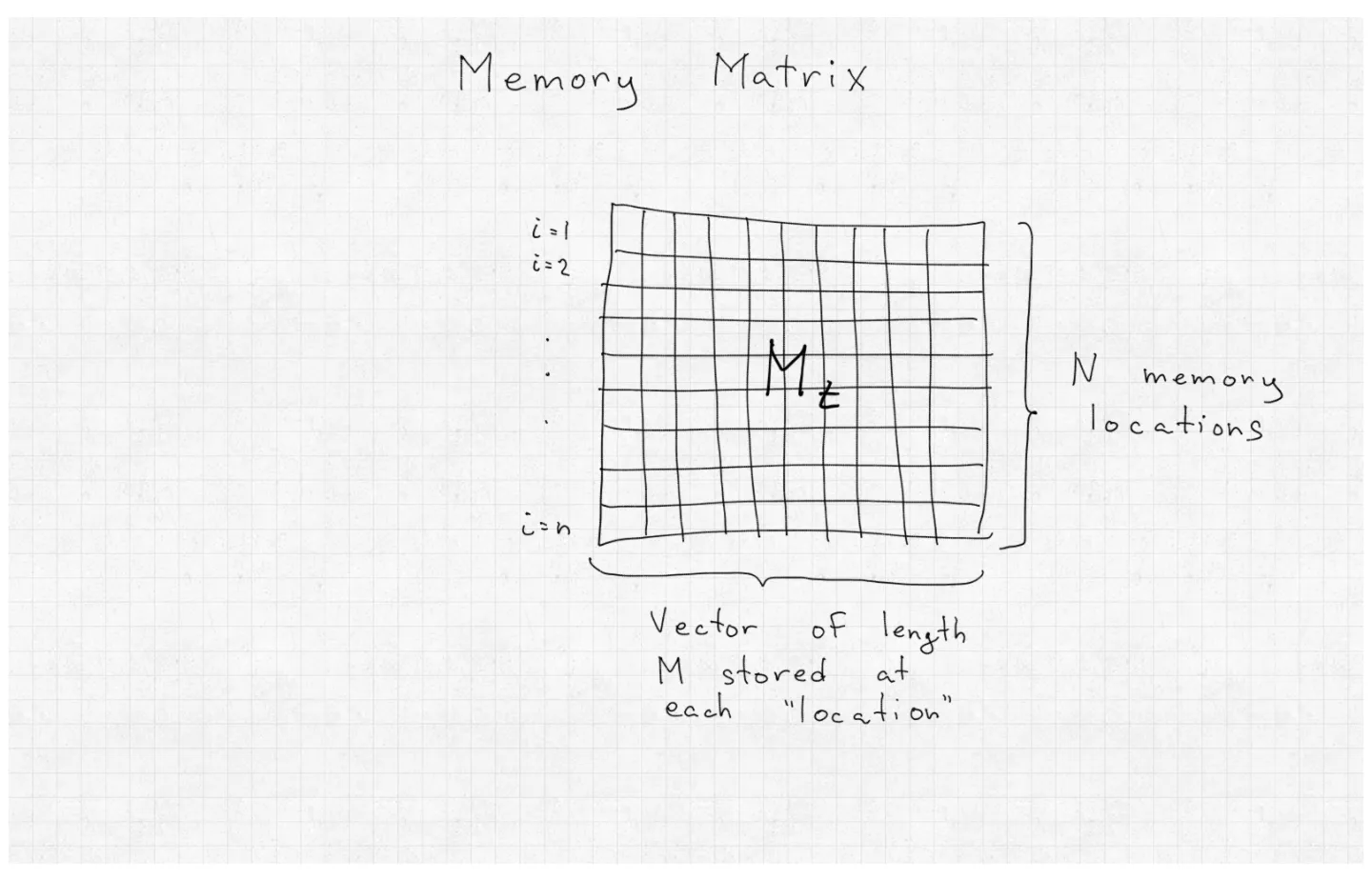
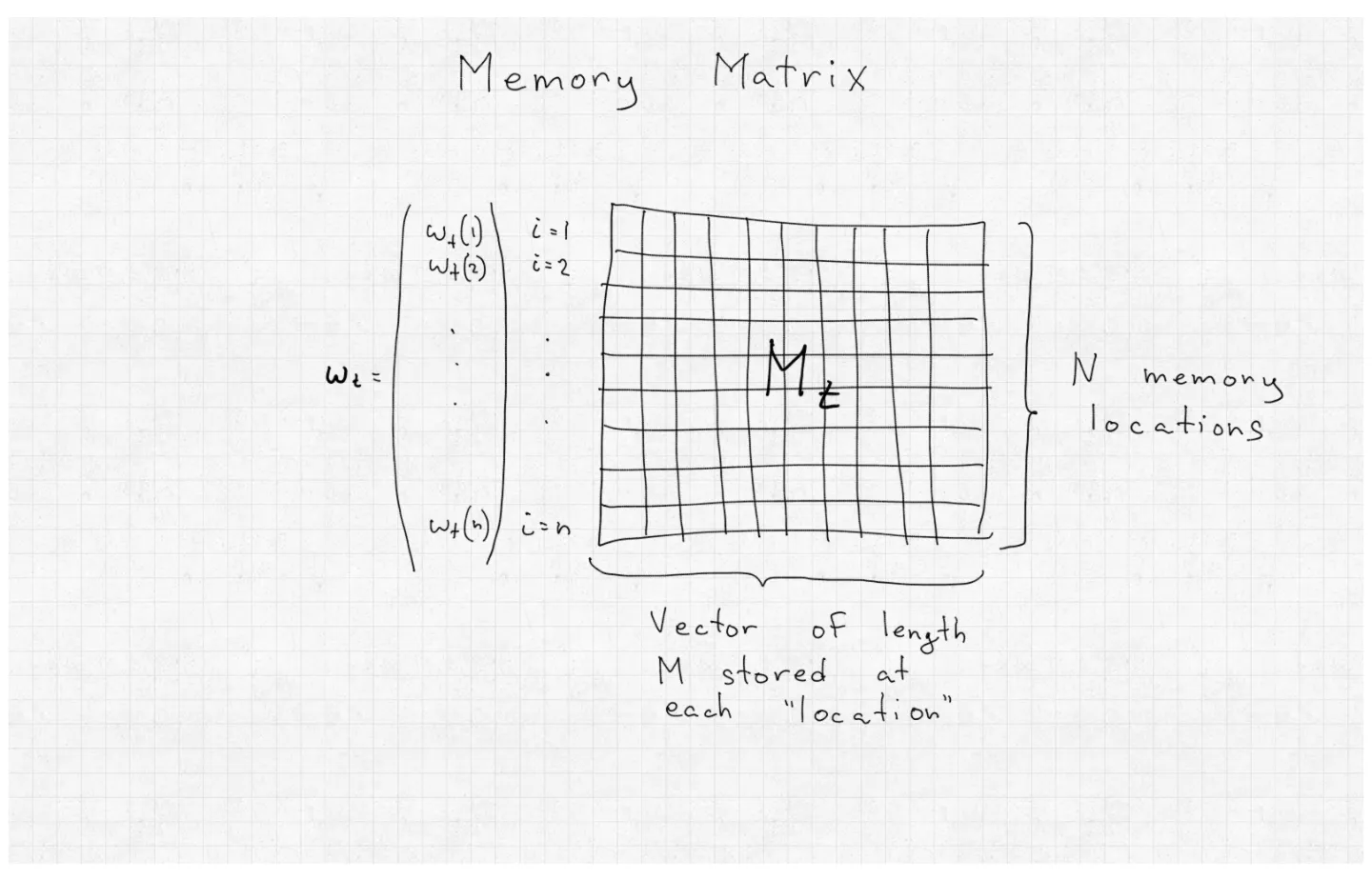
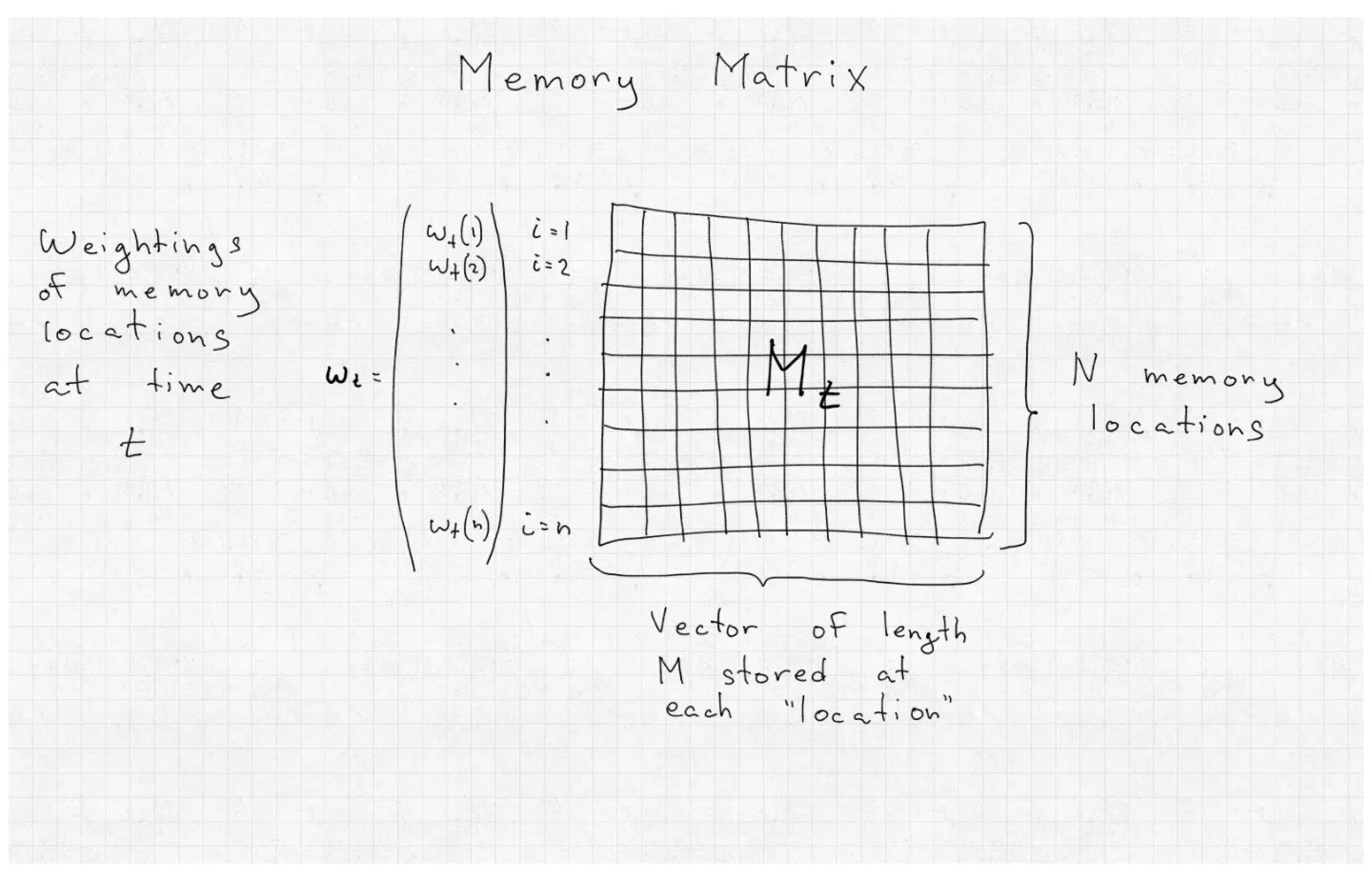
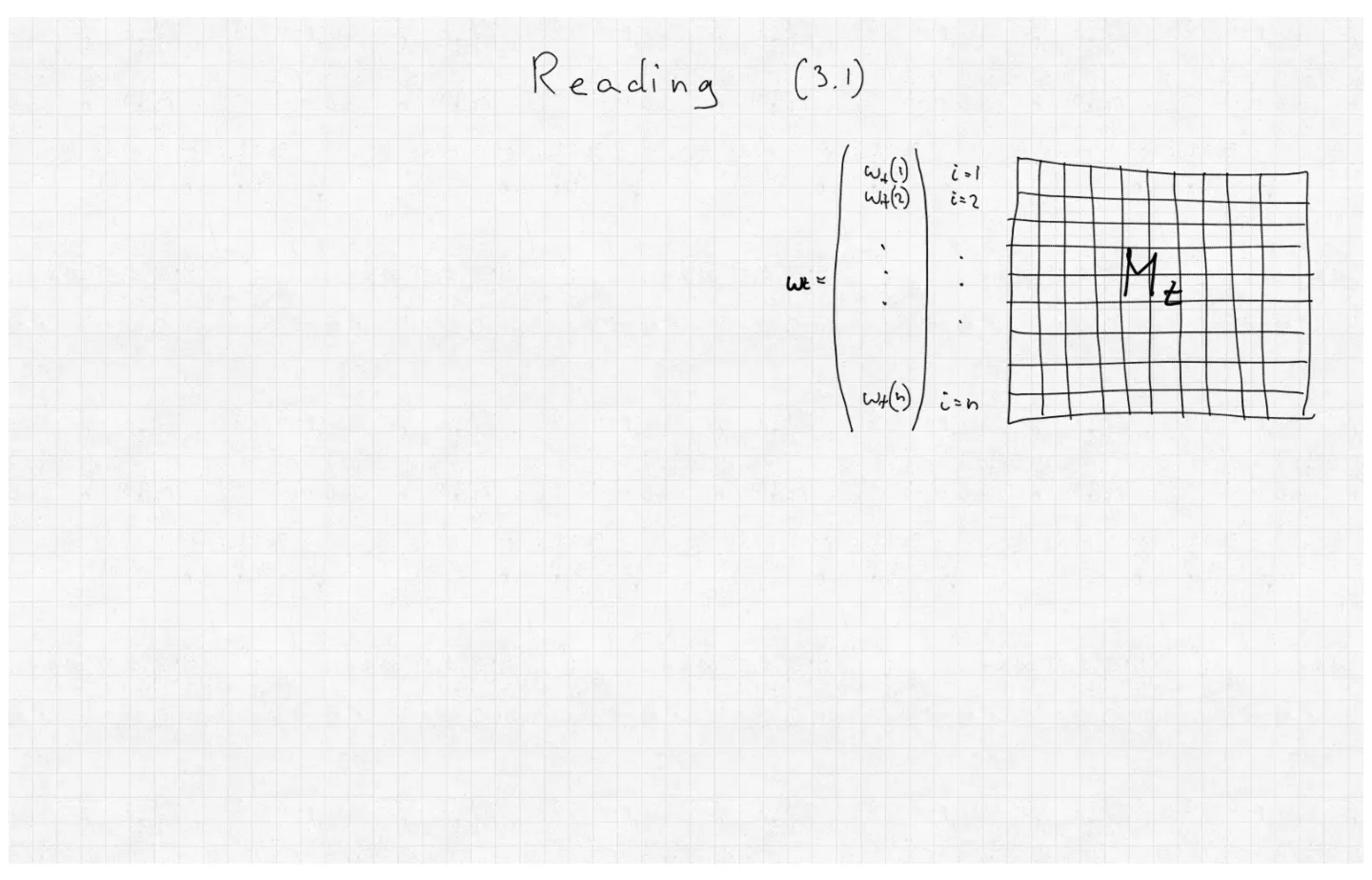
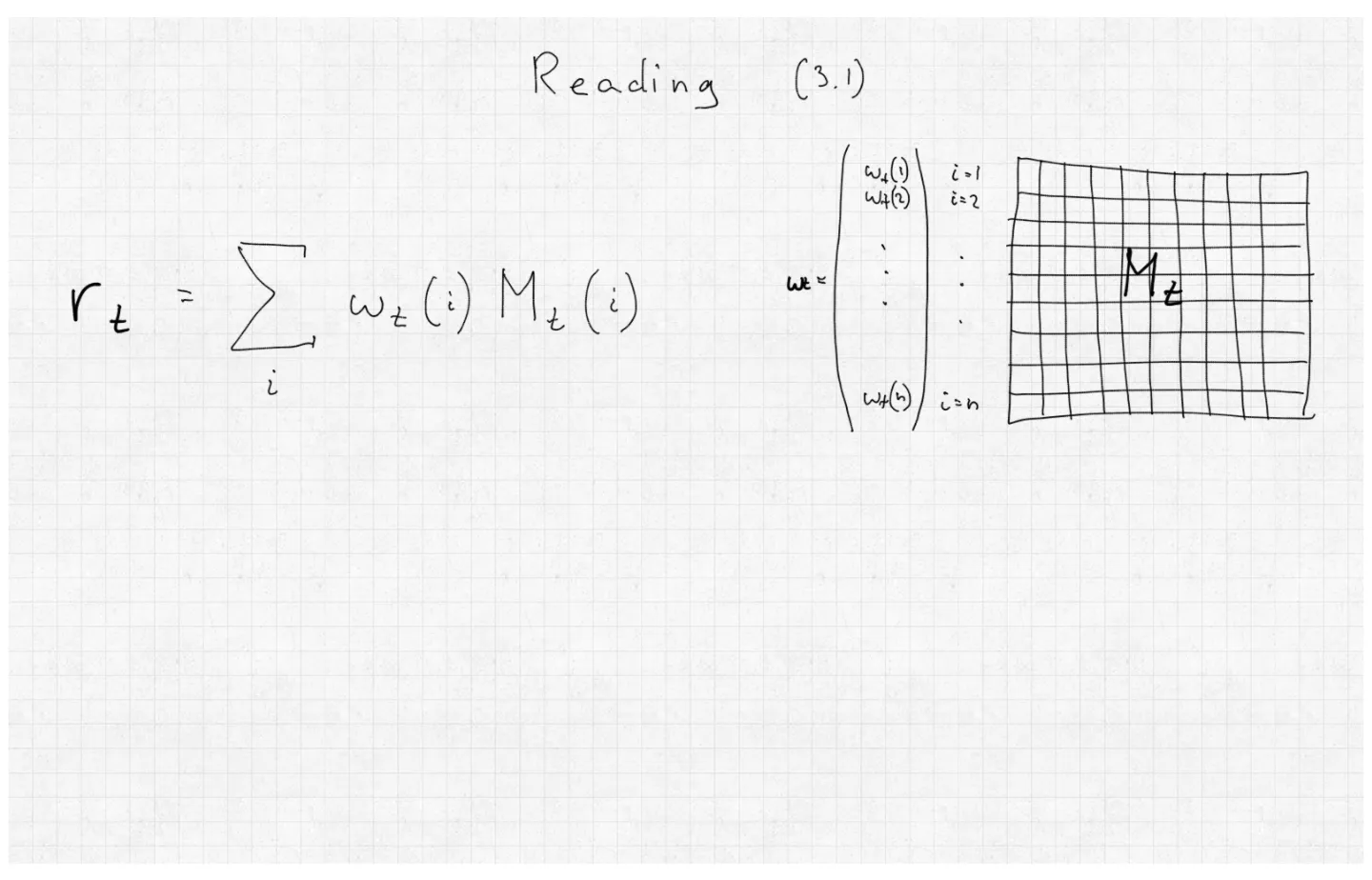
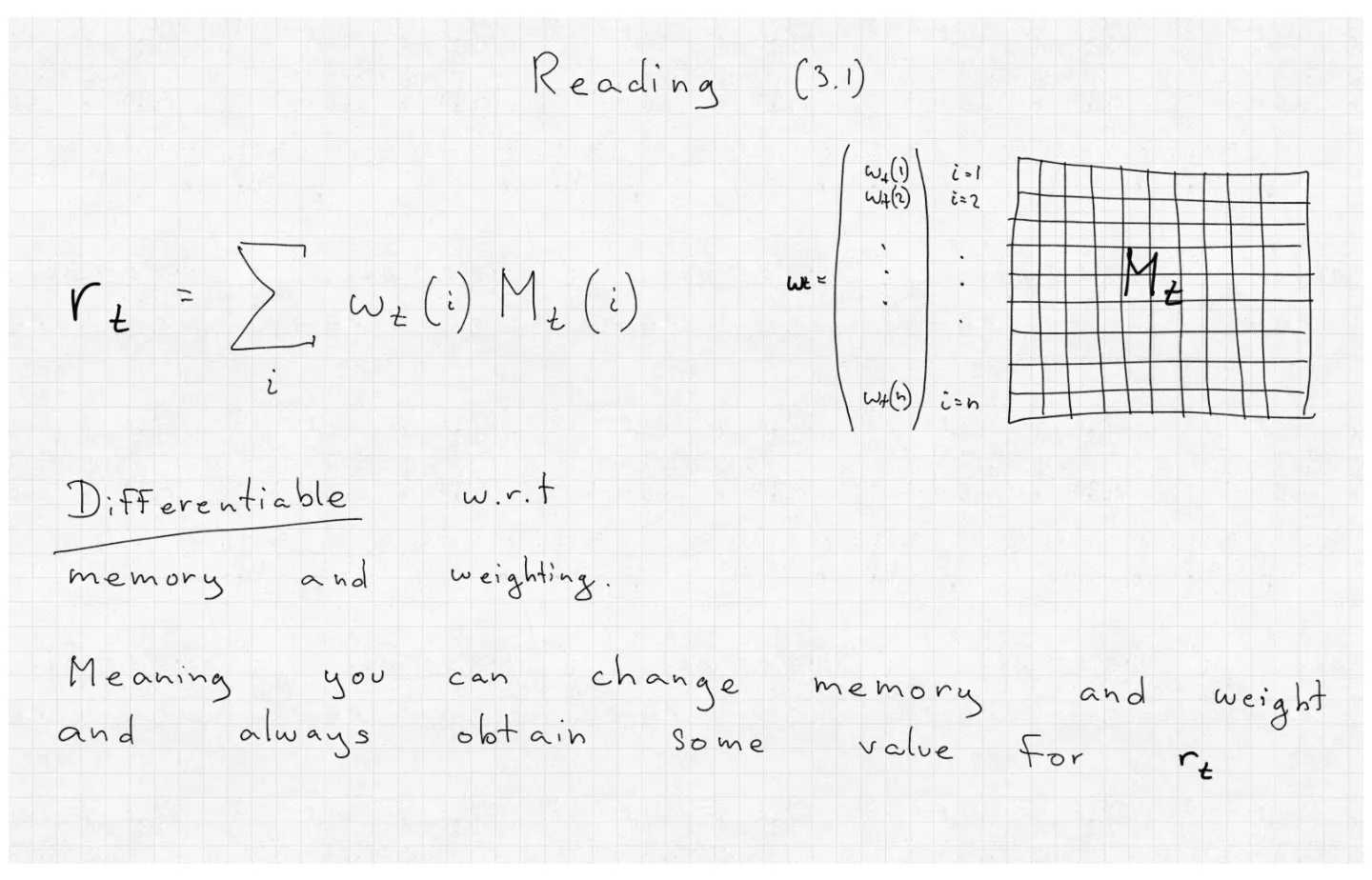
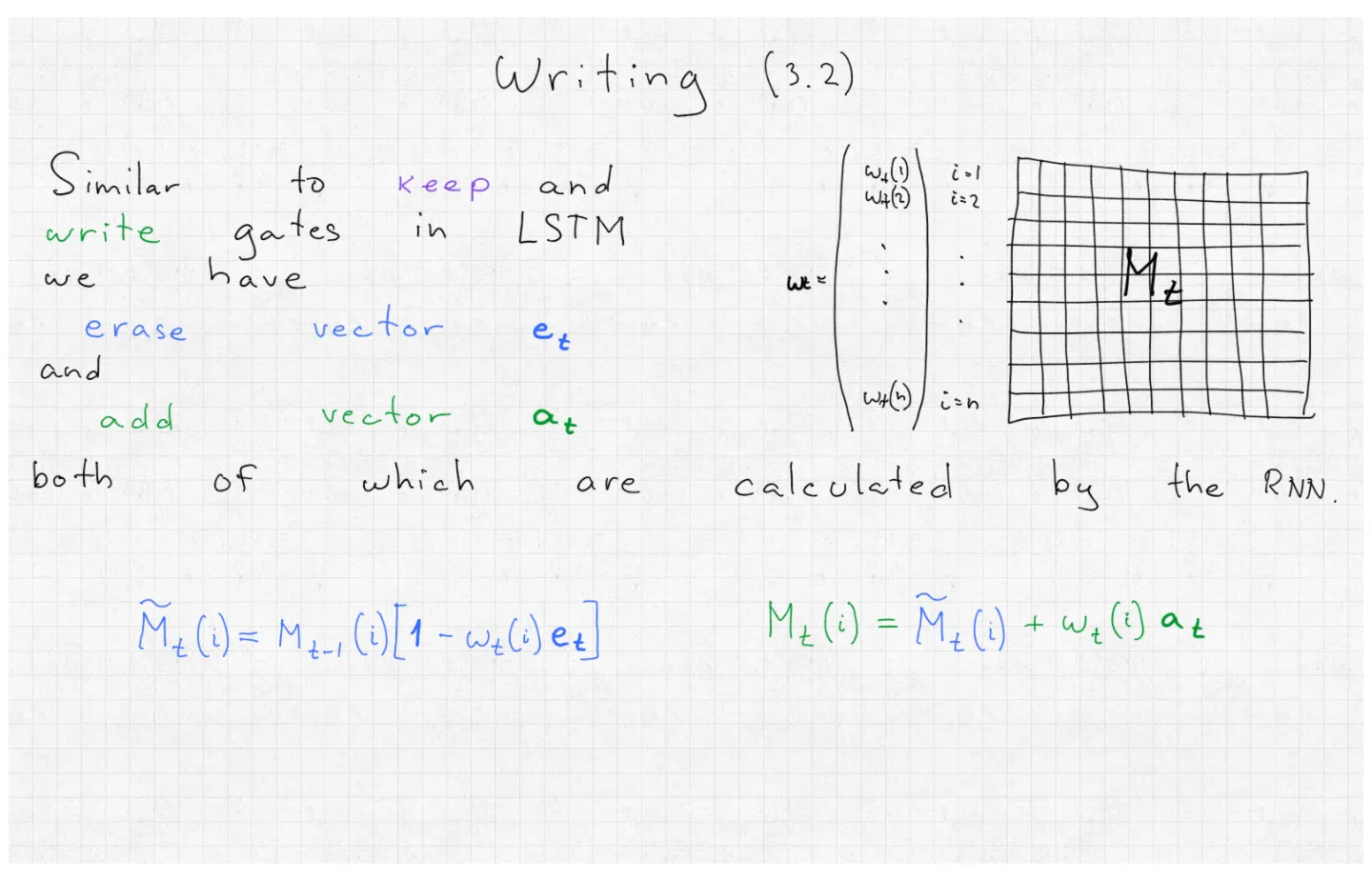
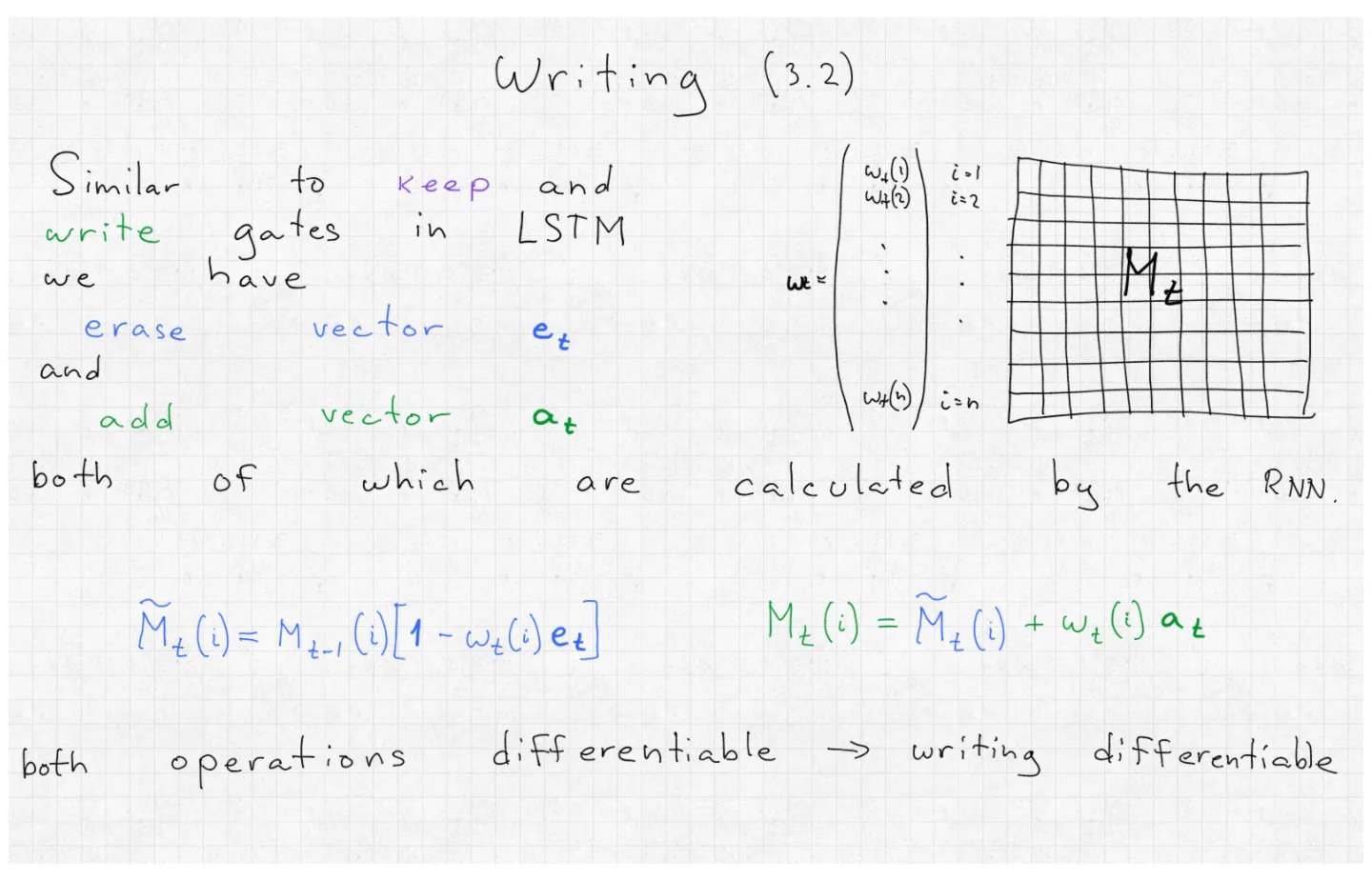
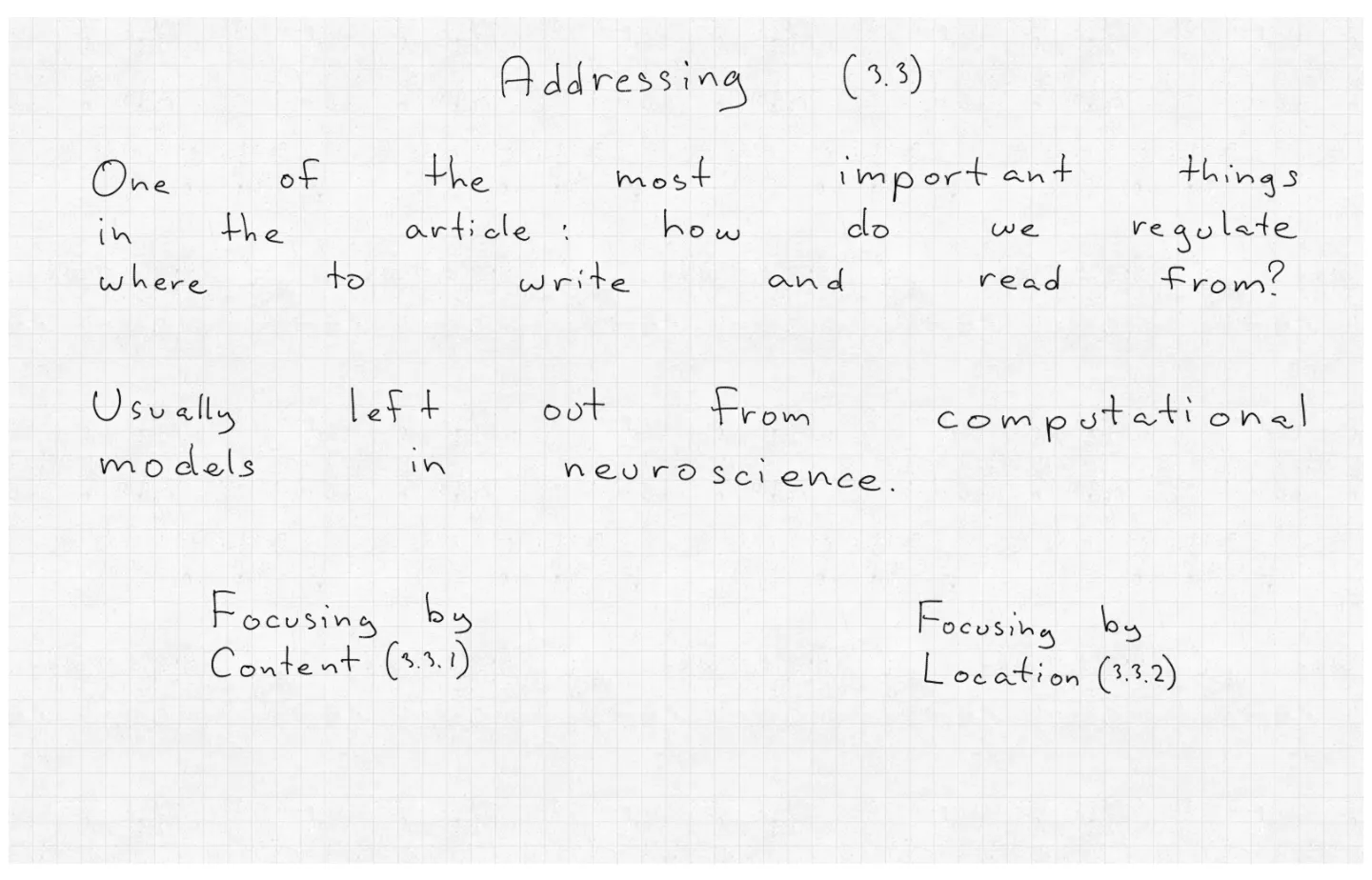
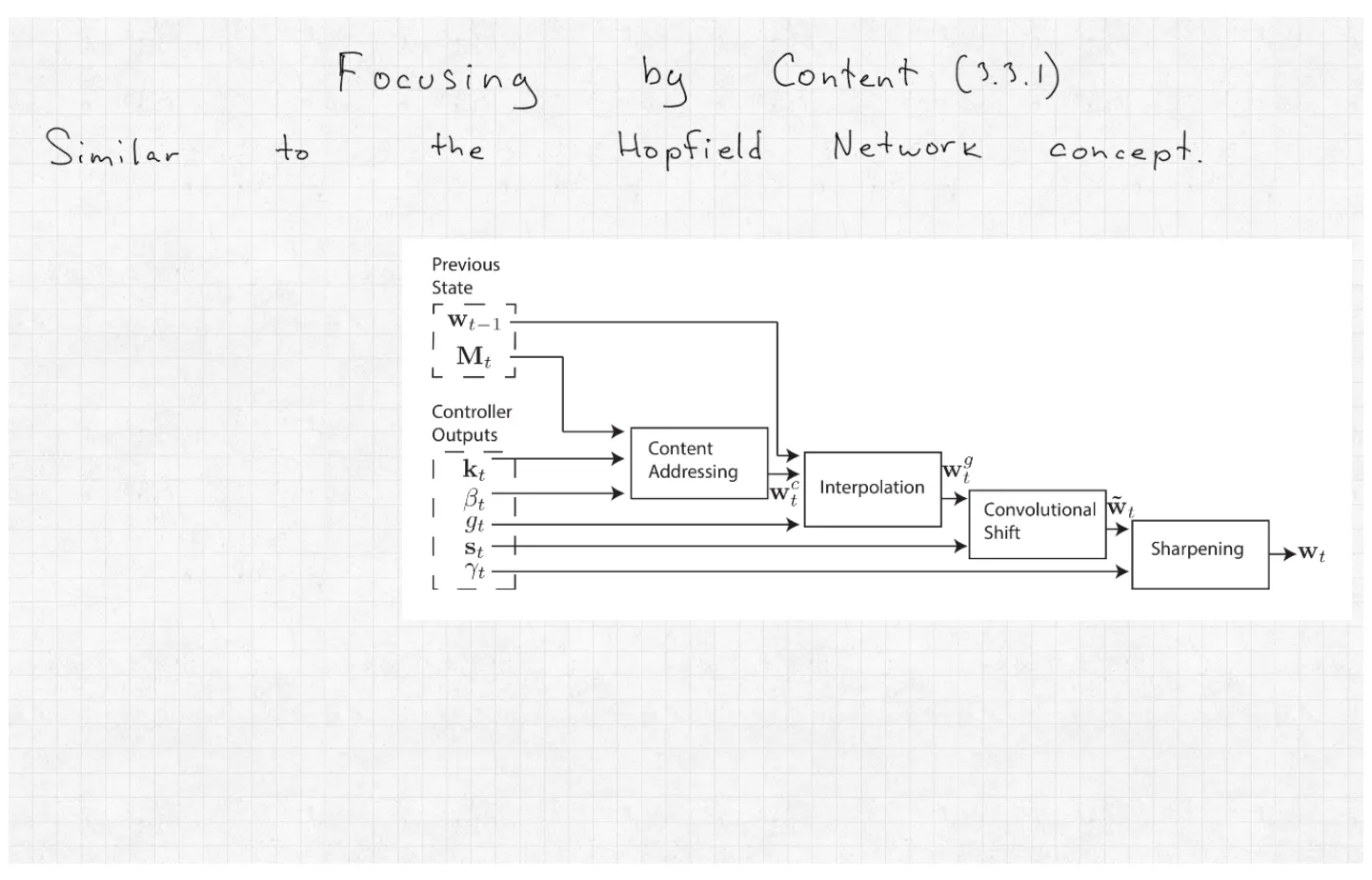
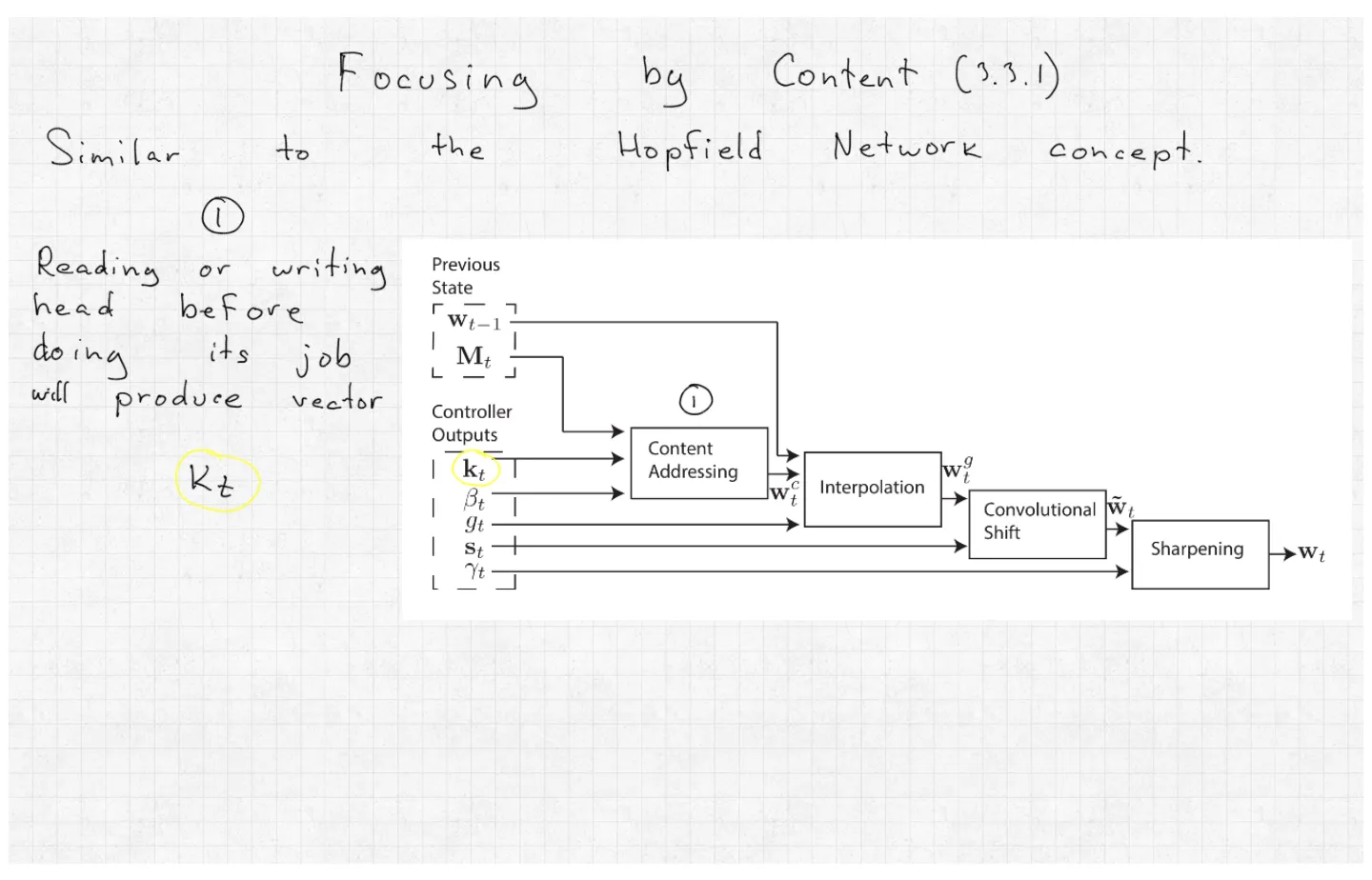
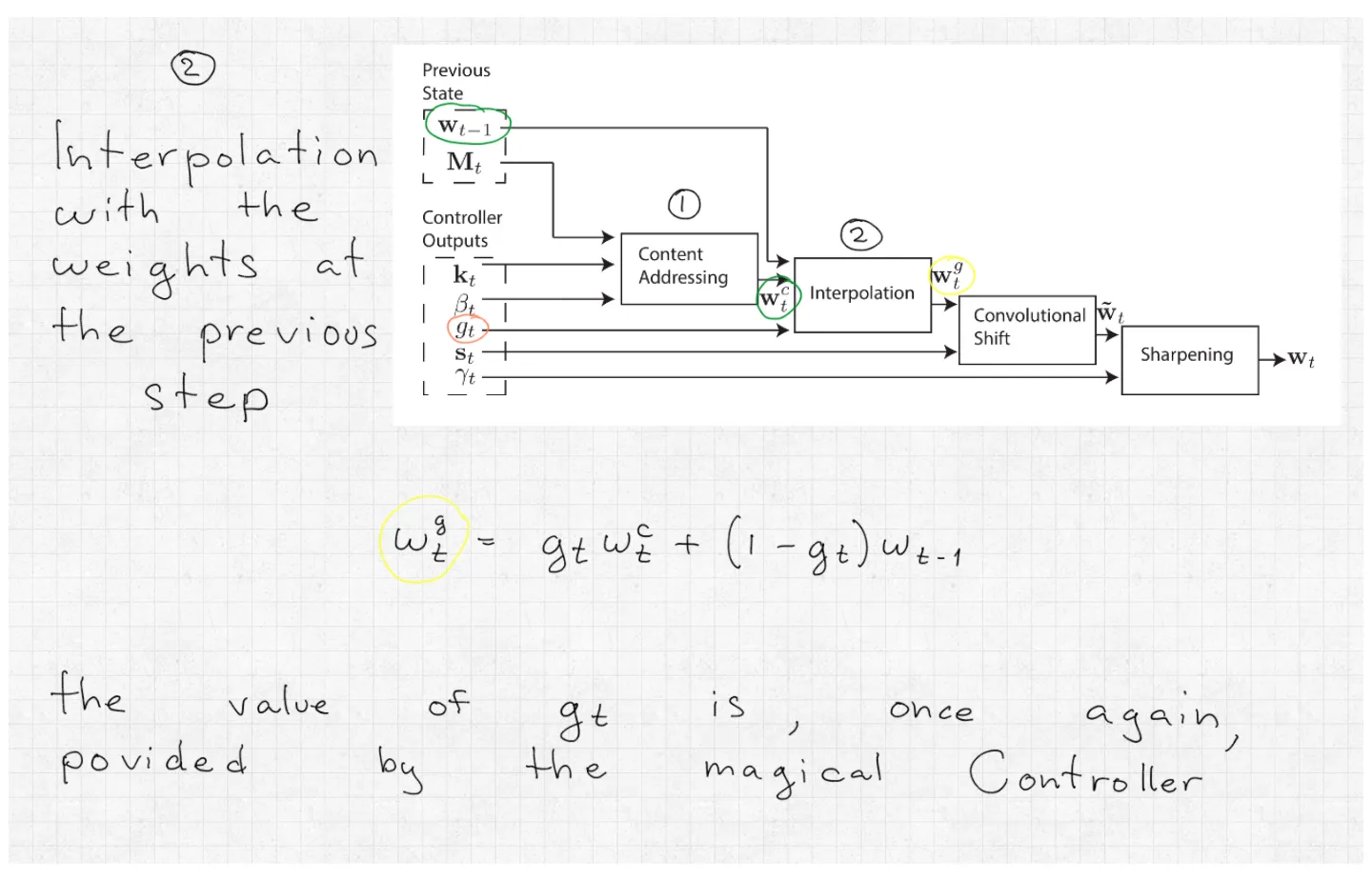
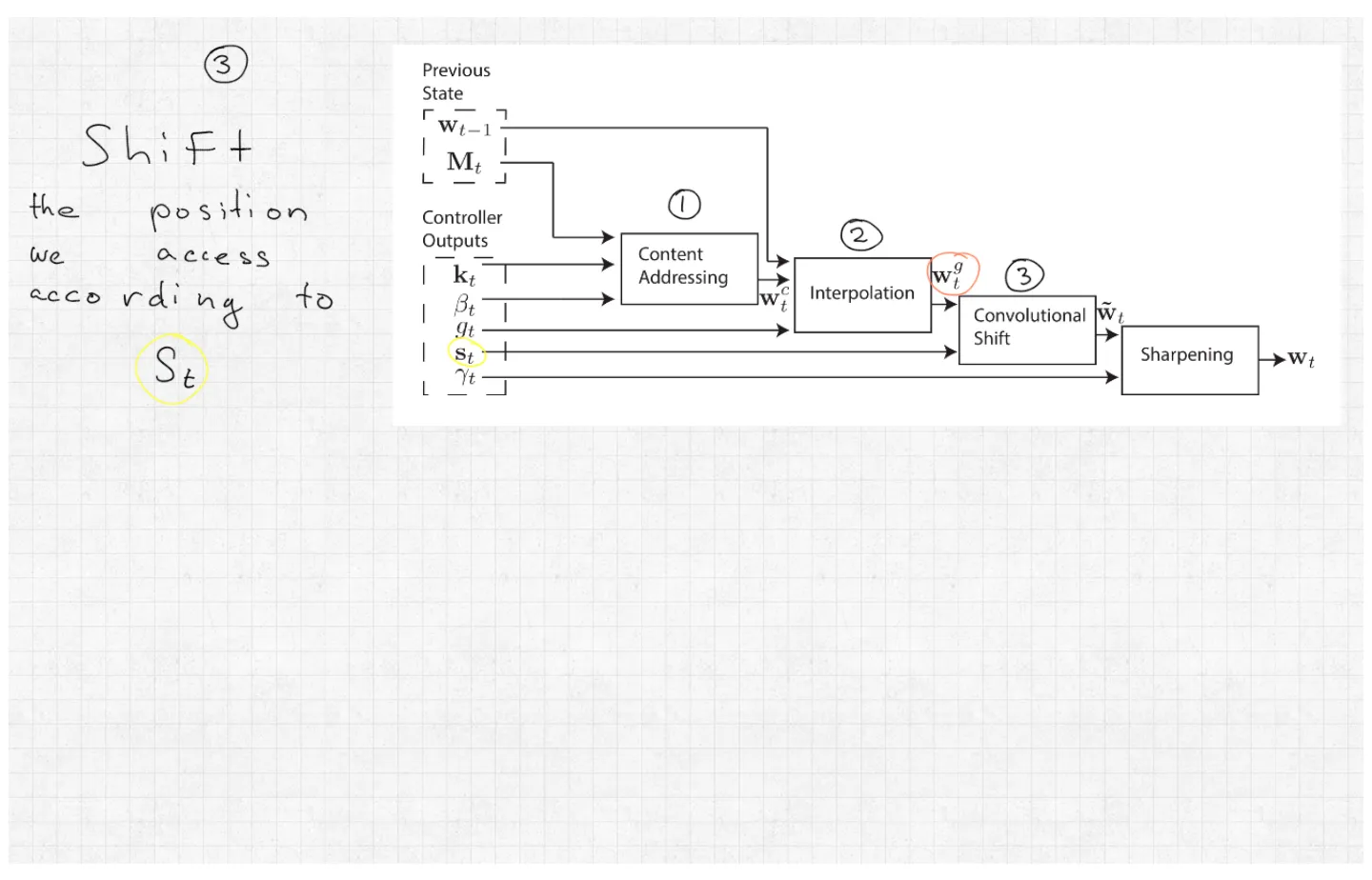
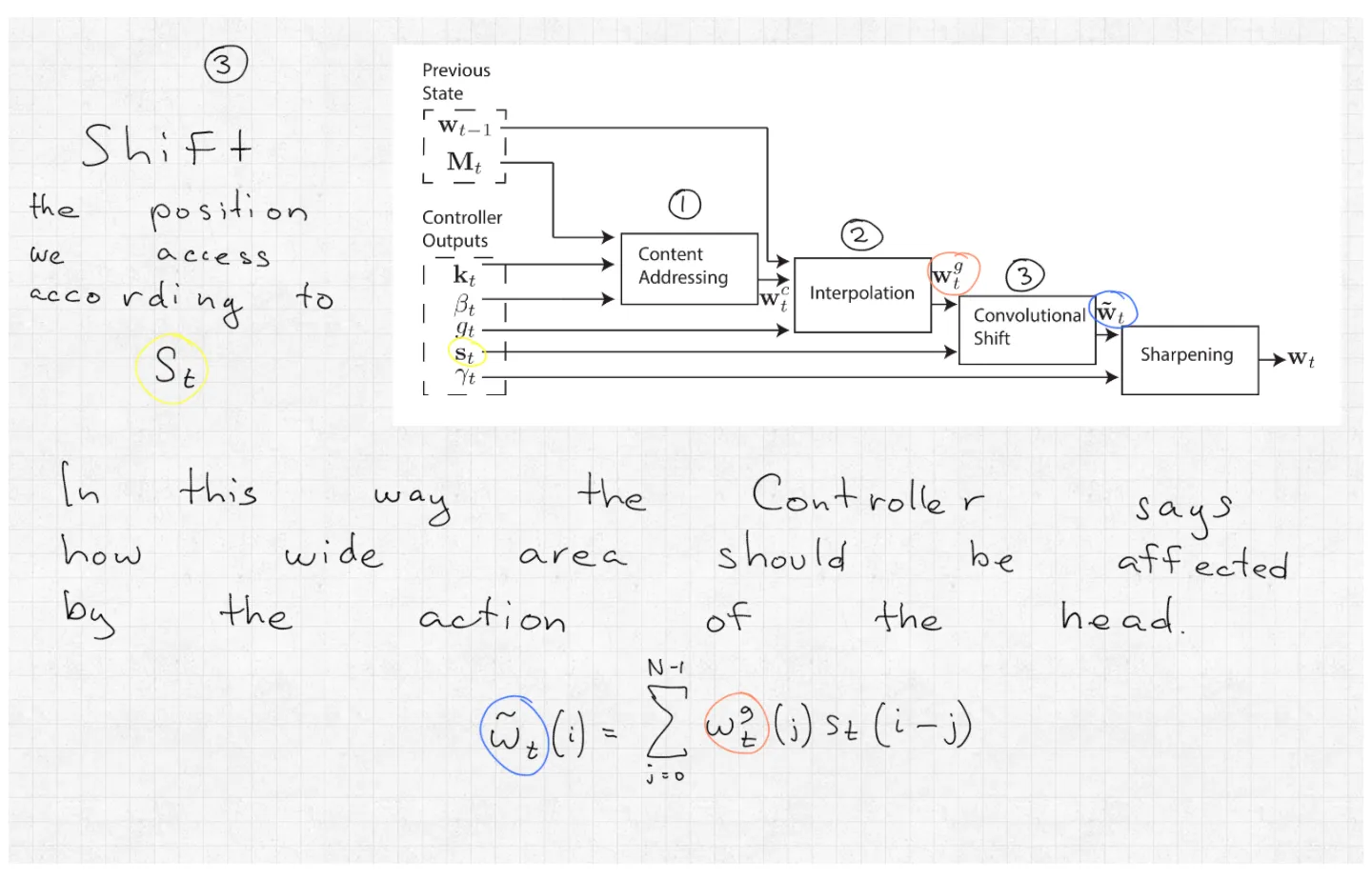
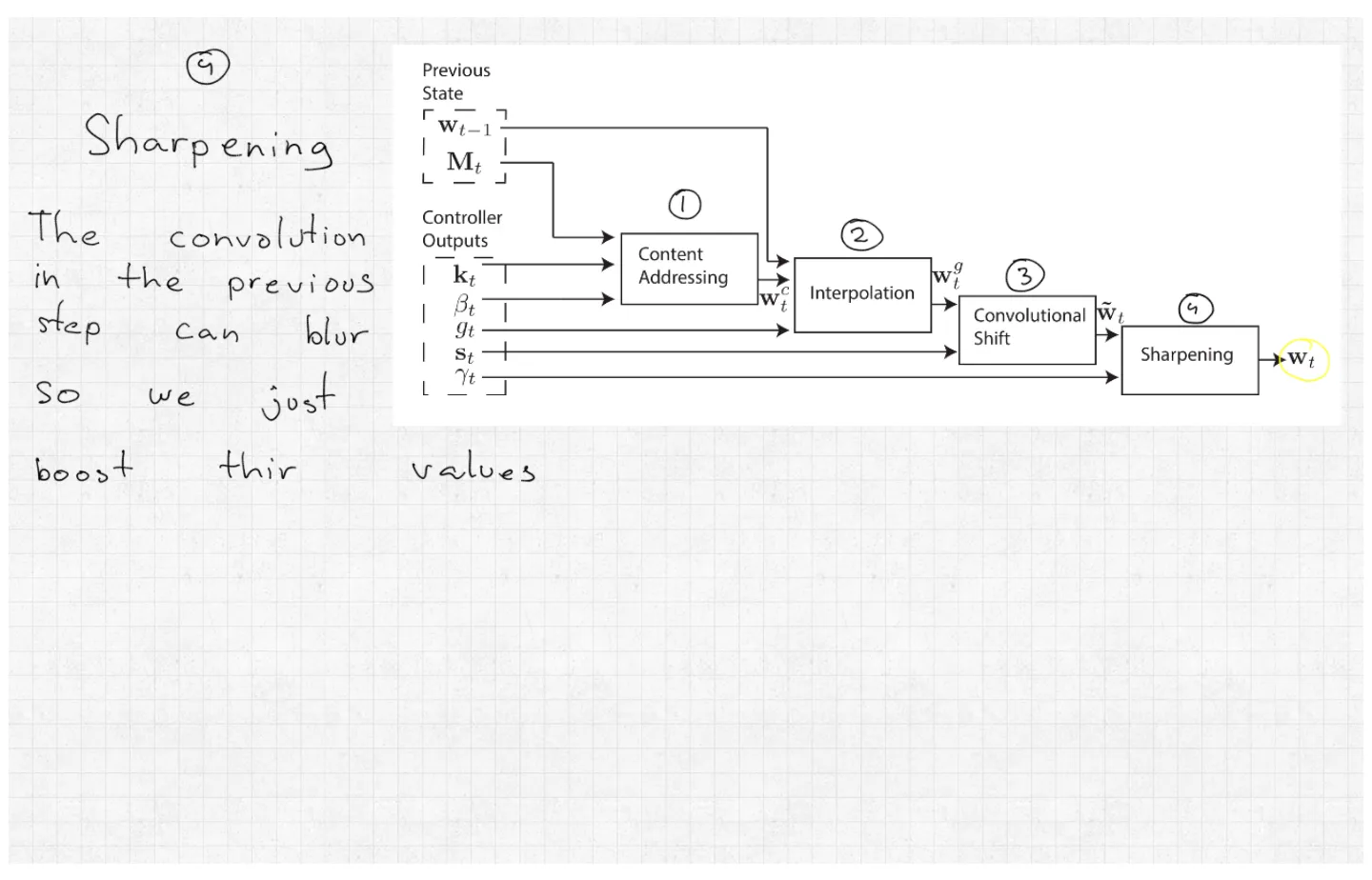
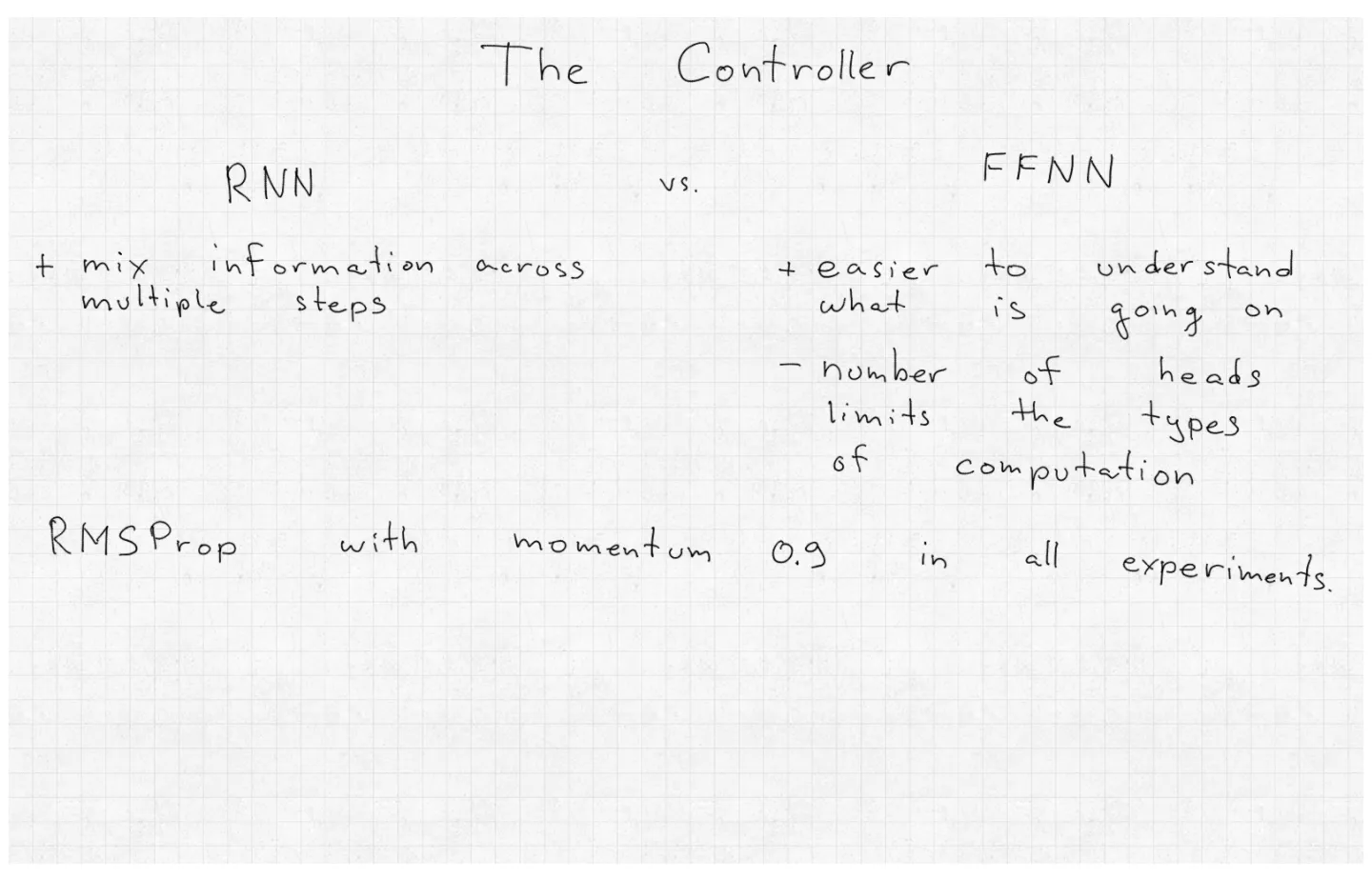
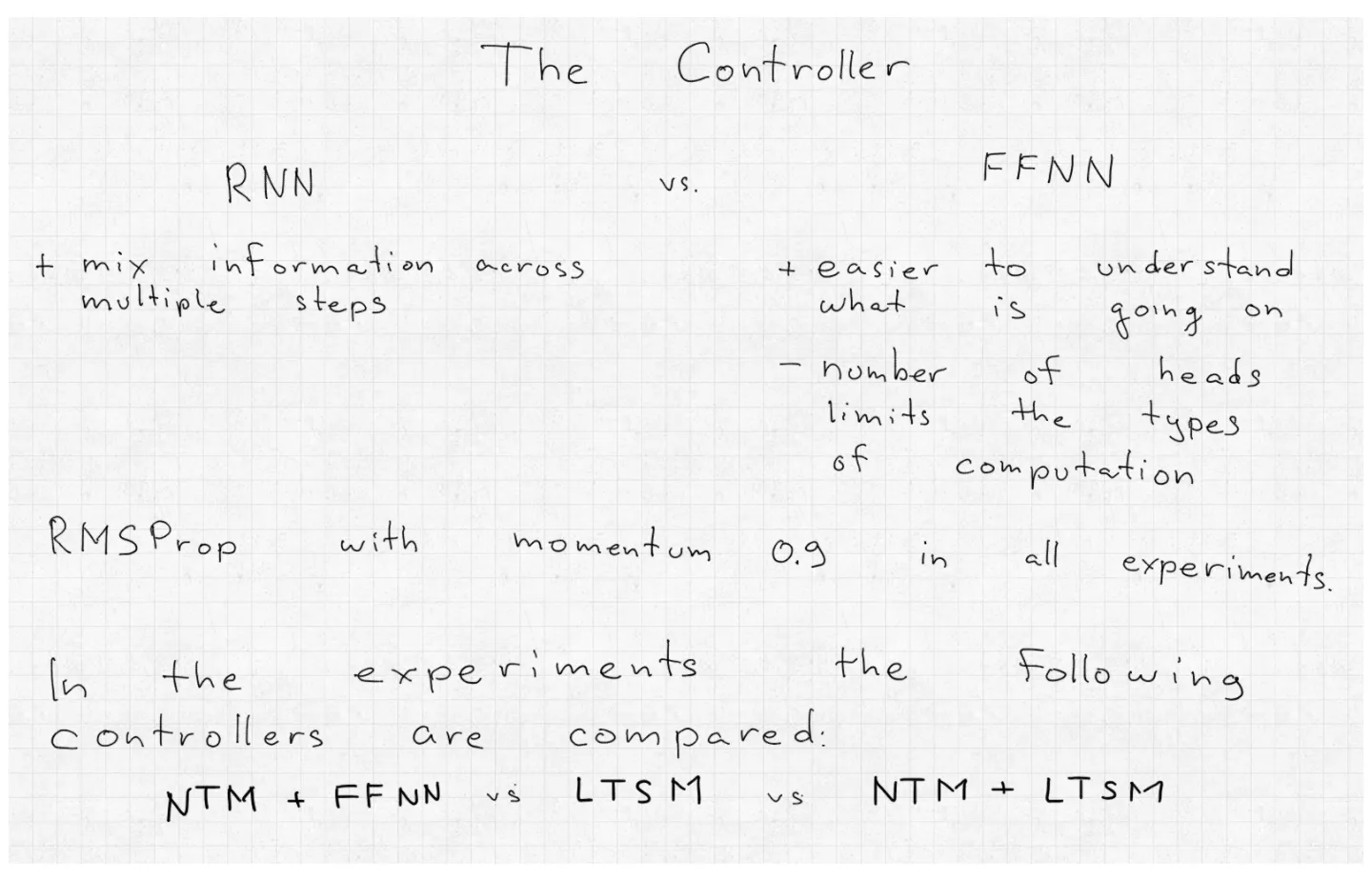
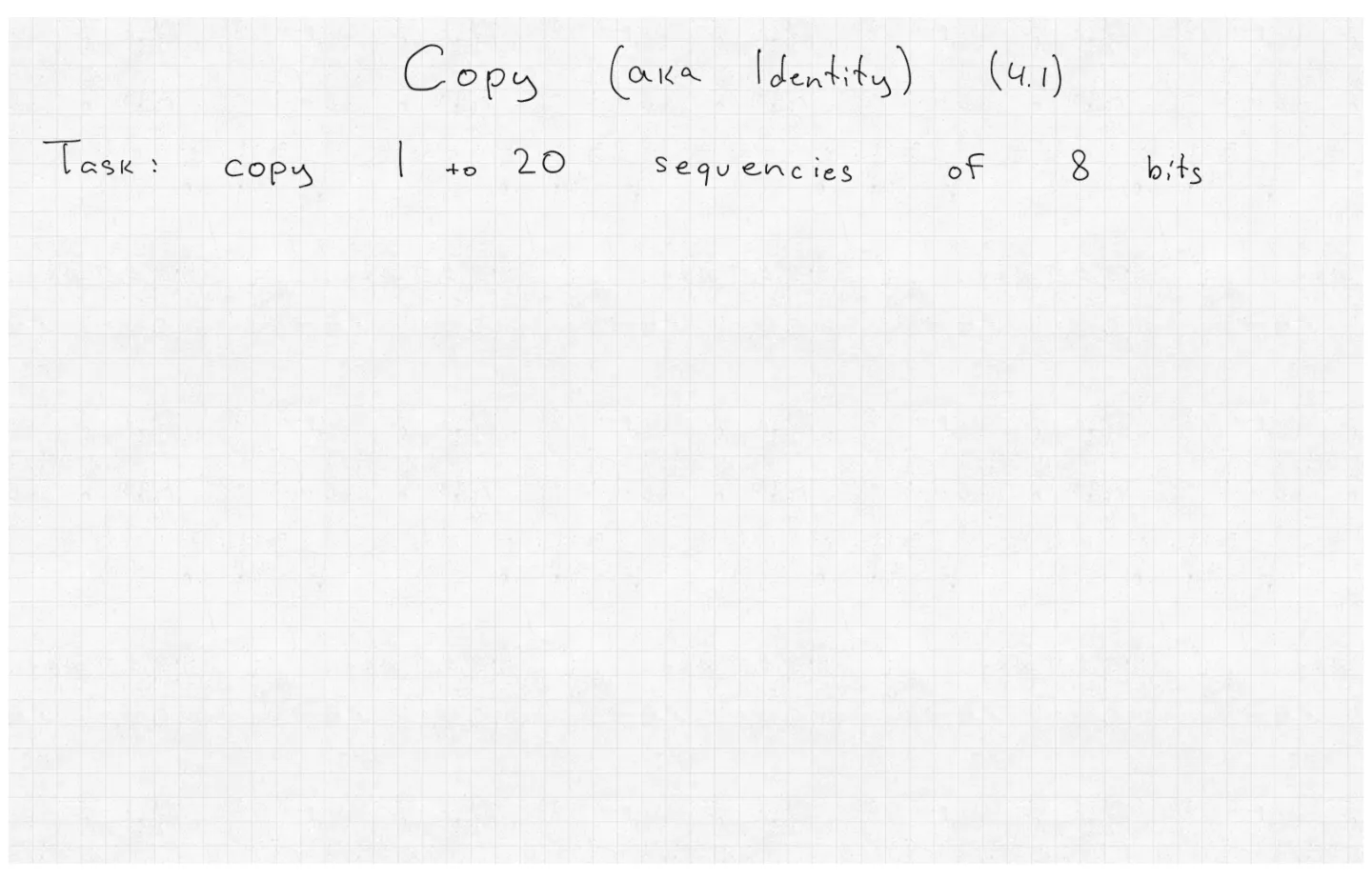
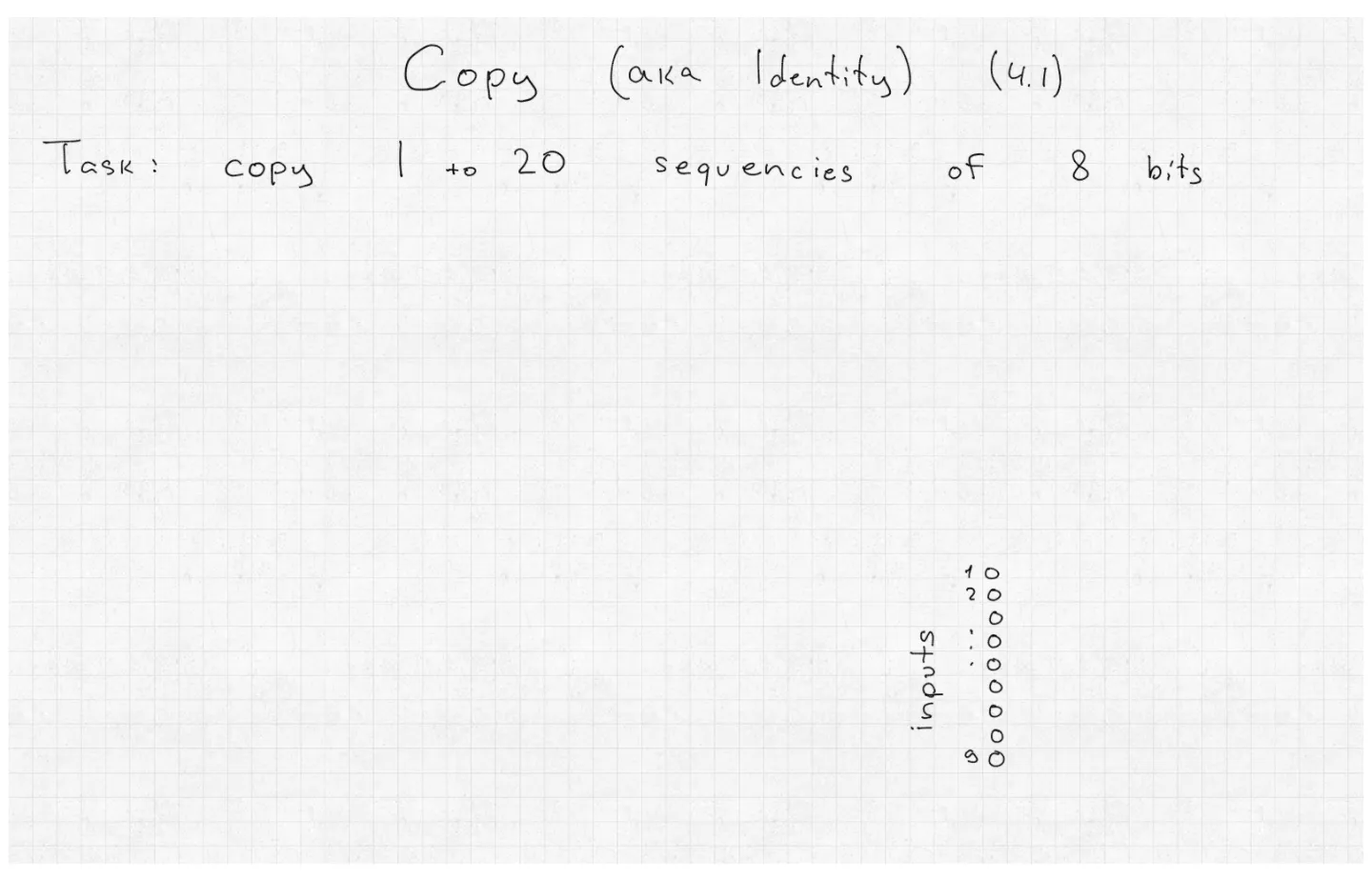
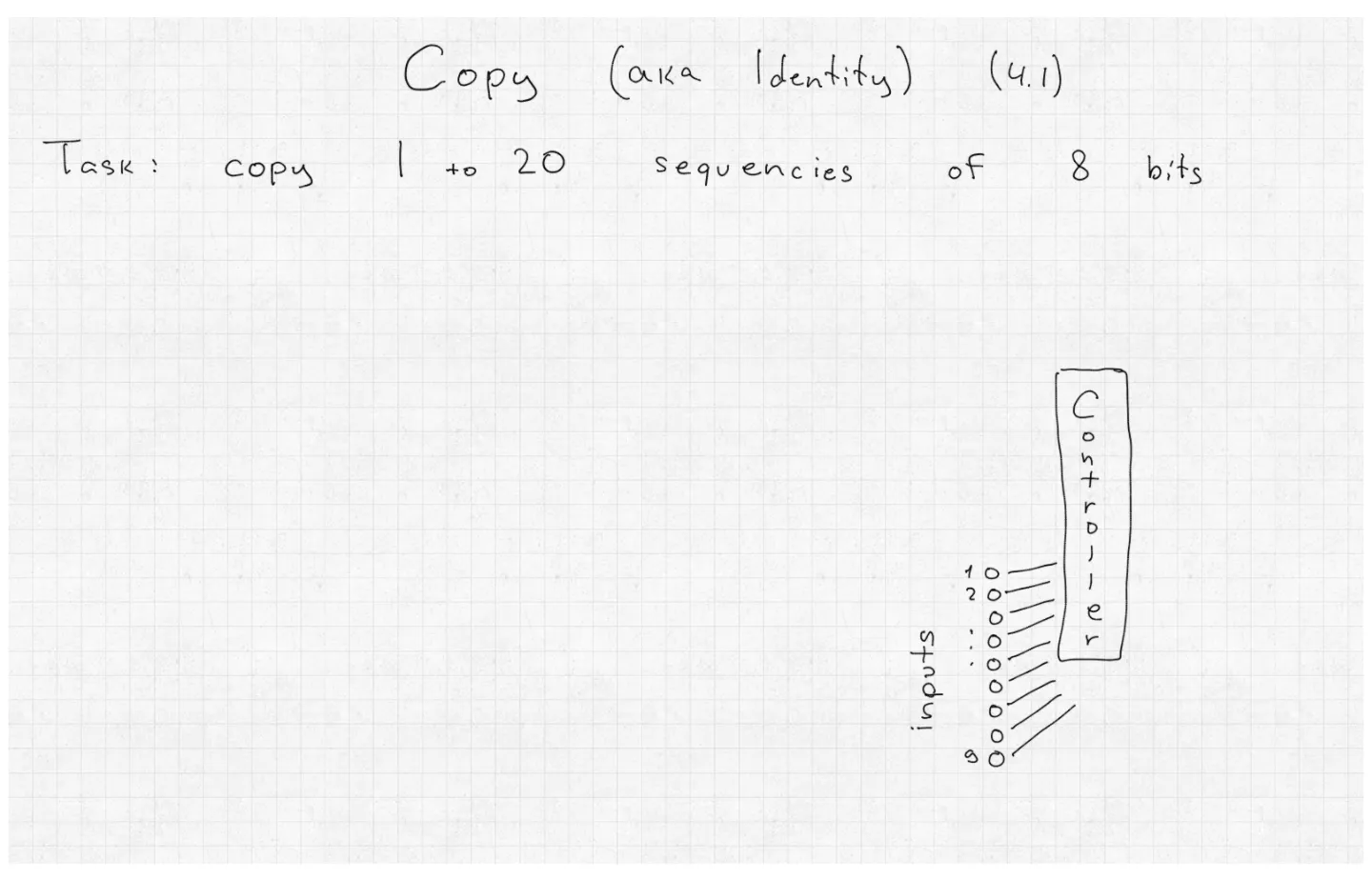
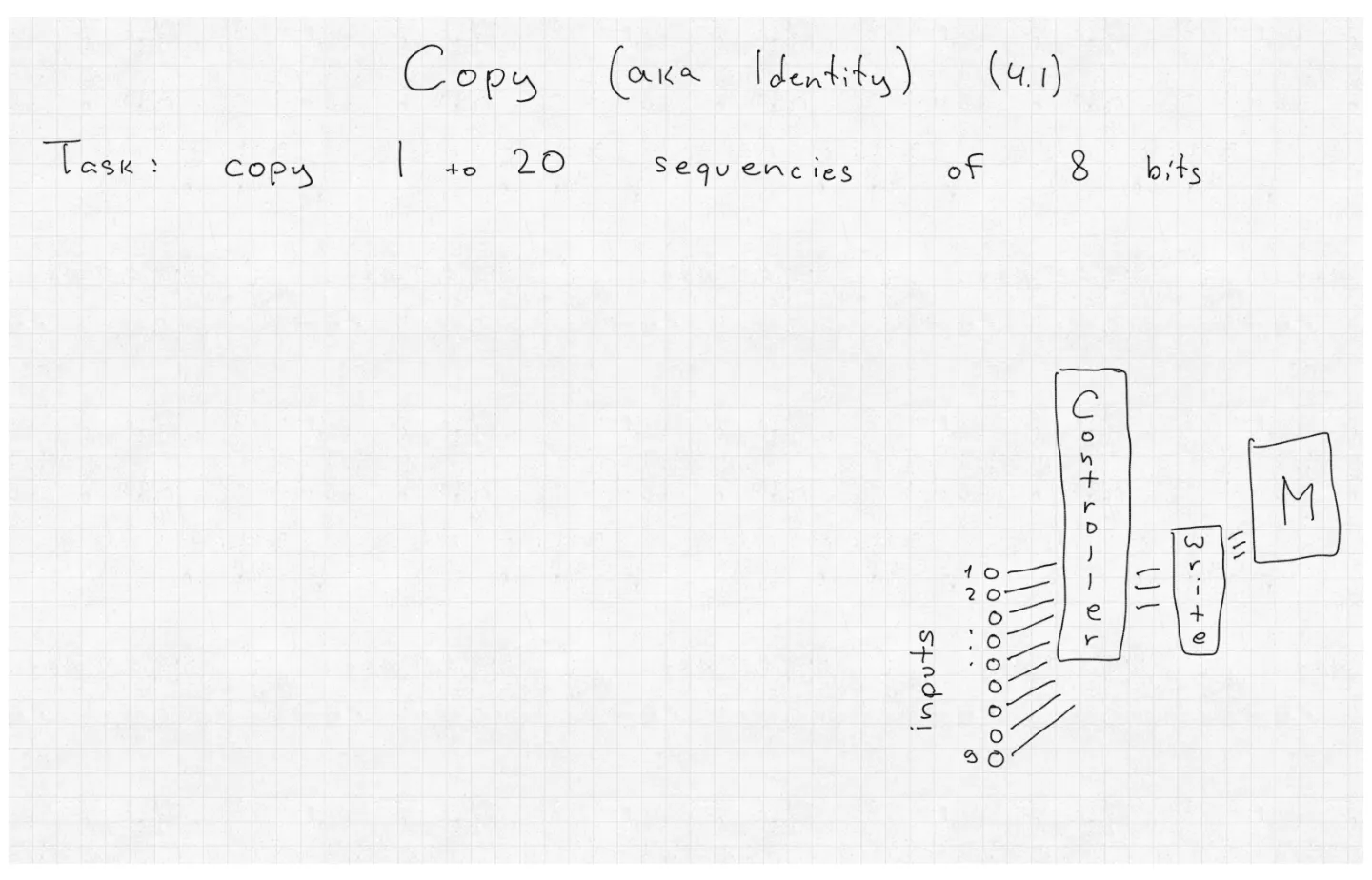
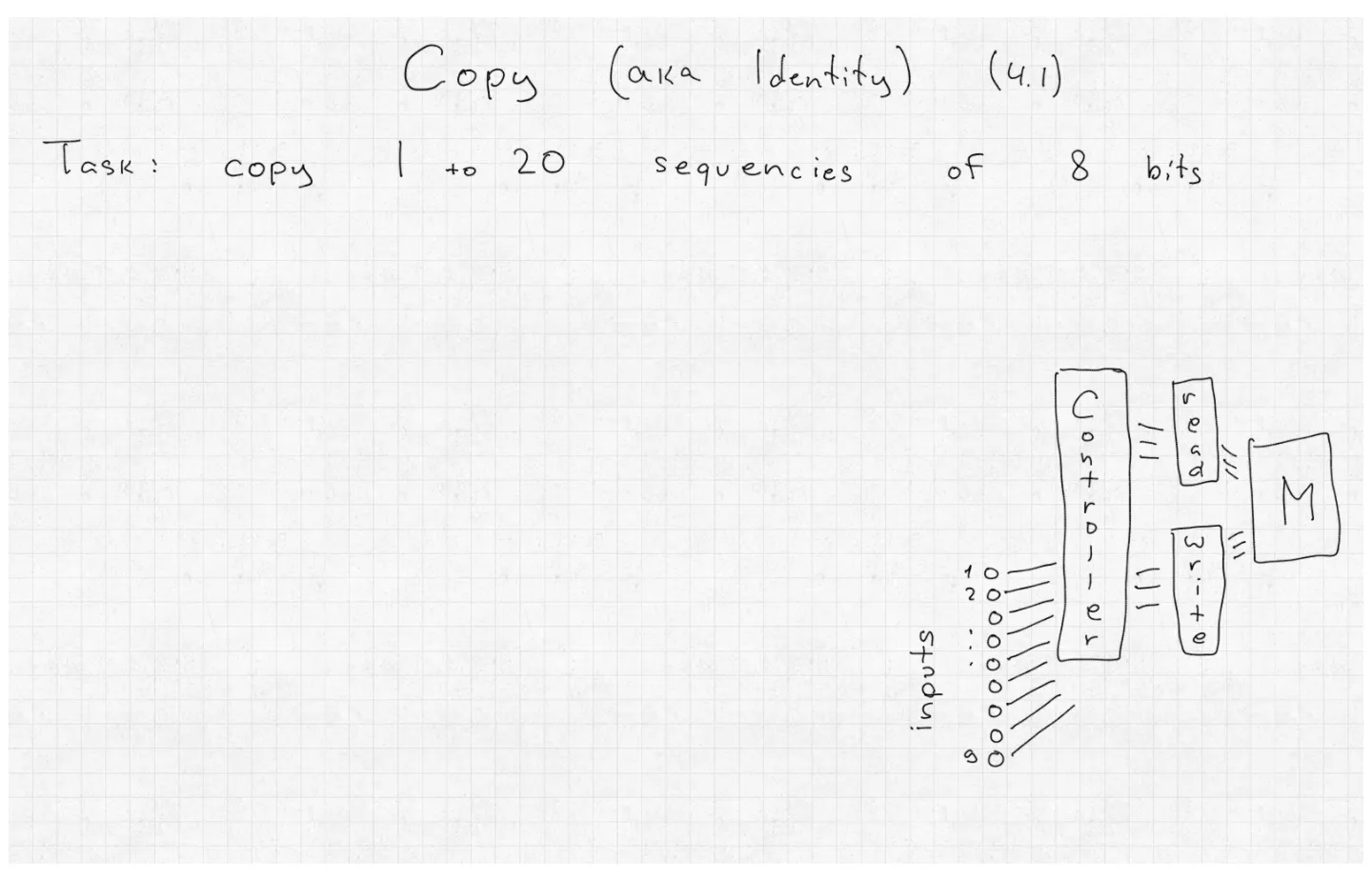
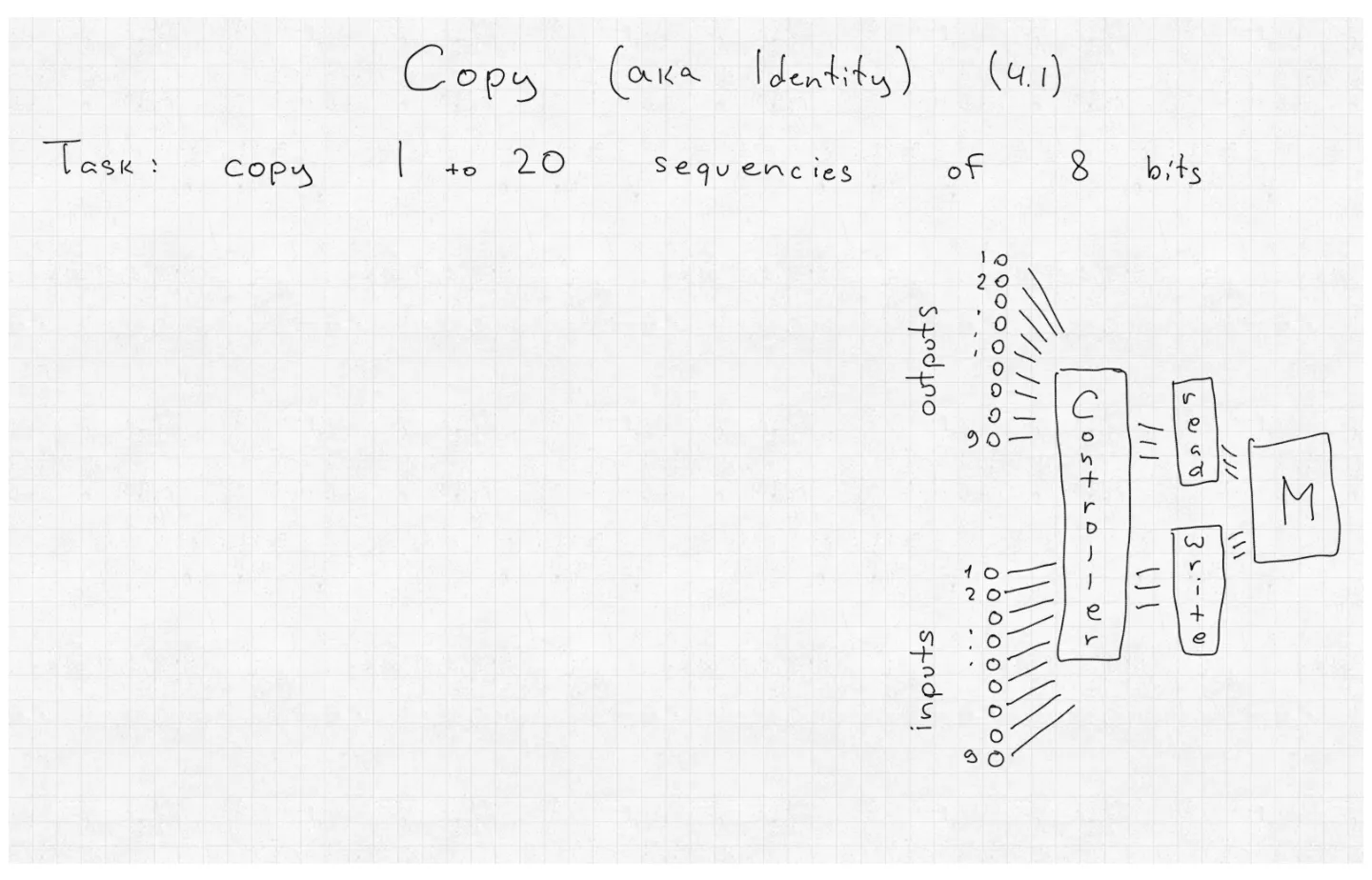
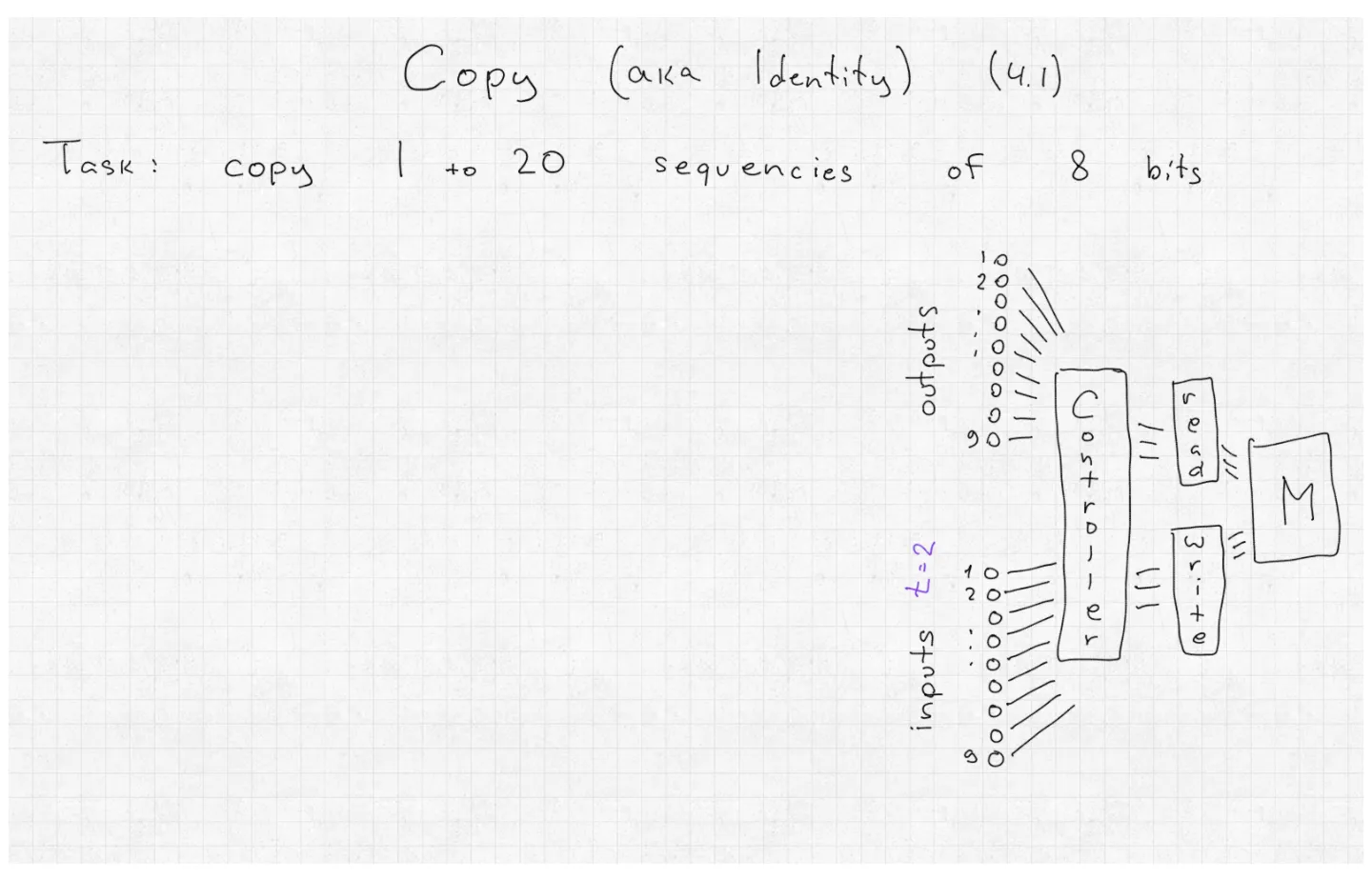
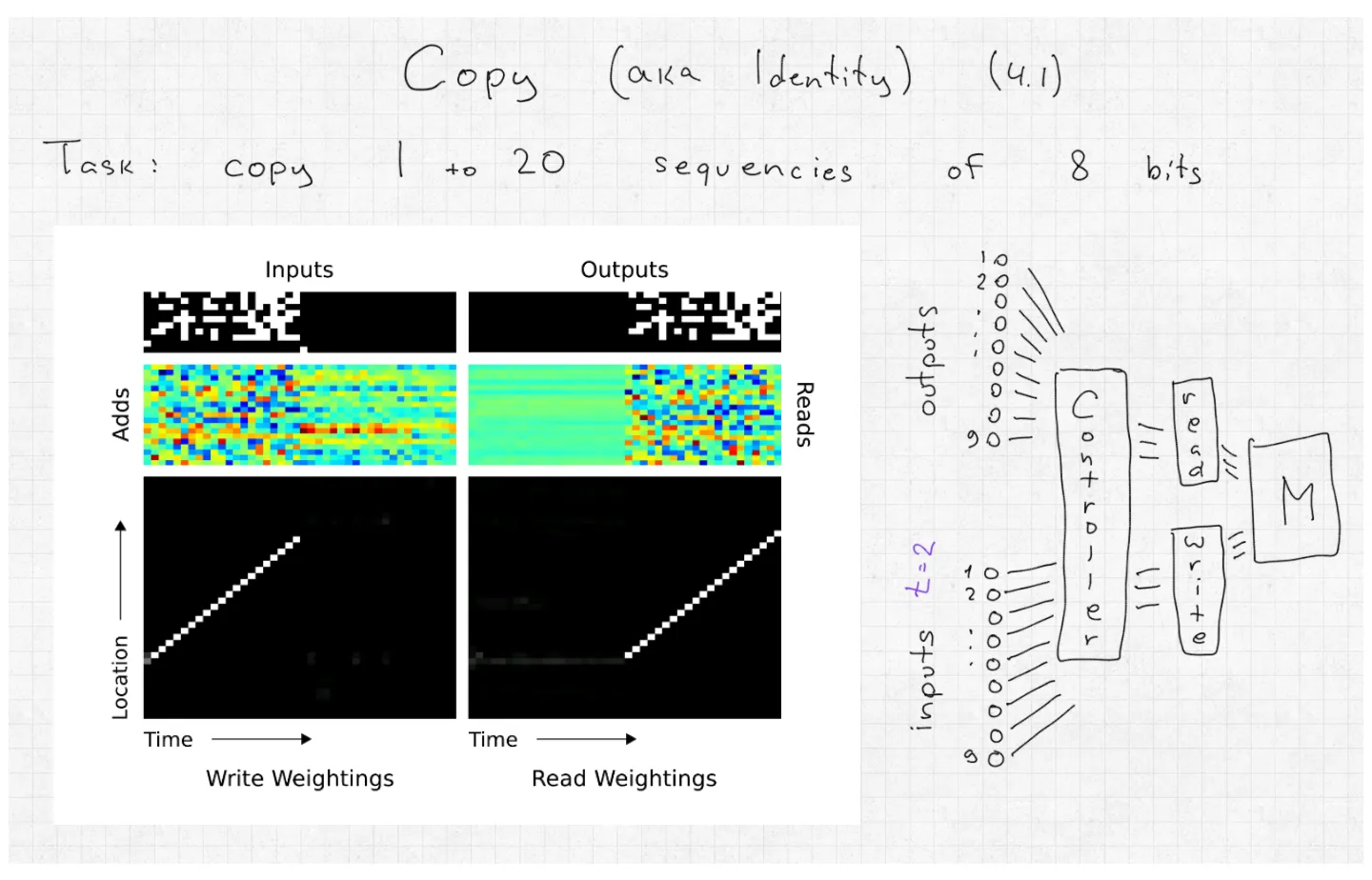
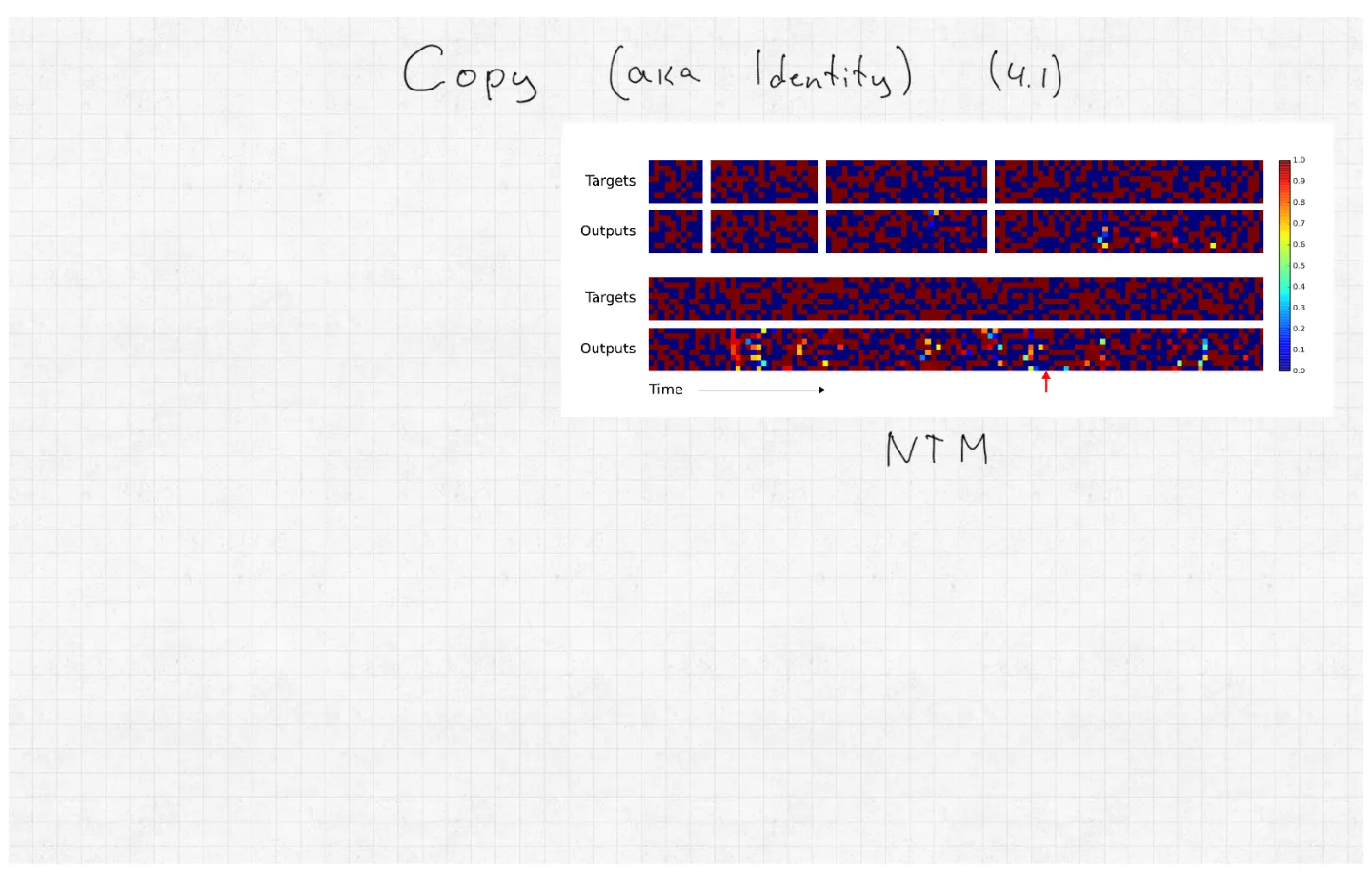
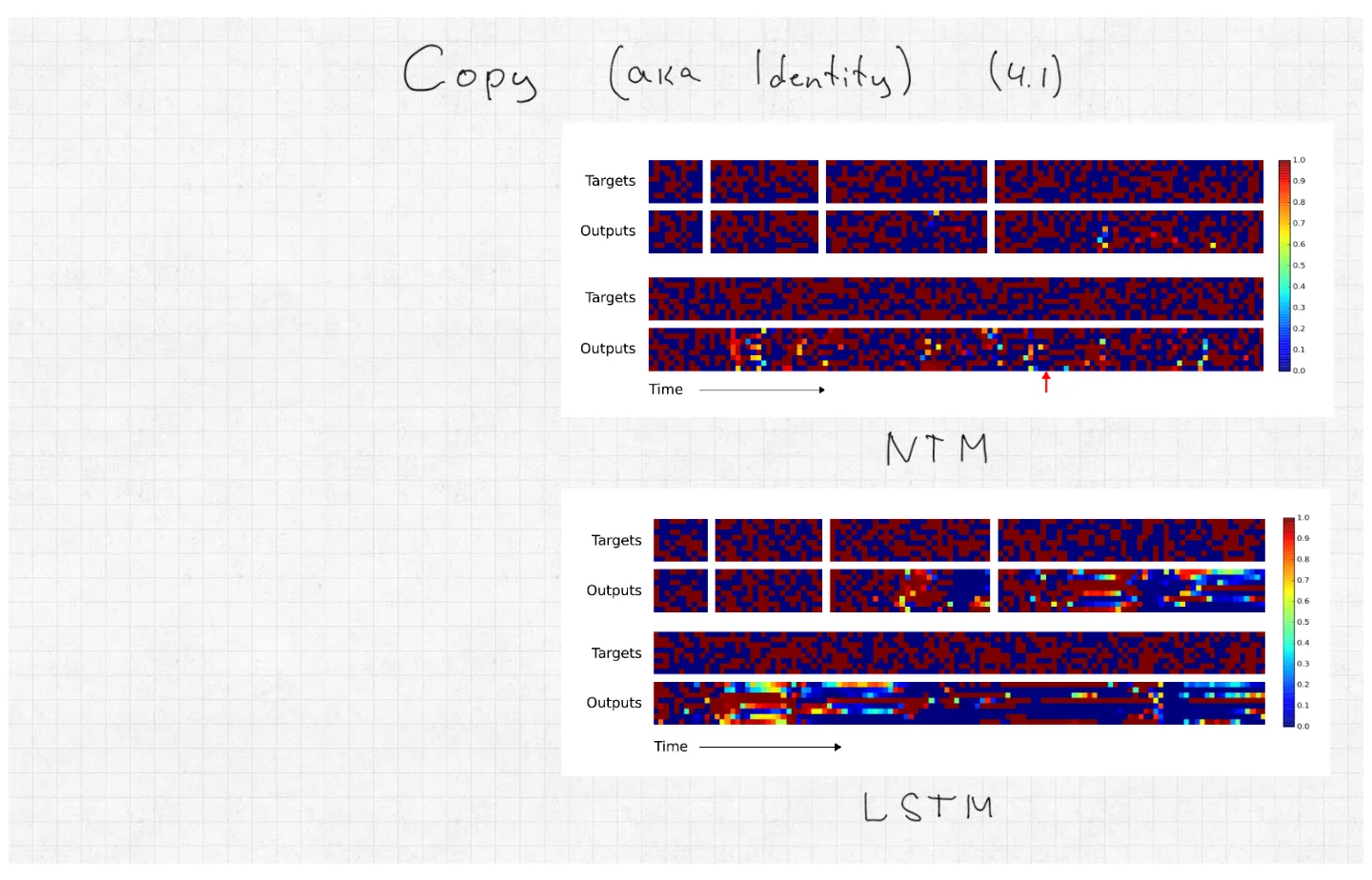
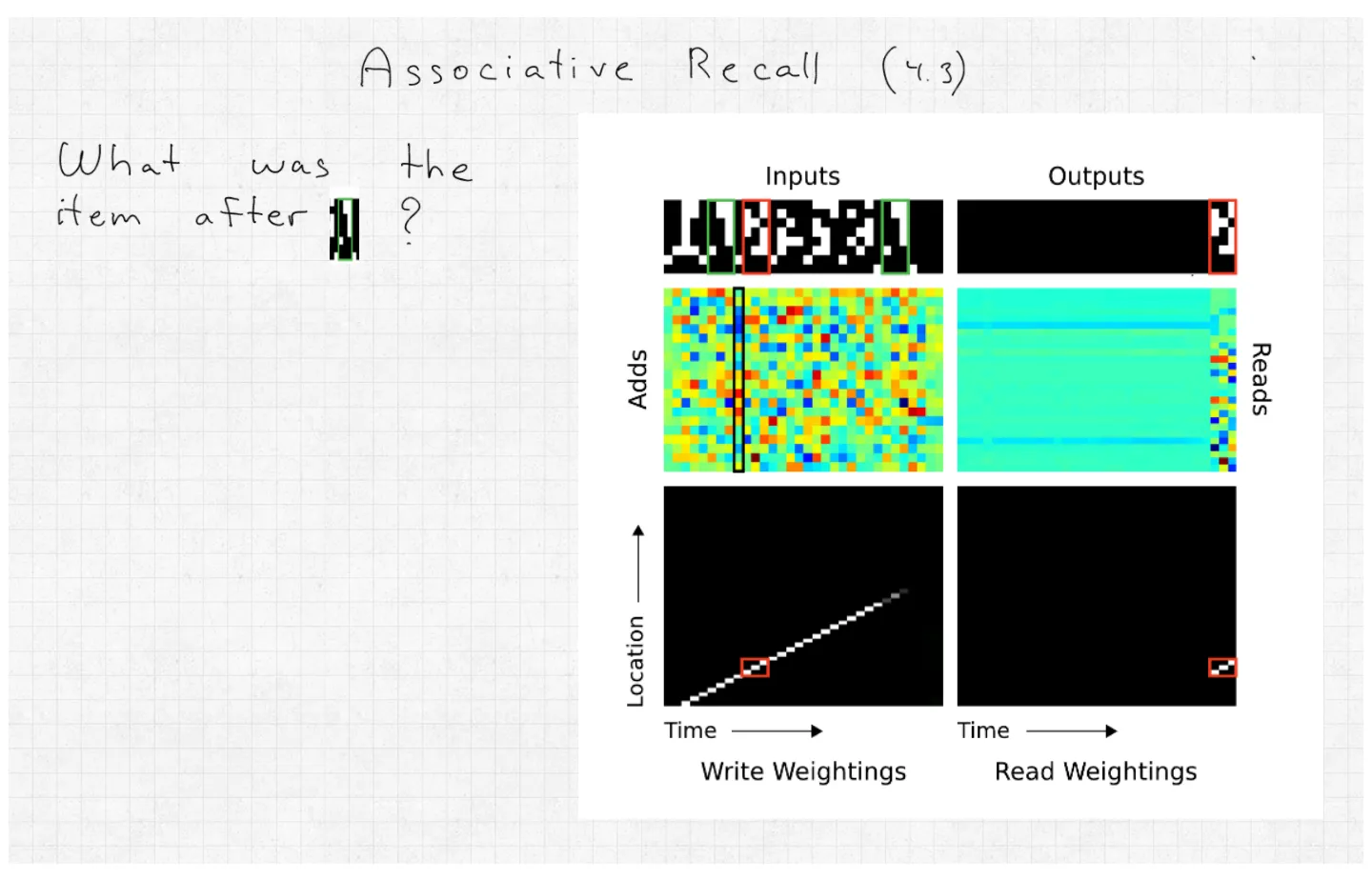
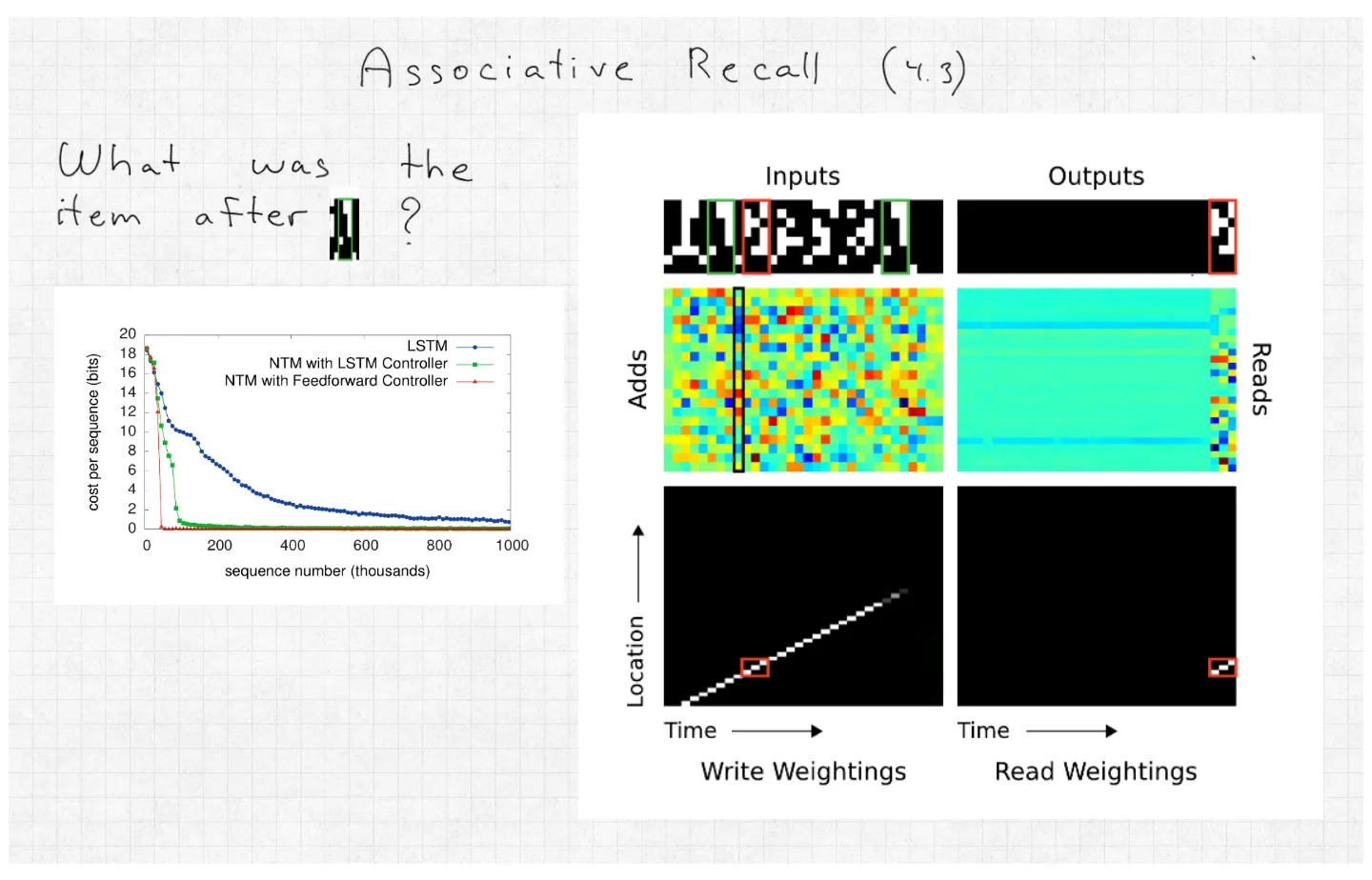
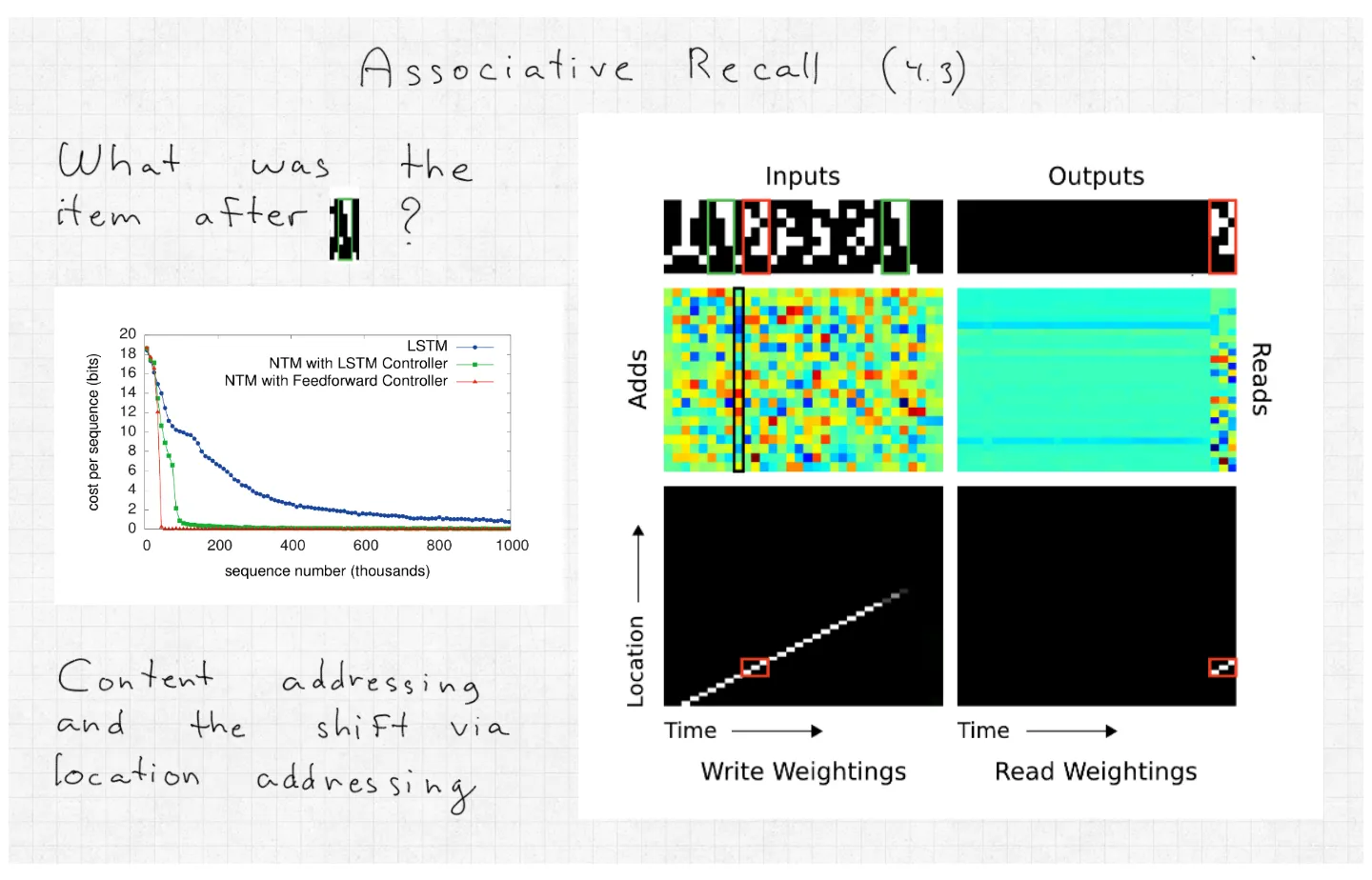
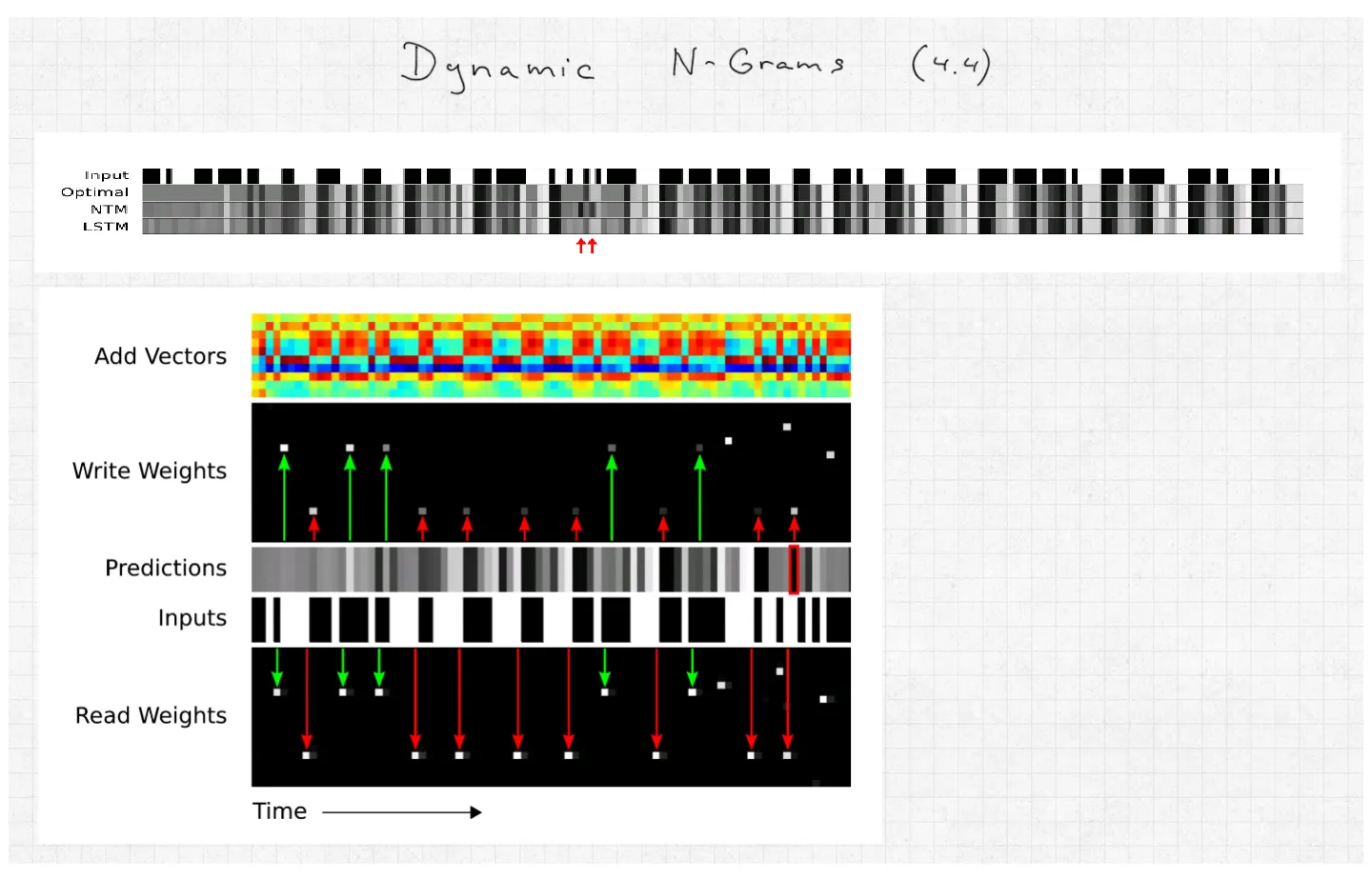
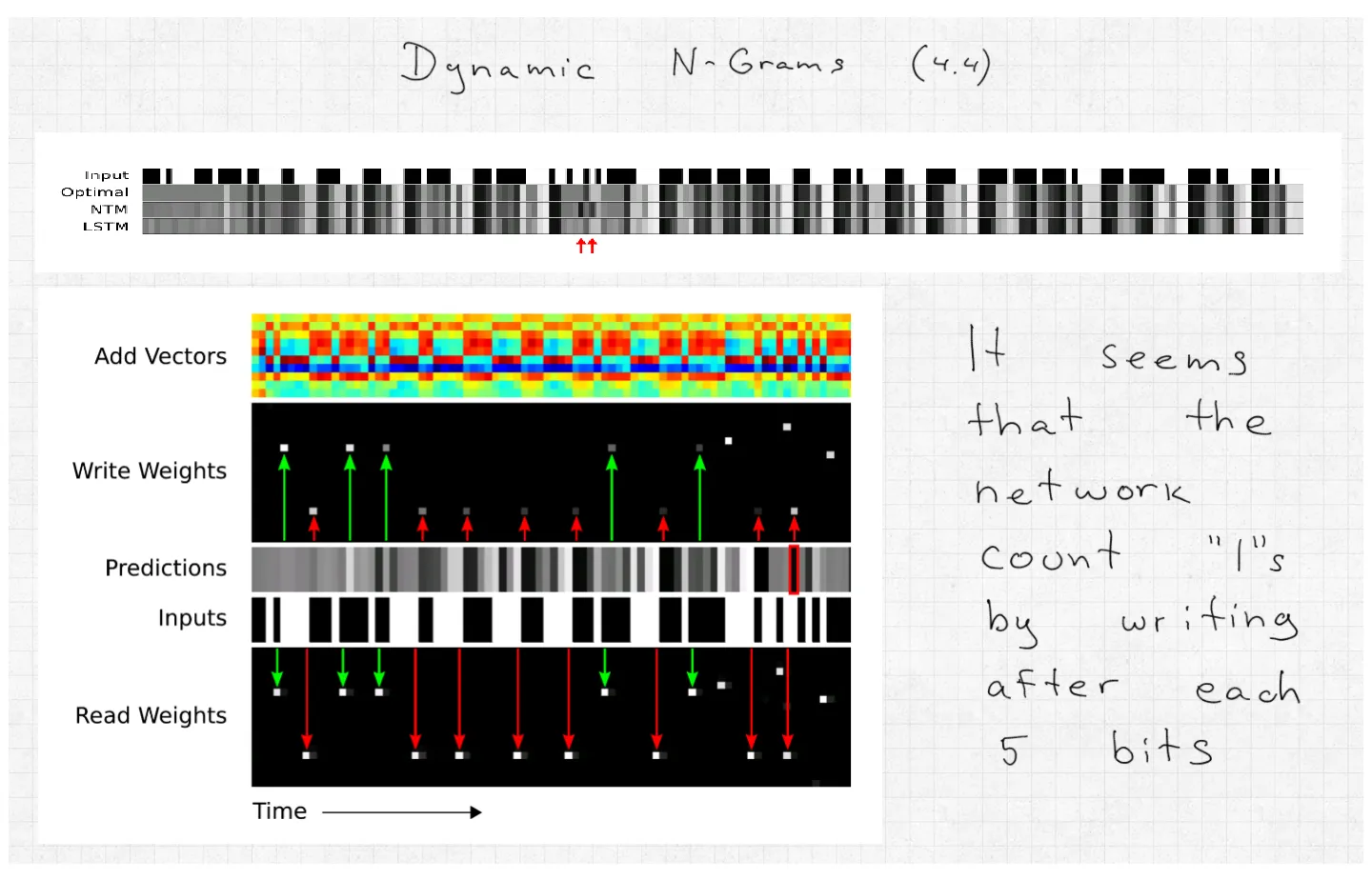
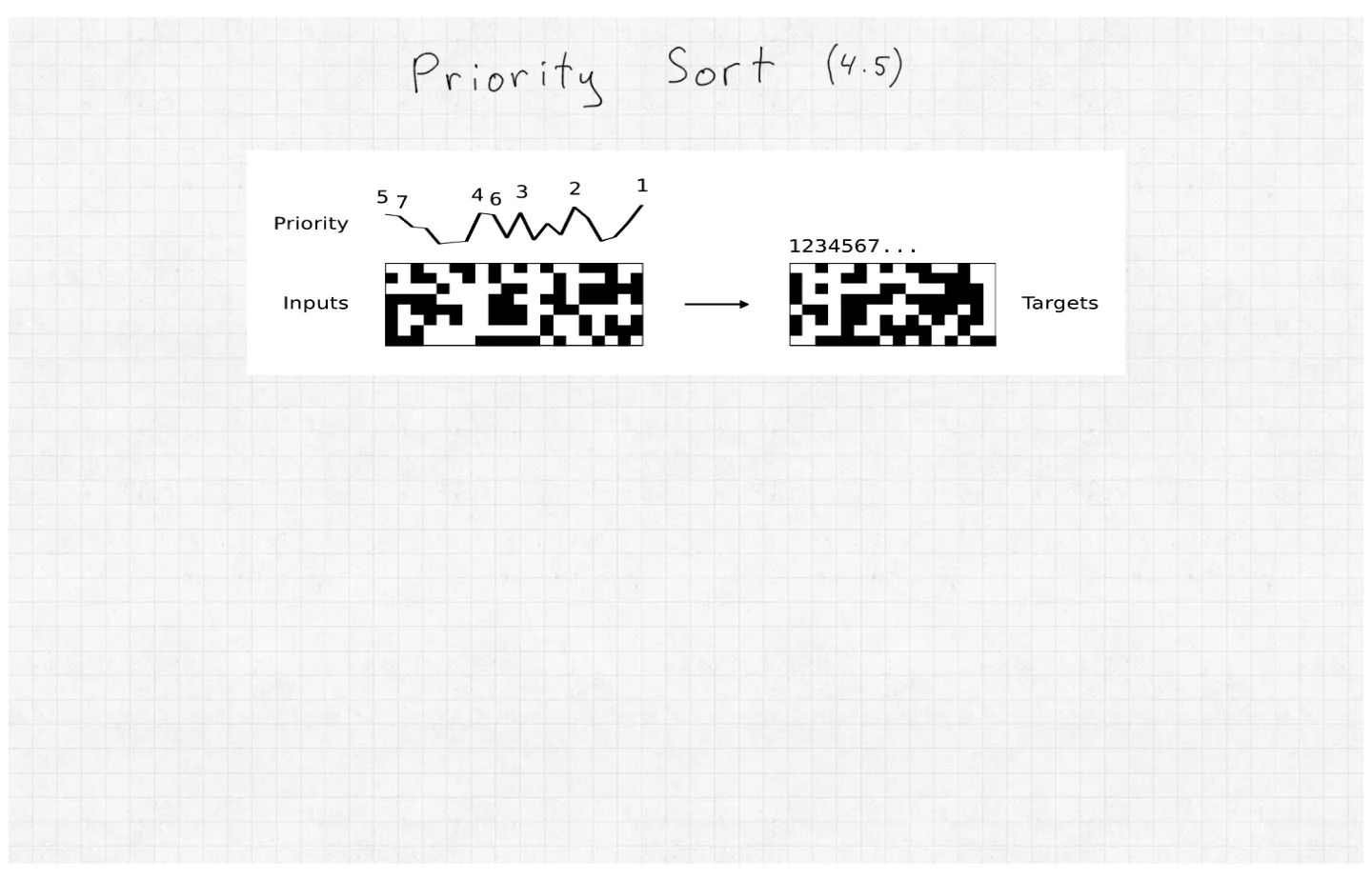
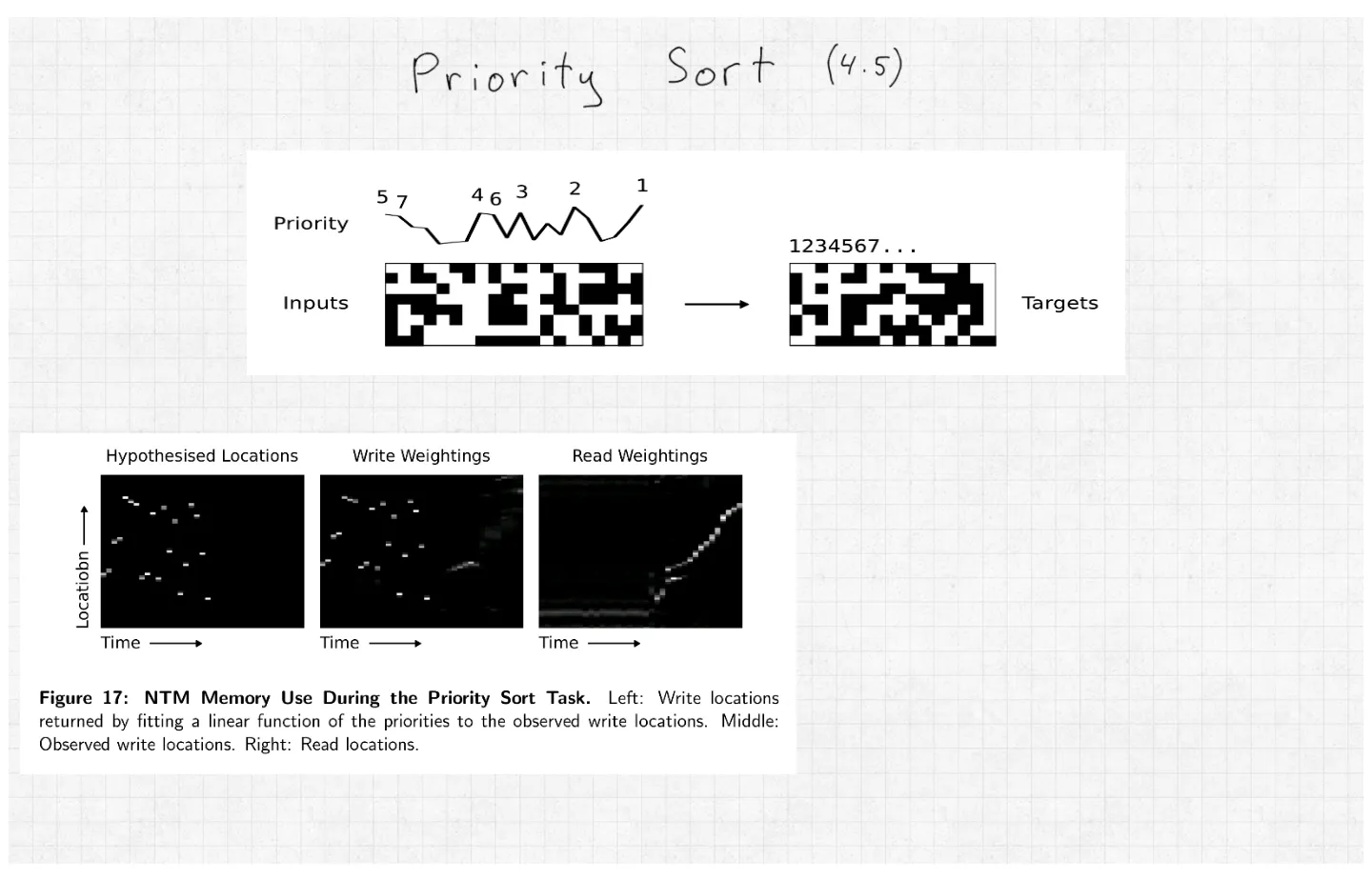
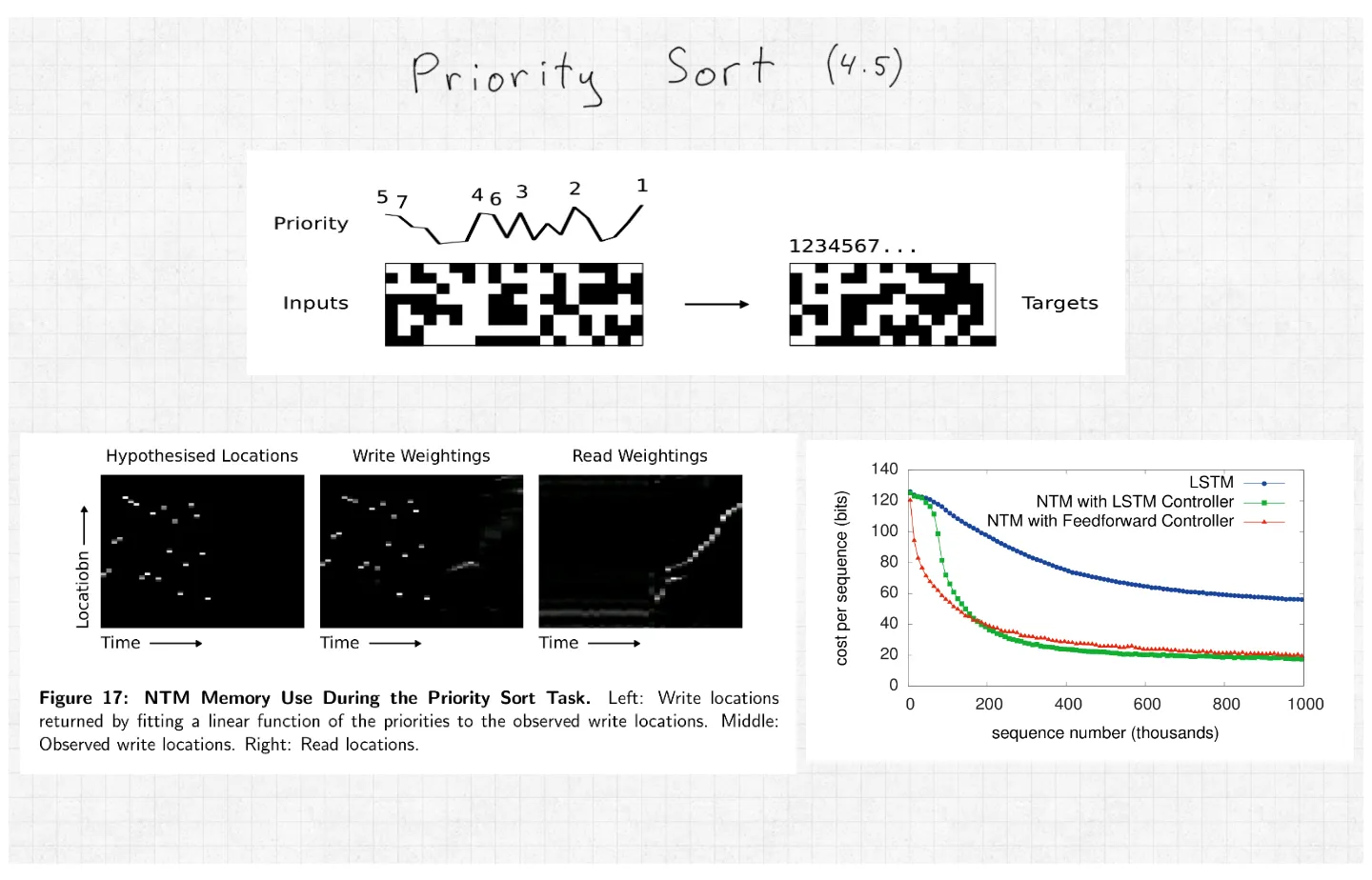
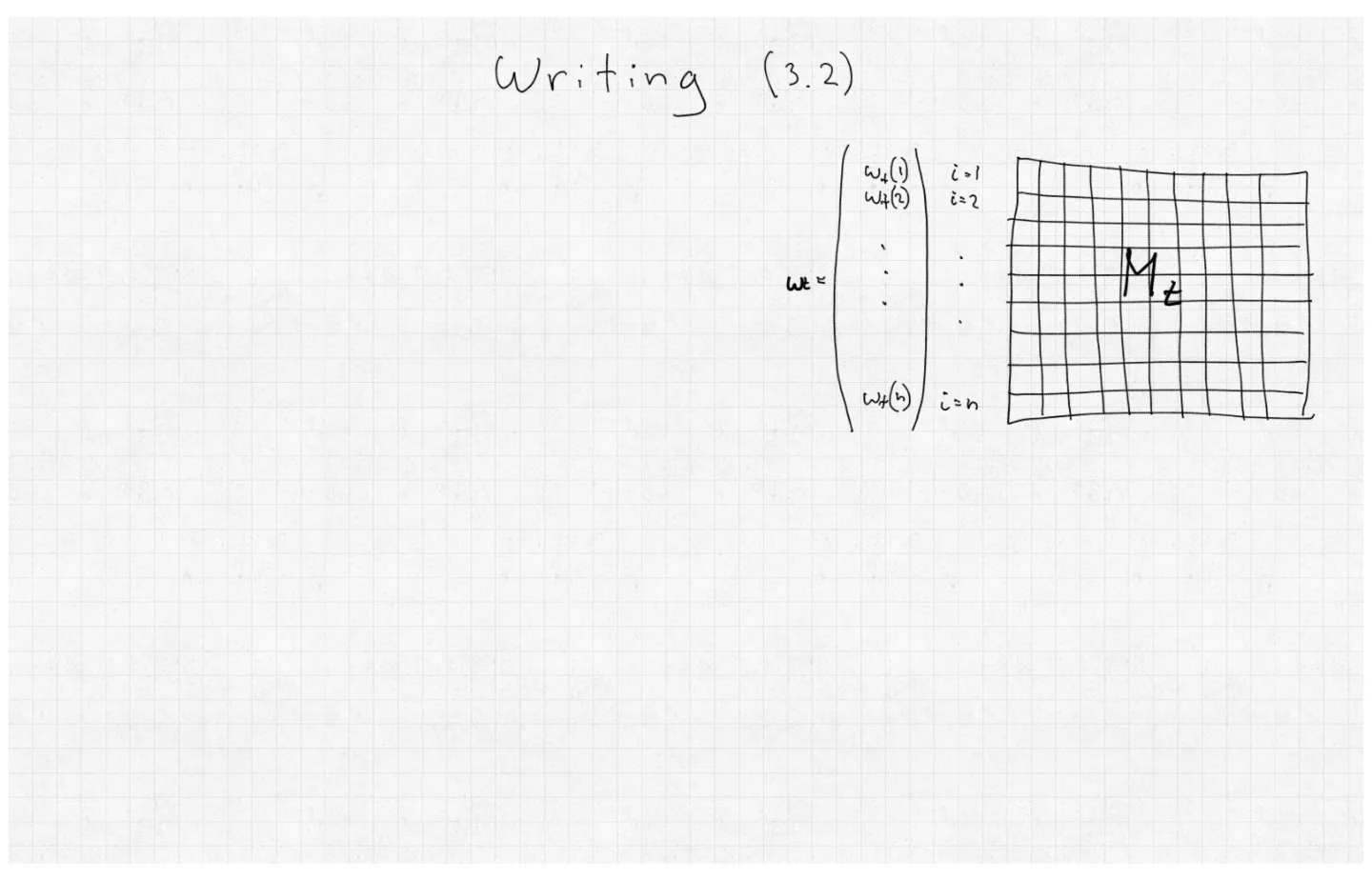
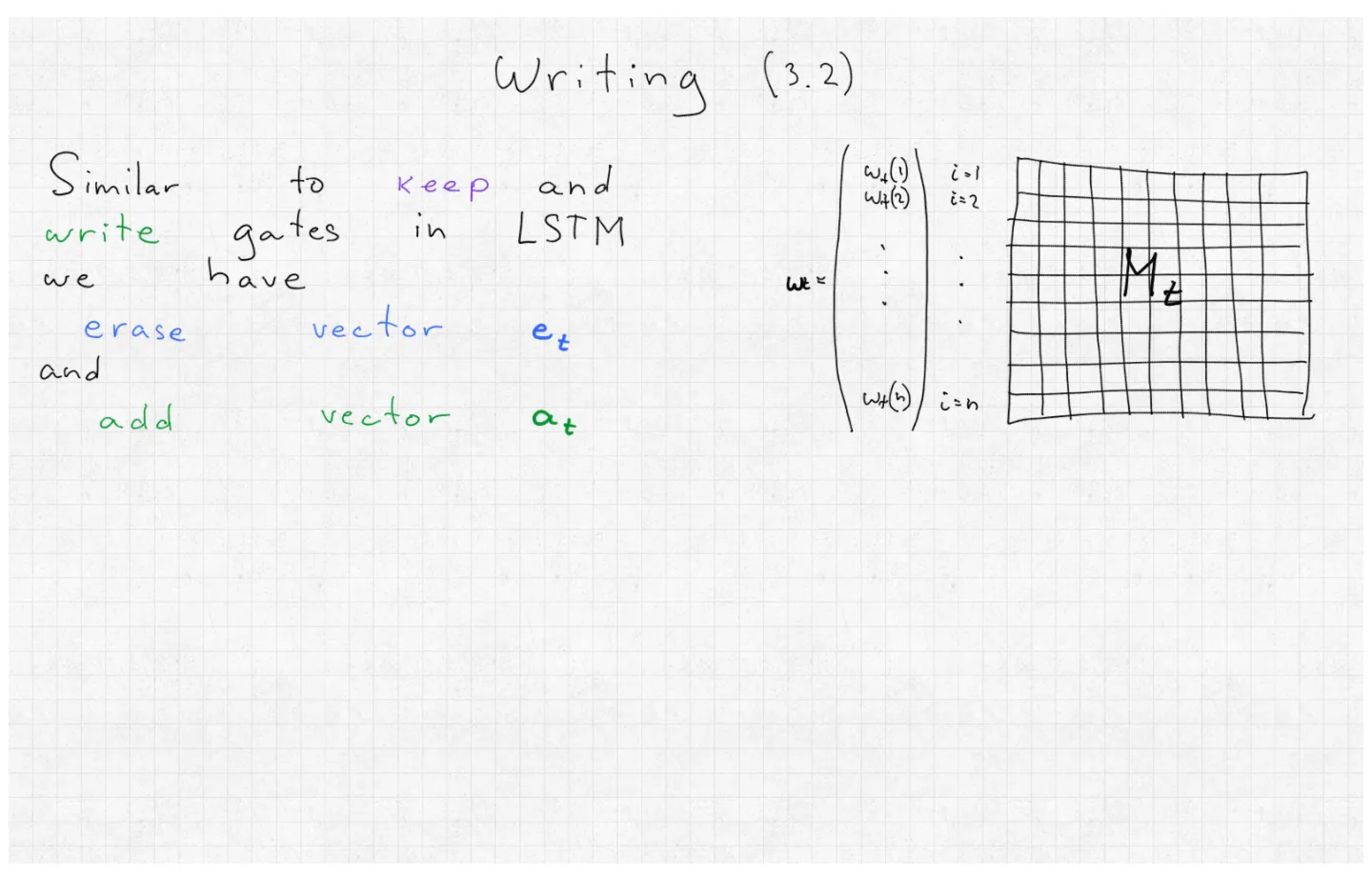
Seminar overview of the third article produced by Google DeepMind. This one again contains conceptual novelties: adding external memory to a machine learning pipeline (using an Artificial Neural Network as a Controller, which decides how to use this memory). The system is differentiable, meaning that you can give it inputs, show the outputs it should produce, define an error-function (cross-entropy in this case) and then train the whole thing using gradient descent. The amazing outcome is that the system learns not the statistical relations between the input and the output as your usual ML, but attempts to learn an algorithm, which allows it to generalize well and perform correctly on problem instances which are bigger or different from what it has been trained on.

Download PDF